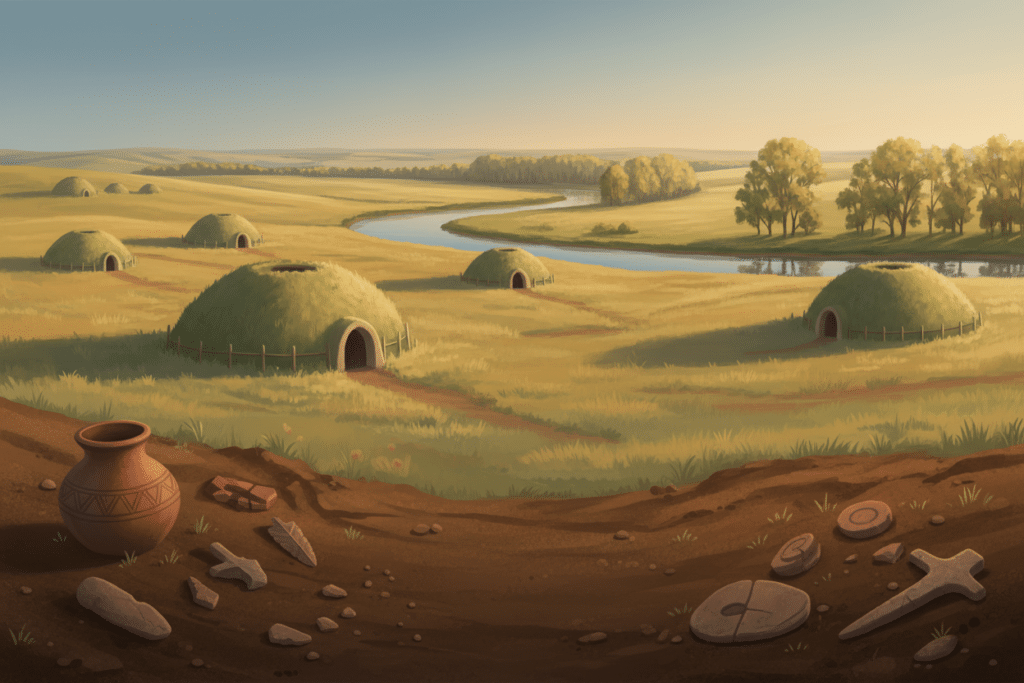
Standing on the windswept plains of North Dakota, where the Knife River meets the Missouri, you’re not just looking at rolling grassland – you’re gazing upon one of North America’s most significant archaeological treasures. The Knife River Indian Villages National Historic Site preserves over 11,000 years of continuous Native American occupation, making it one of the longest-documented human settlements in the Great Plains region.
This remarkable site tells the story of countless generations who called this fertile river valley home, from ancient Paleo-Indian hunters to the thriving Hidatsa villages that European explorers encountered in the 1700s. Today, visitors can walk in the footsteps of these resilient communities and discover how they adapted, thrived, and shaped the landscape we see today.
The Ancient Beginnings: Paleo-Indian Heritage at Knife River
The story of human presence at Knife River begins approximately 11,000 years ago when Paleo-Indian groups first arrived in the region. These early inhabitants were nomadic hunters who followed massive herds of now-extinct megafauna across the changing post-glacial landscape. Archaeological evidence suggests they were skilled toolmakers, crafting distinctive spear points and implements from local stone materials.
What makes Knife River particularly fascinating is the continuity of occupation. Unlike many archaeological sites that show sporadic use, this location has yielded evidence of human presence through virtually every major cultural period in Plains Indian history. The abundance of natural resources – including fresh water, fertile soil, timber, and diverse wildlife – created an environment that could sustain human communities for millennia.
Recent archaeological investigations have uncovered stone tools, fire hearths, and other artifacts that paint a picture of these early residents’ daily lives. They were master hunters who developed sophisticated techniques for taking down large game, and they possessed an intimate knowledge of seasonal patterns that allowed them to maximize their success in this challenging environment.
The Mandan and Hidatsa: Masters of Plains Agriculture
By approximately 1100 CE, the Knife River area had become home to increasingly sedentary agricultural communities. The Mandan and later the Hidatsa peoples established permanent villages along the riverbanks, developing one of the most sophisticated farming cultures in the northern Great Plains. These weren’t simple settlements – they were complex, well-planned communities that could house hundreds of residents.
The Hidatsa, in particular, became renowned for their agricultural innovations. They developed unique varieties of corn, beans, and squash perfectly adapted to the short growing season and harsh winters of the northern plains. Their earth lodges, some measuring over 40 feet in diameter, provided excellent insulation against the brutal Dakota winters while remaining cool during the scorching summers.
What’s truly remarkable about these communities is how they balanced agriculture with hunting and trading. While women tended the crops and managed the villages, men would venture out on seasonal buffalo hunts that could last for months. This dual economy created a stability that allowed their population to grow and their culture to flourish for centuries.
Archaeological Discoveries That Rewrote History
Modern archaeological work at Knife River has revolutionized our understanding of Plains Indian life. Excavations have revealed that these weren’t isolated communities scraping by on the edge of survival – they were part of vast trade networks that stretched from the Gulf of Mexico to the Canadian Arctic.
Artifacts recovered from the site include marine shells from the Pacific Coast, obsidian from the Rocky Mountains, and copper from the Great Lakes region. This evidence demonstrates that the Knife River villages served as major trading centers where goods, ideas, and cultural practices were exchanged among diverse groups of Native Americans.
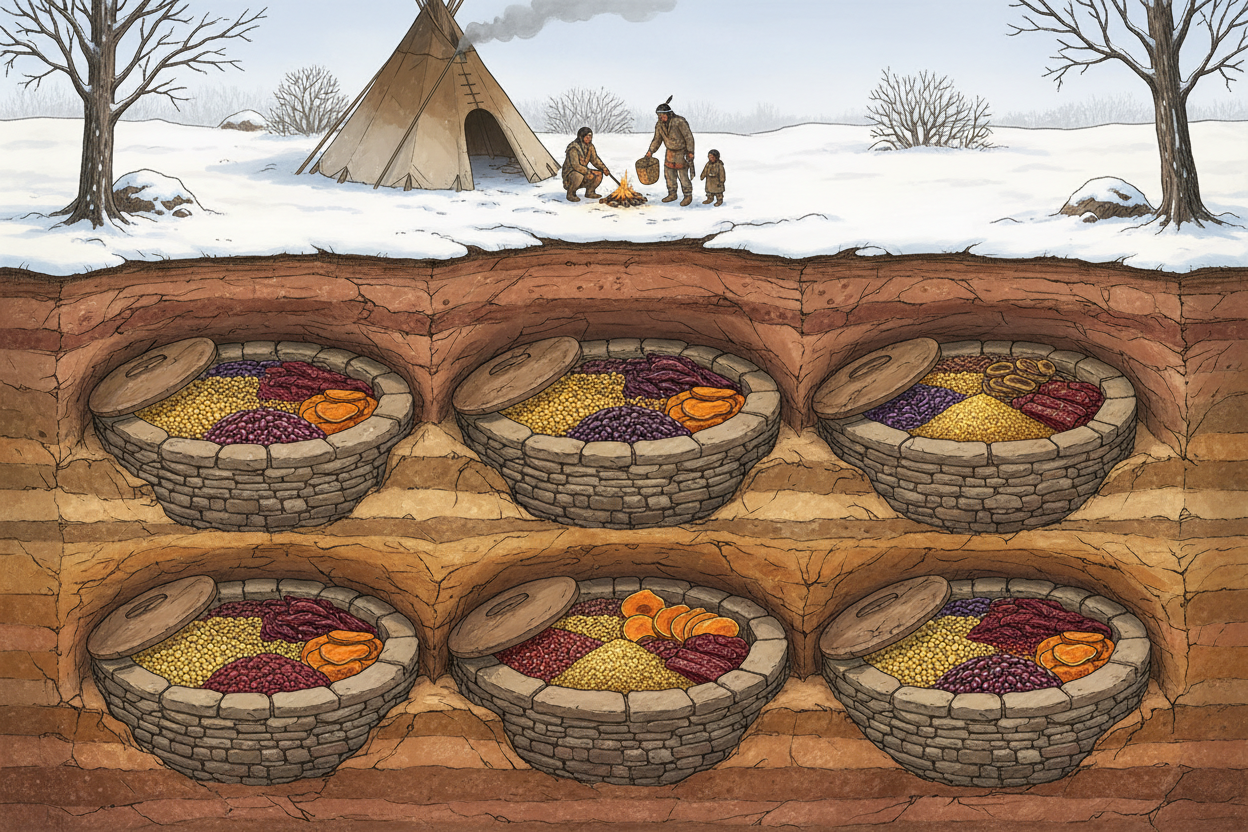
One of the most significant discoveries has been the sophisticated storage systems these communities developed. Underground cache pits, some lined with stone and sealed with clay, allowed families to store surplus crops for winter use and lean years. Some of these storage facilities could hold enough food to sustain a family for an entire year, providing crucial insurance against the uncertainties of Plains life.
Sacagawea’s Birthplace: Personal Connections to History
Perhaps no individual better connects the Knife River villages to broader American history than Sacagawea, the Shoshone woman who guided Lewis and Clark to the Pacific Ocean. Born around 1788 in a Hidatsa village near the confluence of the Knife and Missouri Rivers, Sacagawea’s early life was shaped by the rich cultural traditions of this ancient community.
The village where Sacagawea likely spent her childhood was a bustling center of activity. Children played games that taught them essential survival skills, women worked together processing crops and crafting tools, and elders shared stories that preserved thousands of years of accumulated wisdom. This nurturing environment helped develop the skills and knowledge that would later prove invaluable during the Corps of Discovery expedition.
Walking through the reconstructed Hidatsa village today, visitors can imagine young Sacagawea learning to identify edible plants, helping with the harvest, and absorbing the complex social customs that governed village life. Her story adds a deeply personal dimension to what might otherwise feel like distant history.
The Impact of European Contact and Change
The arrival of European traders in the 1700s brought dramatic changes to life at Knife River. While trade goods like metal tools, firearms, and horses initially enhanced the villagers’ quality of life, they also introduced new challenges and dependencies. The fur trade created economic opportunities but also increased competition and conflict with neighboring tribes.
Perhaps most devastating was the introduction of epidemic diseases like smallpox, which swept through the villages with catastrophic results. The 1837 smallpox epidemic was particularly brutal, reducing the Hidatsa population by an estimated 90 percent. Entire villages were abandoned as survivors sought safety and new opportunities elsewhere.
By the 1840s, the remaining Hidatsa had largely relocated upstream to Like-a-Fishhook Village, ending thousands of years of continuous occupation at the traditional Knife River sites. This migration marked the close of one chapter in the area’s long human story, but the archaeological record they left behind continues to provide invaluable insights into their remarkable culture.
Modern Preservation and Cultural Continuity
Today, the Knife River Indian Villages National Historic Site serves as both a research facility and a place of cultural preservation. The Three Affiliated Tribes – the Mandan, Hidatsa, and Arikara – work closely with the National Park Service to ensure that their ancestors’ stories are told accurately and respectfully.
The site’s visitor center features extensive exhibits showcasing artifacts recovered from decades of archaeological work. Interactive displays help visitors understand everything from ancient hunting techniques to the complex social structures that governed village life. Perhaps most importantly, the center emphasizes that this isn’t just ancient history – it’s the living heritage of Native American communities that continue to thrive today.
Educational programs bring together tribal elders, archaeologists, and visitors to share knowledge and preserve cultural traditions. These initiatives ensure that the wisdom accumulated over 11,000 years of occupation continues to inform and inspire future generations.
Visiting Knife River: A Journey Through Time
A visit to Knife River Indian Villages offers a unique opportunity to connect with one of North America’s most enduring human stories. The site features several well-preserved village locations, including the remains of earth lodges and fortification systems that protected these communities during times of conflict.
The walking trails wind through areas where archaeologists have uncovered evidence of daily life spanning millennia. Interpretive signs help visitors understand what they’re seeing, from the subtle depressions that mark former lodge sites to the more obvious remains of defensive earthworks.
The reconstructed Hidatsa village provides a tangible sense of what life was like during the site’s most prosperous period. Full-scale earth lodges, complete with authentic furnishings and tools, allow visitors to step inside and experience the ingenious architecture that kept families comfortable through harsh Plains winters.
Lessons from 11,000 Years of Adaptation
The long history of human occupation at Knife River offers profound lessons about adaptation, resilience, and sustainable living. These communities thrived for thousands of years by developing intimate relationships with their environment, creating social systems that balanced individual needs with community welfare, and maintaining the flexibility to adapt to changing circumstances.
Their agricultural innovations, including the development of drought-resistant crop varieties and sophisticated storage techniques, demonstrate remarkable ingenuity in the face of environmental challenges. Their trading networks show how diverse communities can benefit from cooperation and exchange rather than isolation and conflict.
Perhaps most importantly, the Knife River story reminds us that human history is far richer and more complex than simple narratives often suggest. These weren’t “primitive” people struggling against nature – they were sophisticated societies that created sustainable ways of life in one of North America’s most challenging environments.
Frequently Asked Questions
How old is the Knife River Indian Villages site?
The site contains evidence of human occupation spanning approximately 11,000 years, from Paleo-Indian times through the historic period when European traders first arrived in the region.
Which tribes lived at Knife River?
The site was home to various Native American groups over time, but it’s most famous for the Hidatsa villages that thrived there from about 1100 CE until the 1840s. The Mandan also had significant presence in the area.
Is Knife River really where Sacagawea was born?
While the exact village of her birth cannot be definitively identified, historical evidence strongly suggests that Sacagawea was born around 1788 in one of the Hidatsa villages near the confluence of the Knife and Missouri Rivers.
What can visitors see at the site today?
Visitors can explore preserved village sites, walk through a reconstructed Hidatsa earth lodge village, visit the comprehensive museum and visitor center, and hike trails that connect multiple archaeological locations.
How long should I plan for a visit?
Most visitors spend 2-4 hours at the site, though those with deep interest in archaeology or Native American history might want to allow a full day to thoroughly explore all the trails and exhibits.
Are there guided tours available?
The visitor center offers ranger-led programs during peak season, and self-guided trail brochures are available year-round. Special programs often feature presentations by tribal members sharing traditional knowledge and cultural perspectives.
The Knife River Indian Villages stand as a testament to human ingenuity, adaptability, and the enduring power of community. This remarkable site preserves not just archaeological artifacts, but the story of how diverse Native American cultures created thriving societies in the heart of the Great Plains. For anyone seeking to understand the deep history of North America, a visit to Knife River offers an unparalleled window into 11,000 years of human achievement and cultural continuity.