Walk down any street in Brooklyn today, and you’ll likely encounter the usual suspects: bearded millennials clutching artisanal coffee, vintage shops selling $80 band t-shirts, and restaurants serving $18 avocado toast. It’s easy to write off Brooklyn as nothing more than hipster central – a playground for the privileged seeking authenticity they can Instagram. But that narrative barely scratches the surface of what makes this borough truly extraordinary.
Brooklyn’s cultural landscape is far richer and more complex than the hipster stereotype suggests. Beneath the carefully curated coffee shops and boutique hotels lies a tapestry woven from generations of immigrants, artists, activists, and dreamers who’ve called these neighborhoods home long before gentrification became a household word. To understand Brooklyn’s real cultural significance, we need to look beyond the surface-level trends and dive into the deep currents that have shaped this borough for over a century.
The Historical Foundation of Brooklyn’s Cultural Identity
Brooklyn’s cultural DNA was formed long before the first handlebar mustache appeared in Williamsburg. Throughout the late 19th and early 20th centuries, waves of immigrants from Ireland, Italy, Eastern Europe, and the Caribbean established vibrant communities that still influence the borough today. These weren’t tourists seeking an authentic experience – they were families building lives, establishing traditions, and creating the cultural bedrock that makes Brooklyn unique.
Take Bay Ridge, for instance. While visitors might only know it as the setting for “Saturday Night Fever,” locals understand it as a Norwegian-American stronghold where you can still find authentic Scandinavian bakeries and hear conversations in Norwegian on the street. Similarly, Sunset Park’s Chinatown rivals Manhattan’s in authenticity, offering everything from hand-pulled noodles to traditional herbal medicine shops that have served the community for decades.
These neighborhoods developed their own rhythms, their own gathering places, and their own ways of preserving culture while adapting to American life. The result is a borough where you can experience genuine Italian-American culture in Bensonhurst, explore vibrant Caribbean communities in Crown Heights, or discover the largest Orthodox Jewish population outside of Israel in Borough Park – all within a few subway stops of each other.
The Arts Scene Beyond the Galleries
While Manhattan might have the Met and MoMA, Brooklyn’s arts scene pulses with a different kind of energy. It’s less about prestigious institutions and more about grassroots creativity that emerges from the communities themselves. This isn’t art created for tourists or collectors – it’s art that speaks to lived experiences and community needs.
The Brooklyn Academy of Music has been a cultural anchor since 1861, long before anyone coined the term “hipster.” BAM’s programming consistently pushes boundaries, featuring experimental theater, cutting-edge dance, and music that challenges conventional expectations. But the real artistic heartbeat of Brooklyn happens in smaller venues, community centers, and even on street corners.
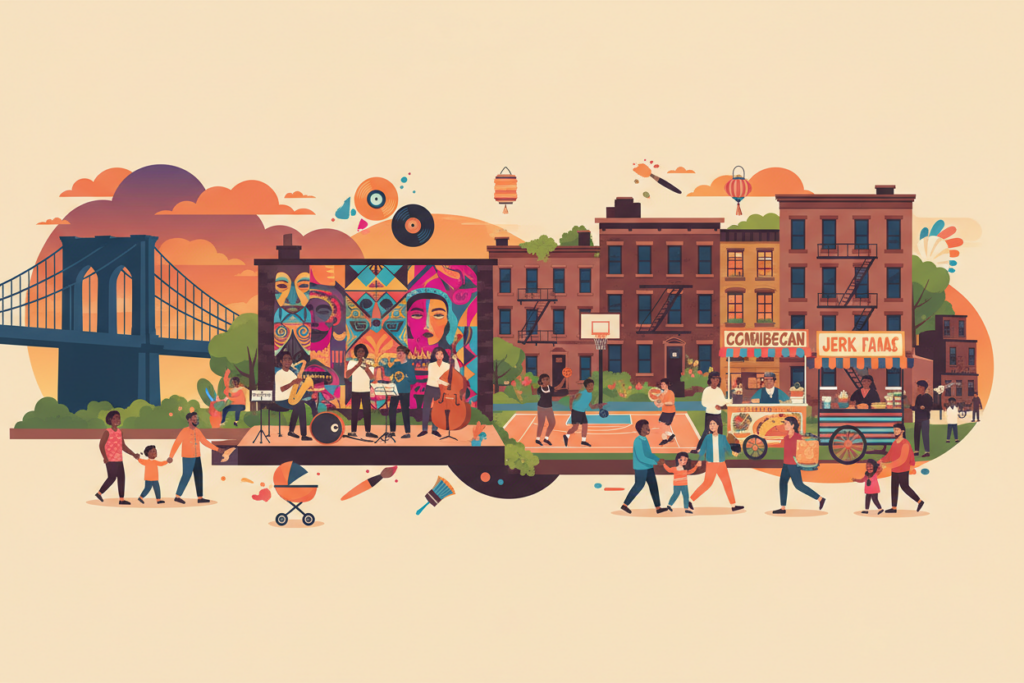
In Bed-Stuy, you’ll find jazz clubs where musicians who grew up in the neighborhood return to play for audiences who’ve known them since childhood. Bushwick’s warehouse spaces host art shows that blur the lines between gallery exhibition and block party. These aren’t carefully curated experiences designed for Instagram – they’re organic expressions of community creativity that happen because artists need spaces to create and neighbors want to support them.
The street art scene exemplifies this grassroots approach. While tourists flock to see Banksy pieces, local residents have been creating murals that tell neighborhood stories for decades. These works address everything from gentrification and police violence to community pride and cultural preservation. They’re not created for art tours – they’re conversations between neighbors painted on walls.
Food Culture That Tells Real Stories
Brooklyn’s food scene extends far beyond the trendy restaurants that make “best of” lists. The borough’s culinary landscape reflects its demographic diversity, with family-owned establishments that have been serving their communities for generations alongside newer ventures that honor traditional techniques while adapting to contemporary tastes.
On 86th Street in Bay Ridge, you can still find Italian bakeries where the recipes haven’t changed in 50 years and the owners remember your grandmother’s usual order. In Brighton Beach, Russian restaurants serve borscht and blini to customers who speak the same language as the servers, creating an atmosphere that feels more like a community gathering than a commercial transaction.
The newer food establishments that get media attention often succeed because they’re rooted in authentic cultural traditions rather than following fleeting trends. The best Jamaican restaurants in Flatbush aren’t trying to appeal to food bloggers – they’re serving the Jamaican community food that tastes like home. When these places gain wider recognition, it’s because their authenticity speaks to something real.
Even the much-maligned artisanal food movement often has deeper roots than critics acknowledge. The small-batch pickle makers and craft brewers aren’t just following trends – many are drawing on family traditions or cultural practices that industrialization pushed aside. They’re part of a broader movement to reconnect with food production methods that prioritize quality and community over mass production.
Music Heritage That Shaped America
Brooklyn’s musical contributions to American culture run deeper than most people realize. This borough didn’t just produce a few famous artists – it helped create entirely new genres and movements that influenced music worldwide. From the early days of hip-hop in the 1970s to the punk scenes of the 1980s and beyond, Brooklyn has consistently been a laboratory for musical innovation.
The hip-hop that emerged from Brooklyn neighborhoods like Bedford-Stuyvesant and East New York wasn’t just music – it was a cultural movement that gave voice to communities that mainstream media had largely ignored. Artists like Notorious B.I.G., Jay-Z, and countless others didn’t just rap about Brooklyn life for artistic effect; they were documenting real experiences and creating a cultural language that resonated far beyond the borough’s borders.
The punk and alternative rock scenes that flourished in venues like CBGB’s (though technically in Manhattan, it drew heavily from Brooklyn musicians and audiences) created a DIY ethos that still influences independent music today. Bands formed in Brooklyn basements and performed in warehouse spaces, creating a music ecosystem that prioritized artistic expression over commercial success.
Today’s music scene continues this tradition of innovation and authenticity. Venues like Baby’s All Right and House of Yes showcase emerging artists alongside established acts, maintaining Brooklyn’s reputation as a place where musical boundaries are pushed and new sounds are born. These aren’t tourist destinations trying to recreate past glory – they’re active parts of a living musical ecosystem.
Community Activism and Social Innovation
Perhaps nothing defines Brooklyn’s cultural character more than its tradition of community activism and social innovation. This borough has always been home to people who organize, advocate, and work to improve their neighborhoods. From tenant organizing in the early 20th century to contemporary environmental justice movements, Brooklyn residents have consistently demonstrated that culture isn’t just about consumption – it’s about participation and change.
The community gardens scattered throughout Brooklyn represent this activist spirit perfectly. These spaces emerged during the fiscal crisis of the 1970s when residents took over abandoned lots and transformed them into productive green spaces. They’re not just pretty additions to the neighborhood – they’re examples of residents taking collective action to address community needs.
Contemporary movements around affordable housing, police accountability, and environmental justice continue this tradition. Organizations like the Brooklyn Movement Center and Make the Road New York don’t just provide services – they build community power and create spaces for residents to advocate for themselves. This activism shapes neighborhood culture just as much as any restaurant or art gallery.
The cooperative movement in Brooklyn also reflects this community-focused approach to culture and economics. From food co-ops that have operated for decades to newer cooperative businesses, Brooklyn residents have consistently sought alternatives to purely commercial relationships, creating institutions that serve community needs rather than just generating profit.
The Real Impact of Gentrification
Any honest discussion of Brooklyn culture must address gentrification – not as a simple story of hipsters displacing longtime residents, but as a complex process that affects different communities in different ways. The narrative that reduces gentrification to young white people moving into previously Black and Latino neighborhoods misses the nuanced reality of how neighborhoods change and how communities respond.
In some areas, new residents have brought resources and attention that benefit longtime residents. New businesses create jobs, increased property values help some homeowners build wealth, and political attention can lead to improved city services. But in other cases, rising costs displace families who’ve lived in neighborhoods for generations, and new businesses cater to newcomers rather than existing residents.
The most successful examples of neighborhood change happen when new and longtime residents find ways to work together rather than existing in parallel. Community land trusts, tenant organizing, and local hiring initiatives represent attempts to ensure that neighborhood improvements benefit everyone rather than just newcomers.
What’s often missing from gentrification discussions is recognition that Brooklyn’s neighborhoods have always been in flux. The Italian families in Bensonhurst replaced earlier Irish residents. The Caribbean communities in Crown Heights moved into areas where Jewish families had previously lived. Change isn’t new – but the pace and scale of contemporary change, driven by broader economic forces, creates different challenges that require thoughtful responses.
Brooklyn’s Cultural Future
Brooklyn’s culture continues to evolve, shaped by new waves of immigration, changing economic conditions, and the ongoing creativity of its residents. The borough’s future cultural development will likely depend on whether it can maintain the community-rooted authenticity that makes it special while adapting to contemporary challenges.
The next generation of Brooklyn artists, activists, and entrepreneurs are already creating new forms of cultural expression that build on the borough’s traditions while addressing current realities. Young people who grew up in Brooklyn are starting businesses that serve their communities, creating art that reflects their experiences, and organizing around issues that matter to their neighbors.
Technology is also playing a role in cultural preservation and innovation. Social media helps small businesses reach customers, community organizations coordinate activities, and artists share their work. But the most meaningful cultural developments still happen through face-to-face interactions in physical spaces where neighbors can connect with each other.
Brooklyn’s cultural richness stems from its ability to be both rooted in tradition and open to change. The borough works best when new influences enhance rather than replace existing cultural foundations. This requires ongoing dialogue between different communities and conscious effort to ensure that Brooklyn’s benefits are shared broadly rather than concentrated among newcomers.
Understanding Brooklyn culture means recognizing that it’s not a performance for outsiders – it’s a living, breathing ecosystem created by people who call this place home. The hipster stereotype captures one small slice of contemporary Brooklyn life, but it misses the deeper currents that make this borough truly special. From immigrant communities preserving traditions to artists creating new forms of expression, from activists organizing for change to entrepreneurs building community-focused businesses, Brooklyn’s culture is defined by people who are invested in this place for the long term.
The next time you visit Brooklyn, look beyond the obvious attractions. Talk to the longtime residents, eat at the family-owned restaurants, attend community events, and explore neighborhoods that don’t make the tourist guides. You’ll discover a cultural landscape that’s far more complex, authentic, and meaningful than any stereotype suggests – a place where real people are creating real culture that extends far beyond any single demographic or trend.