There’s something magical about New Mexico that captures your soul the moment you cross its borders. Maybe it’s the way the golden light dances across ancient mesas at sunset, or how centuries-old adobe walls seem to whisper stories of the past. This isn’t just another southwestern state – it’s a place where three distinct cultures have woven together to create something entirely unique. From the moment I first set foot in Santa Fe’s Plaza, I knew I was somewhere special, somewhere that would challenge everything I thought I knew about American travel destinations.
New Mexico earned its nickname “Land of Enchantment” honestly. Here, you’ll find experiences that simply don’t exist anywhere else in the world. Whether you’re seeking spiritual renewal, culinary adventures, or connections to ancient civilizations, the state offers authentic encounters that will leave you fundamentally changed. Let me share fifteen experiences that truly define what makes New Mexico so extraordinary.
Ancient Puebloan Heritage: Stepping Back in Time
The ruins at Chaco Culture National Historical Park represent one of the most sophisticated pre-Columbian civilizations in North America. Walking among these massive stone structures, some rising four stories high, you’re witnessing architectural achievements that rival anything built in medieval Europe. The precision of the construction, aligned with celestial events, reveals a deep understanding of astronomy that still impresses modern scientists.
At Bandelier National Monument, you can actually climb wooden ladders into ancient cliff dwellings, feeling the smooth stone walls that sheltered families over 700 years ago. The experience becomes deeply personal when you realize you’re touching the same handholds carved by Ancestral Puebloan peoples who called these canyons home.
Living Native American Culture: Pueblo Communities Today
New Mexico hosts 19 Pueblo communities, each maintaining distinct traditions while welcoming respectful visitors. At San Ildefonso Pueblo, you might witness the creation of world-renowned black pottery, a technique passed down through generations. The artists don’t just make pottery – they’re preserving a cultural legacy that connects them to their ancestors.
Taos Pueblo, continuously inhabited for over 1,000 years, offers guided tours where tribal members share their stories directly. Standing before the multi-story adobe buildings, some of the oldest continuously inhabited structures in the United States, you’re not just observing history – you’re experiencing a living culture that has adapted and thrived despite centuries of challenges.
Santa Fe’s Artistic Soul: Where Creativity Flows Like Water
Canyon Road in Santa Fe stretches for nearly a mile, packed with over 100 galleries showcasing everything from traditional Native American art to contemporary sculptures. But this isn’t just about shopping – it’s about understanding how art functions as a living language in New Mexico. Local artists often draw inspiration from the landscape, the light, and the multicultural heritage that surrounds them.
The Georgia O’Keeffe Museum offers intimate insights into how New Mexico’s landscape influenced one of America’s most celebrated artists. O’Keeffe didn’t just paint New Mexico – she became part of it, and her work captures something essential about the state’s spiritual essence that photographs simply cannot convey.
Culinary Fusion: The Holy Trinity of Flavors
New Mexican cuisine represents a unique fusion of Native American, Hispanic, and Anglo influences that creates flavors found nowhere else. The famous question “Red or green?” refers to chile, and your answer becomes a declaration of personal preference that locals take seriously. Green chile, harvested fresh each fall, offers a complex heat that builds slowly, while red chile provides earthier, sometimes fierier notes.
At family-run establishments like El Parasol in Española or Sadie’s of New Mexico in Albuquerque, you’ll taste recipes passed down through generations. These aren’t just restaurants – they’re cultural institutions where food serves as a bridge between past and present, connecting diners to the land and its people.
High Desert Landscapes: Nature’s Grand Theater
White Sands National Park presents an otherworldly landscape of pure gypsum dunes that shift and change with every wind. Walking barefoot across these white crystals at sunset, with the Organ Mountains silhouetted against a purple sky, creates moments of pure magic. The silence here is profound – broken only by the whisper of sand moving in the breeze.
Tent Rocks, formed by volcanic eruptions 6 to 7 million years ago, offers hiking through narrow slot canyons that feel like nature’s own cathedral. The cone-shaped rock formations create a landscape so unique that it’s been featured in countless films, yet experiencing it in person reveals details that no camera can capture.
Spiritual Sanctuaries: Sacred Spaces Across Cultures
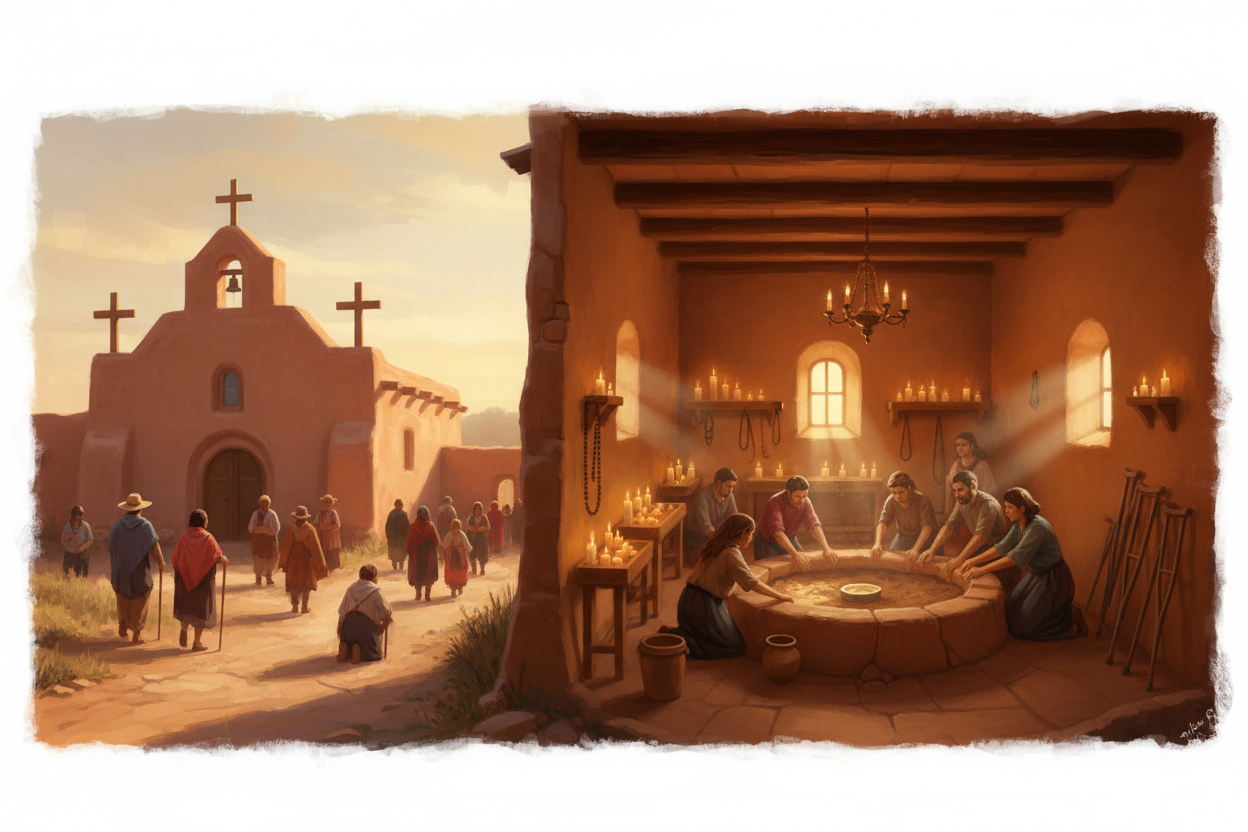
The Santuario de Chimayó, known as the “Lourdes of America,” draws hundreds of thousands of pilgrims annually. Many walk the final miles as an act of devotion, seeking healing from the sacred dirt found in a small room within the chapel. Whether you share the religious beliefs or not, the devotion and faith evident in this place creates a palpable sense of the sacred.
Taos Mountain, considered sacred by Taos Pueblo, dominates the northern horizon with a presence that feels almost sentient. Many visitors report profound spiritual experiences simply sitting quietly in its shadow, watching how the light changes throughout the day.
Artistic Communities: Where Creativity Becomes Lifestyle
Madrid, once a booming coal mining town, transformed itself into an artists’ colony where creativity flourishes in unexpected ways. Walking down the main street, you’ll encounter everything from chainsaw sculptures to delicate jewelry, often created by artists who chose to leave conventional careers for a life dedicated to their craft.
In Galisteo, a small village south of Santa Fe, working artists open their studios to visitors, offering insights into their creative processes. These aren’t tourist attractions – they’re genuine glimpses into how art becomes a way of life in New Mexico’s inspiring environment.
Hot Springs Culture: Natural Healing Waters
Ojo Caliente Mineral Springs Resort has been welcoming visitors to its natural hot springs for over 150 years. The lithia spring, one of only a few in the world, offers waters believed to have healing properties. Soaking in these mineral-rich pools under a canopy of stars, with coyotes calling in the distance, connects you to both the earth and the countless generations who have found healing in these same waters.
Jemez Springs offers a more rustic experience, where you can soak in natural pools along the Jemez River. The contrast between the hot springs and the cool mountain air creates a sensory experience that’s both invigorating and deeply relaxing.
Balloon Fiesta: Sky-High Magic
The Albuquerque International Balloon Fiesta transforms the October sky into a canvas of color and wonder. Standing on the launch field before dawn, surrounded by hundreds of balloons inflating in the darkness, creates an almost surreal atmosphere. When the sun rises and the balloons begin their ascent, the entire Rio Grande Valley becomes a stage for one of the world’s most beautiful spectacles.
But the real magic happens in the basket of a balloon, floating silently above the high desert landscape. The perspective reveals patterns in the land that ground-level views cannot show, offering a unique understanding of how geography, culture, and human settlement interact across New Mexico’s vast spaces.
Archaeological Wonders: Mysteries Waiting to be Solved
Petroglyph National Monument on Albuquerque’s west side preserves over 24,000 petroglyphs created by Ancestral Puebloan peoples and early Hispanic settlers. Walking among these ancient images, you’re engaging with humanity’s earliest form of communication. Each symbol tells a story, though many meanings remain mysteries that continue to puzzle archaeologists.
The Gila Cliff Dwellings in southwestern New Mexico offer a more intimate archaeological experience. The hike to reach these ancient homes through the Gila Wilderness adds an element of adventure, and the remote location means you might have these incredible ruins almost to yourself.
Unique Festivals: Celebrating Cultural Diversity
The burning of Zozobra (Old Man Gloom) during Santa Fe’s Fiesta marks one of the most cathartic community celebrations in America. This 50-foot marionette, stuffed with written worries and troubles from community members, goes up in flames as thousands cheer. The ritual represents a collective release of negativity and a fresh start for the coming year.
Each pueblo’s feast day celebrations offer respectful visitors opportunities to witness traditional dances, taste authentic foods, and observe ceremonies that have continued unbroken for centuries. These aren’t performances for tourists – they’re living expressions of faith and community that welcome respectful observers.
New Mexico doesn’t just offer experiences – it offers transformation. Every encounter with this remarkable state reveals new layers of meaning, whether you’re tasting your first sopapilla, watching sunrise paint the Sangre de Cristo Mountains, or listening to an elder share stories passed down through generations. The Land of Enchantment earns its name by weaving together ancient wisdom, artistic expression, and natural beauty into something that touches the soul.
These fifteen experiences represent just the beginning of what New Mexico offers. Each visit reveals new discoveries, new connections, and new reasons to return. In a world that often feels increasingly homogenized, New Mexico stands as a testament to the power of place, culture, and authentic experience to create something truly magical.
Frequently Asked Questions
What’s the best time to visit New Mexico? Fall (September-November) and spring (March-May) offer ideal weather conditions. Fall brings harvest season and the famous Balloon Fiesta, while spring offers wildflower blooms and comfortable hiking temperatures.
Do I need a permit to visit Pueblo communities? Most pueblos welcome visitors during designated hours, but some require permits for photography or special events. Always check with tribal offices before visiting and respect all posted guidelines.
How spicy is New Mexican chile? Heat levels vary significantly. Green chile ranges from mild to very hot, while red chile tends to be earthier with moderate heat. Don’t hesitate to ask servers about spice levels – they’re usually happy to guide newcomers.
Can I visit archaeological sites independently? Many sites like Bandelier and Chaco offer self-guided trails, but some require guided tours. Always stay on designated paths and never touch or remove artifacts – these sites are protected for future generations.
What should I pack for New Mexico’s high desert climate? Layer clothing for temperature swings, bring sun protection (hat, sunscreen, sunglasses), and pack plenty of water. Even in summer, evenings can be cool at higher elevations.
Are the hot springs suitable for families? Many hot springs welcome families, but check individual policies. Some natural springs may have rustic facilities, while resort springs offer more amenities and controlled temperatures.