
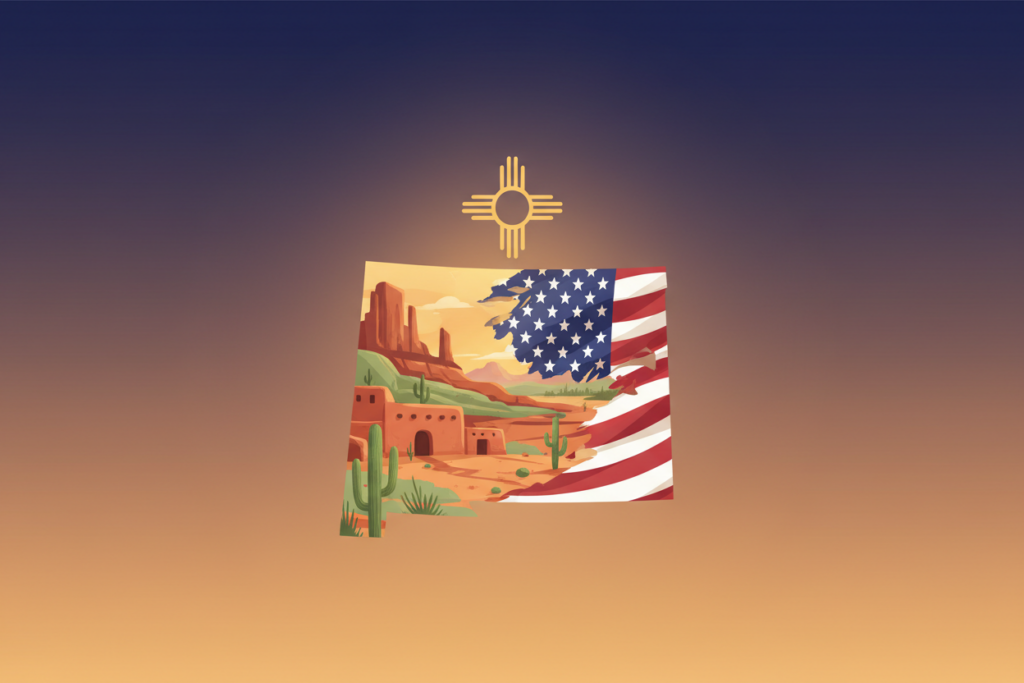
On January 6, 1912, New Mexico officially became the 47th state to join the United States of America, marking the end of a remarkable 62-year journey from territorial status to full statehood. This Land of Enchantment, with its rich cultural tapestry woven from Native American, Hispanic, and Anglo traditions, faced unique challenges and obstacles that made its path to statehood longer and more complex than most other territories.
The story of New Mexico’s statehood is not just about political maneuvering and legislative processes—it’s a fascinating tale of cultural preservation, linguistic diversity, and the struggle to balance federal requirements with local identity. From the Mexican-American War to the signing of the statehood proclamation by President William Howard Taft, New Mexico’s journey reflects the broader American experience of expansion, inclusion, and the ongoing definition of what it means to be American.
The Territorial Years: From Mexican Territory to American Possession
New Mexico’s path to statehood began long before 1912, rooted in the complex history of the American Southwest. Following the Mexican-American War (1846-1848) and the Treaty of Guadalupe Hidalgo, the vast territory that included present-day New Mexico, Arizona, Nevada, Utah, and parts of Colorado became part of the United States. The Compromise of 1850 officially established the Territory of New Mexico, encompassing a massive area that stretched from Texas to California.
Unlike many other American territories that were primarily settled by English-speaking pioneers from the eastern United States, New Mexico presented a unique demographic situation. The territory was home to established Hispanic communities that had been there for centuries, numerous Native American tribes with their own sovereign traditions, and a relatively small but growing Anglo population. This cultural complexity would become both New Mexico’s greatest strength and its biggest challenge in achieving statehood.
The territorial government structure placed New Mexico under federal oversight, with governors appointed by the President and a territorial legislature that had limited powers. While this arrangement was meant to be temporary, lasting only until the territory met the requirements for statehood, New Mexico would remain in this status for over six decades—longer than any other territory except Alaska and Hawaii.
Cultural and Linguistic Barriers to Statehood
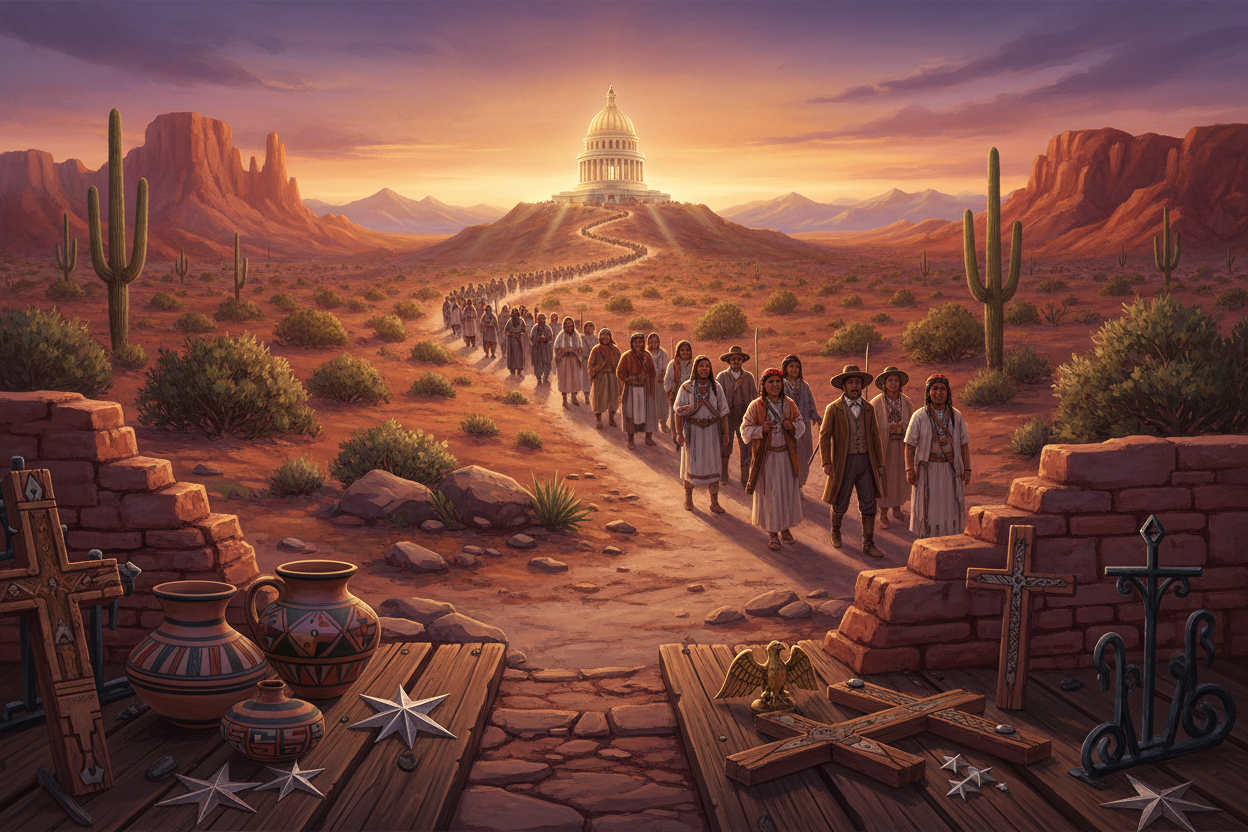
One of the most significant obstacles New Mexico faced in its quest for statehood was the cultural and linguistic composition of its population. By the late 19th century, Spanish remained the dominant language in many parts of the territory, and Hispanic culture was deeply embedded in local customs, legal traditions, and daily life. This reality made many members of Congress uncomfortable, as they questioned whether New Mexico could truly be “American” enough for statehood.
The language issue became particularly contentious during statehood debates in Washington, D.C. Critics argued that a state where English wasn’t universally spoken couldn’t fully participate in American democratic processes. They worried about everything from jury trials conducted in Spanish to the ability of representatives to effectively communicate in Congress. These concerns reflected broader national anxieties about immigration and cultural assimilation that were prevalent during this period of American history.
New Mexico’s supporters, however, argued that linguistic diversity was not incompatible with American citizenship. They pointed to the successful integration of German-speaking communities in Pennsylvania and other states, and they emphasized that many New Mexican families had been in North America longer than most Anglo families. The territory’s delegate to Congress, often serving as the primary advocate for statehood, worked tirelessly to address these concerns while preserving the cultural heritage that made New Mexico unique.
Political Challenges and Congressional Opposition
Beyond cultural concerns, New Mexico faced significant political obstacles in its journey to statehood. The territory’s political landscape was complex, with shifting alliances between Republican and Democratic parties, and local political machines that sometimes prioritized personal interests over statehood goals. Additionally, national politics played a crucial role, as both major parties calculated how New Mexico’s admission might affect the balance of power in Congress.
The Republican Party generally supported New Mexico statehood, believing the territory would likely send Republican representatives to Washington. However, this support wasn’t unconditional, and it fluctuated based on national political considerations and the strength of local Republican organizations. Democrats, while sometimes supportive, were often skeptical about admitting a territory that might strengthen Republican control in the Senate.
Economic factors also influenced the statehood debate. Some members of Congress questioned whether New Mexico had sufficient economic development and population to support the responsibilities of statehood. The territory’s economy, based primarily on ranching, mining, and agriculture, seemed less developed than other successful statehood candidates. Critics worried about the territory’s ability to fund state government operations and contribute meaningfully to the national economy.
The Push for Joint Statehood with Arizona
One of the most controversial chapters in New Mexico’s statehood story was the proposal for joint statehood with Arizona Territory. In 1905, as frustration mounted over the lengthy territorial status, Congress seriously considered admitting New Mexico and Arizona as a single state. This proposal, supported by President Theodore Roosevelt and many Republican leaders, was seen as a way to overcome the objections to each territory individually while ensuring Republican control of the new state’s Senate seats.
The joint statehood proposal required approval from voters in both territories, and it sparked intense debate throughout the Southwest. Supporters argued that a combined state would have greater political influence, a stronger economy, and better prospects for development. They pointed to successful large states like Texas and California as models for what a unified Arizona-New Mexico could achieve.
However, the proposal faced significant opposition in both territories. Many New Mexicans worried about losing their cultural identity in a larger, more diverse state, while Arizonans feared that New Mexico’s Hispanic population and different political traditions would dominate the new state’s politics. The cultural differences between the territories, despite their geographic proximity, made the merger seem unnatural to many residents.
When the joint statehood referendum was held in November 1906, New Mexico voters narrowly approved the measure, but Arizona voters decisively rejected it. This outcome effectively ended the joint statehood experiment and forced both territories to continue pursuing separate paths to statehood.
The Final Push: Overcoming the Last Obstacles
Following the failure of joint statehood, New Mexico’s leaders regrouped and developed a more strategic approach to achieving separate statehood. They worked to address Congressional concerns about language and culture by emphasizing the territory’s loyalty to the United States and its residents’ commitment to American democratic values. The territorial government also made efforts to promote English education while respecting Spanish-speaking communities’ rights.
The election of William Howard Taft as President in 1908 provided new momentum for New Mexico’s statehood cause. Taft was more supportive of southwestern statehood than his predecessor, and he made admission of New Mexico and Arizona a priority of his administration. This presidential support was crucial in overcoming lingering Congressional resistance.
In 1910, Congress finally passed the New Mexico Enabling Act, which outlined the requirements the territory needed to meet for statehood. These included drafting a state constitution, establishing a state government structure, and guaranteeing certain rights and protections. The act also required that the new state constitution include provisions protecting both English and Spanish speakers, reflecting the ongoing importance of the language issue.
New Mexico moved quickly to meet these requirements. A constitutional convention was held in Santa Fe in late 1910, bringing together delegates from across the territory to draft the founding document for the new state. The resulting constitution was notably progressive for its time, including strong protections for civil rights, provisions for women’s suffrage in school elections, and guarantees that Spanish-speaking citizens would have equal rights in legal proceedings.
January 6, 1912: Statehood at Last
After the constitutional convention completed its work and voters approved the new constitution, all that remained was the formal admission process. On January 6, 1912, President William Howard Taft signed the proclamation admitting New Mexico as the 47th state of the United States. The ceremony took place in the White House, with New Mexico’s territorial delegate and other dignitaries present to witness this historic moment.
The news of statehood was celebrated throughout New Mexico with parades, speeches, and festivities. In Santa Fe, the territorial capital that would now become the state capital, crowds gathered to mark the end of 62 years of territorial status. Similar celebrations occurred in Albuquerque, Las Cruces, Roswell, and communities throughout the new state.
The timing of New Mexico’s admission was particularly significant, as Arizona would follow just six weeks later on February 14, 1912, making it the 48th state. This meant that New Mexico had the distinction of being the last of the continental United States to achieve statehood, marking the end of an era in American expansion and territorial organization.
Legacy and Impact of New Mexico Statehood
New Mexico’s journey to statehood set important precedents for cultural diversity and inclusion in American democracy. The state’s constitution, with its protections for Spanish-speaking citizens and recognition of the territory’s multicultural heritage, demonstrated that American identity could encompass different languages and traditions while maintaining unity and shared democratic values.
The lengthy territorial period, while frustrating for New Mexicans at the time, ultimately allowed the region to develop its own unique political culture and institutions. This extended preparation period may have contributed to New Mexico’s relatively smooth transition to statehood and its ability to maintain political stability in its early years as a state.
Today, New Mexico’s statehood story continues to resonate as the United States grapples with questions of diversity, inclusion, and what it means to be American. The state’s experience shows that cultural preservation and national unity are not mutually exclusive, and that American democracy can be strengthened by embracing rather than suppressing regional differences and traditions.
Conclusion
The story of New Mexico’s path to statehood is ultimately a story about perseverance, cultural pride, and the evolving nature of American identity. For 62 years, the people of New Mexico worked toward the goal of full participation in American democracy while fighting to preserve the cultural heritage that made their region unique. Their success in achieving statehood without sacrificing their distinctive identity offers valuable lessons for contemporary discussions about diversity and inclusion in American society.
From the Mexican-American War through the territorial period to the final achievement of statehood on January 6, 1912, New Mexico’s journey reflects the broader American experience of growth, change, and the ongoing effort to form a more perfect union. The 47th state’s story reminds us that the American experiment has always been about balancing unity with diversity, and that our nation’s strength comes not from uniformity but from our ability to embrace and celebrate our differences while working toward common goals.
As we look back on New Mexico’s statehood more than a century later, we can appreciate not just the political achievement it represented, but also the cultural victory it embodied—proof that America’s promise of equality and opportunity could extend to all its people, regardless of their language, heritage, or traditions.
Frequently Asked Questions
Why did it take New Mexico 62 years to achieve statehood?
New Mexico’s path to statehood was delayed by several factors, including concerns about the territory’s large Spanish-speaking population, questions about cultural assimilation, political considerations in Congress, and economic development issues. The territory also faced the unique challenge of the failed joint statehood proposal with Arizona in 1906.
What was the joint statehood proposal with Arizona?
In 1905, Congress proposed admitting New Mexico and Arizona as a single state called “Arizona.” While New Mexico voters narrowly approved this plan in 1906, Arizona voters decisively rejected it, forcing both territories to pursue separate statehood.
What role did language play in New Mexico’s statehood debate?
The prevalence of Spanish as a primary language in much of New Mexico created concerns among some members of Congress about the territory’s readiness for statehood. Critics worried about conducting government business and legal proceedings in Spanish, though supporters argued that linguistic diversity was compatible with American citizenship.
Who was the President when New Mexico became a state?
President William Howard Taft signed the proclamation admitting New Mexico as the 47th state on January 6, 1912. Taft was a strong supporter of southwestern statehood and made the admission of New Mexico and Arizona a priority of his administration.
How did New Mexico’s constitution address cultural concerns?
New Mexico’s 1910 constitution included progressive provisions protecting the rights of both English and Spanish speakers, guaranteeing equal treatment in legal proceedings regardless of language, and recognizing the state’s multicultural heritage while affirming loyalty to the United States.
What happened to Arizona during New Mexico’s statehood process?
Arizona followed New Mexico’s path and became the 48th state on February 14, 1912, just six weeks after New Mexico’s admission. Both territories benefited from President Taft’s support for southwestern statehood.