The dusty mesas and red rock canyons of the American Southwest have been home to some of the world’s most extraordinary pottery traditions for over a thousand years. From the ancient Ancestral Puebloans who first shaped clay vessels in hidden alcoves to today’s celebrated ceramic artists whose works grace museum collections worldwide, Southwestern pottery represents an unbroken chain of cultural expression, technical innovation, and artistic mastery.
What makes Southwestern pottery so captivating isn’t just its stunning visual appeal—though the intricate geometric patterns and rich earth tones certainly draw the eye. It’s the profound connection between artist and landscape, the way each piece tells a story of survival, adaptation, and creative evolution that spans centuries. Whether you’re a collector, an art enthusiast, or simply someone who appreciates handcrafted beauty, understanding these pottery traditions opens a window into one of North America’s most enduring artistic legacies.
The Ancient Foundations of Southwestern Pottery
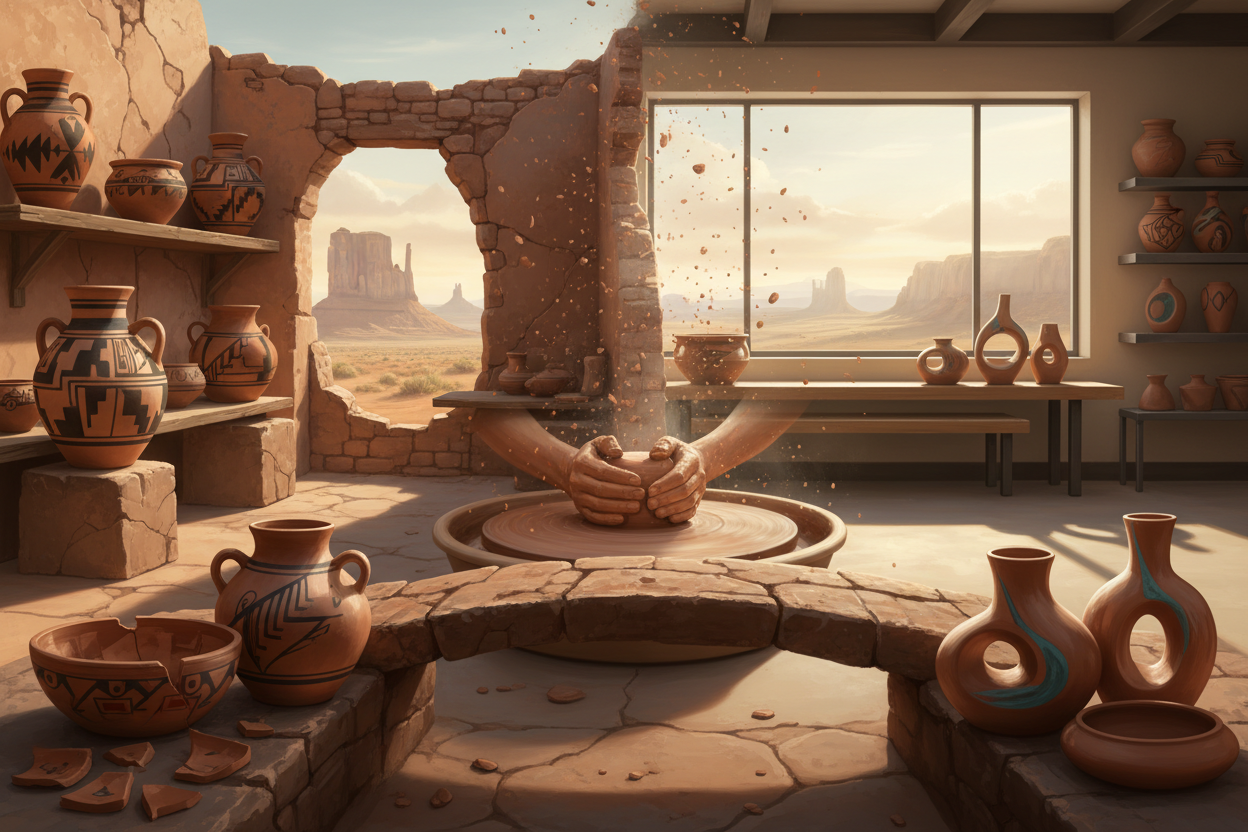
Long before European explorers set foot in the Southwest, indigenous peoples were creating sophisticated ceramic vessels that served both practical and ceremonial purposes. The earliest pottery fragments found in the region date back to around 500 CE, marking the beginning of what archaeologists call the “Ceramic Period” in Southwestern prehistory.
The Ancestral Puebloans, formerly known as the Anasazi, were among the first master potters of the region. Living in the Four Corners area where Utah, Colorado, Arizona, and New Mexico meet, these skilled artisans developed techniques that would influence pottery making for generations to come. They discovered that the local clay, rich in iron oxide, could be transformed into durable vessels when fired at high temperatures in outdoor kilns.
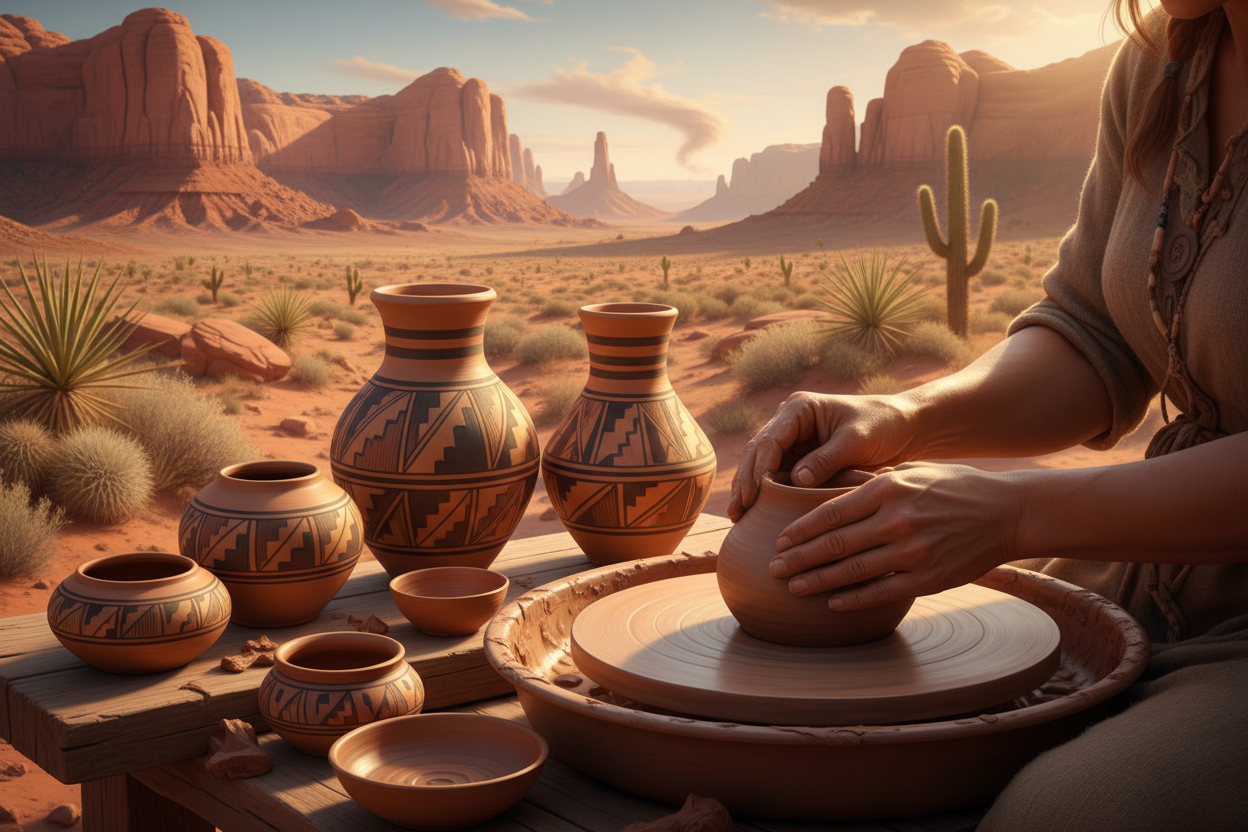
What’s remarkable about these ancient potters is how they solved complex technical challenges without modern tools or scientific understanding of ceramic chemistry. They learned through experimentation and observation that adding crushed pottery shards (called temper) to clay made it stronger and less likely to crack during firing. They developed slip techniques to create smooth surfaces and discovered natural pigments that could withstand the intense heat of firing.
Archaeological evidence reveals that pottery wasn’t just utilitarian—it was deeply woven into the social and spiritual fabric of these communities. Large storage jars held precious water and grain, while smaller vessels served food and drink during communal gatherings. Ceremonial pieces, often elaborately decorated, played important roles in religious rituals and seasonal celebrations.
Traditional Techniques That Endure
The pottery techniques developed by ancient Southwestern peoples weren’t just effective—they were so well-adapted to the environment and available materials that many remain virtually unchanged today. Traditional Southwestern pottery making is a labor-intensive process that demands patience, skill, and deep respect for natural materials.
The process begins with clay gathering, often from specific locations that have been used by families for generations. Potters know exactly where to find clay with the right plasticity and mineral content for their work. This clay is then cleaned, removing rocks and organic matter, before being mixed with temper—traditionally crushed pottery shards, though some potters also use sand or crushed volcanic rock.
Unlike pottery made on wheels, traditional Southwestern vessels are hand-built using the coil-and-scrape method. Long snakes of clay are coiled to build up the walls of the pot, then carefully smoothed and shaped using gourd scrapers and other simple tools. This technique allows for incredible precision and enables potters to create forms ranging from delicate seed jars to massive storage vessels.
The decoration process is equally meticulous. Traditional designs are painted using brushes made from yucca fibers and natural pigments derived from plants and minerals. Iron-rich clays create reds and oranges, while manganese produces deep blacks. These pigments are applied in layers, with each layer needing to dry completely before the next is added.
Firing remains one of the most critical and unpredictable aspects of traditional pottery making. Pots are typically fired outdoors using wood or dried animal dung as fuel. The potter must carefully control temperature and oxygen levels throughout the firing process, which can take many hours. The slightest miscalculation can result in cracked or discolored pieces, making each successful firing a small miracle.
Regional Styles and Cultural Significance
One of the most fascinating aspects of Southwestern pottery is how distinct regional styles developed, each reflecting the unique cultural identity and environmental conditions of different pueblo communities. These styles aren’t just aesthetic choices—they’re expressions of tribal identity, family heritage, and spiritual beliefs.
Acoma Pueblo pottery, for instance, is renowned for its paper-thin walls and intricate geometric patterns. Acoma potters developed techniques for creating vessels so thin they’re almost translucent, yet remarkably strong. The traditional white slip background decorated with fine black lines creates designs that seem to dance around the curved surfaces of jars and bowls.
Hopi pottery from northeastern Arizona showcases a different aesthetic entirely. Hopi potters are famous for their polychrome vessels featuring stylized birds, clouds, and other natural elements. The yellow and orange clays found near Hopi mesas create distinctive background colors that you won’t find in pottery from other regions. Many Hopi designs carry deep spiritual significance, representing prayers for rain, good harvests, or protection.
Santa Clara Pueblo has become synonymous with black pottery, particularly the innovative carved blackware developed by master potter Maria Martinez and her family in the early 20th century. This technique involves creating matte designs on polished black surfaces through careful control of firing conditions, producing vessels of stunning elegance and sophistication.
Each pueblo maintains its own design traditions, passed down through families and closely guarded as cultural treasures. Young potters learn not just techniques but also the cultural significance of different patterns, the proper times to create certain types of vessels, and the spiritual responsibilities that come with being a keeper of these ancient traditions.
The Evolution to Contemporary Art
While traditional techniques and cultural significance remain at the heart of Southwestern pottery, the art form has also evolved dramatically over the past century. This evolution hasn’t meant abandoning tradition—instead, it’s represented a creative expansion that honors the past while embracing new possibilities.
The transformation began in earnest during the early 1900s when anthropologists, collectors, and art dealers began taking serious interest in Native American pottery. This outside attention brought both opportunities and challenges. On one hand, it created markets that allowed potters to make living wages from their art. On the other hand, it sometimes led to pressure to create pieces that appealed to non-Native buyers rather than serving traditional community needs.
Many contemporary Southwestern potters have found ways to bridge this gap, creating works that satisfy both artistic vision and market demands while maintaining cultural integrity. Some have expanded traditional forms, creating larger or more complex pieces than would have been practical for everyday use. Others have experimented with new decorative techniques while staying within the bounds of traditional materials and methods.
The rise of pottery as fine art has also led to increased recognition for individual artists. Where traditional pottery was often anonymous, created for community use rather than personal expression, contemporary Southwestern pottery celebrates the unique vision and technical mastery of individual makers. This shift has elevated pottery from craft to art, with pieces by renowned potters commanding prices comparable to paintings or sculptures.
Educational institutions and cultural centers have played crucial roles in this evolution, providing spaces where traditional knowledge can be preserved and passed on while also encouraging innovation and experimentation. Programs at places like the Institute of American Indian Arts in Santa Fe have helped train new generations of Native artists who understand both traditional techniques and contemporary art world contexts.
Modern Masters and Innovation
Today’s Southwestern pottery scene includes artists who have achieved international recognition while remaining deeply rooted in their cultural traditions. These modern masters demonstrate that innovation and tradition aren’t opposing forces—they can work together to create art that’s both authentically Native and thoroughly contemporary.
Artists like Tammy Garcia of Santa Clara Pueblo have pushed the boundaries of traditional forms while maintaining cultural authenticity. Her large-scale pieces feature traditional carved designs but in sizes and configurations that challenge conventional expectations. Similarly, potters like Nathan Begaye have incorporated contemporary themes and imagery into traditional Navajo pottery forms, creating pieces that speak to modern Native experiences while honoring ancestral techniques.
The innovation isn’t just in design—it’s also in technique and scale. Some contemporary potters create massive installations that would have been impossible using traditional firing methods. Others have developed new approaches to traditional techniques, finding ways to achieve effects that earlier potters could only dream of.
What’s particularly exciting about the current generation of Southwestern potters is their commitment to education and cultural preservation. Many established artists teach workshops, mentor young potters, and work with museums and cultural centers to ensure that traditional knowledge isn’t lost. They understand that their role extends beyond creating beautiful objects—they’re also cultural ambassadors and tradition keepers.
The internet and social media have also transformed how Southwestern pottery reaches audiences. Potters can now share their work directly with collectors worldwide, tell the stories behind their pieces, and educate people about the cultural significance of their art. This direct connection has helped combat stereotypes and misconceptions while building appreciation for the sophistication and depth of Southwestern pottery traditions.
Collecting and Appreciating Southwestern Pottery
For those interested in collecting or simply appreciating Southwestern pottery, understanding what to look for can greatly enhance the experience. Authentic pieces reflect not just technical skill but also cultural knowledge and artistic vision. The best Southwestern pottery combines traditional techniques with personal expression, creating works that are both culturally significant and artistically compelling.
When evaluating pottery, consider the quality of construction first. Traditional hand-building techniques should be evident—look for the subtle irregularities that show human touch rather than machine precision. The clay should be well-prepared and properly fired, with no cracks or weak spots. Surface decoration should be crisp and carefully applied, with natural pigments that have achieved their intended colors through proper firing.
Provenance matters enormously in Southwestern pottery. Authentic pieces should come with clear information about the artist, their tribal affiliation, and the techniques used. Many contemporary potters sign their work, and established artists often have documentation or certificates of authenticity. Be wary of pieces claimed to be “traditional” but lacking specific attribution—authentic traditional pottery is increasingly rare and valuable.
The investment potential of Southwestern pottery has grown significantly over recent decades. Works by recognized masters like Maria Martinez, Lucy Lewis, or Margaret Tafoya have achieved auction prices in the tens of thousands of dollars. However, collecting should be driven by appreciation rather than just investment potential. The joy of owning a piece of Southwestern pottery comes from understanding its cultural significance and artistic achievement.
Proper care and display are essential for preserving pottery collections. These pieces should be kept away from direct sunlight, which can fade natural pigments over time. Temperature and humidity fluctuations can cause clay to expand and contract, potentially leading to cracks. When handling pottery, always support the base rather than lifting by handles or rims, which may be more fragile than they appear.
Frequently Asked Questions
How can I tell if a piece of Southwestern pottery is authentic?
Authentic Southwestern pottery should show evidence of hand-building techniques, use natural materials, and come with clear provenance information about the artist and their tribal affiliation. Look for subtle irregularities that indicate human craftsmanship rather than machine production, and be wary of pieces that seem too perfect or uniform.
What makes Southwestern pottery different from other ceramic traditions?
Southwestern pottery is distinguished by its hand-building techniques (no potter’s wheel), use of natural local materials, outdoor firing methods, and distinctive regional design styles that reflect specific tribal cultures. The geometric patterns and earth-tone colors are also characteristic of the region’s aesthetic traditions.
Are contemporary Southwestern potters still using traditional techniques?
Many contemporary potters continue to use traditional hand-building, natural materials, and outdoor firing techniques while also incorporating innovative designs or larger scales. The best contemporary work honors traditional methods while allowing for personal artistic expression.
How long does it take to make a traditional Southwestern pot?
The time varies greatly depending on size and complexity, but a typical hand-built pot can take anywhere from several days to several weeks. This includes time for gathering and preparing clay, building the form, decorating, drying, and firing. Large or elaborately decorated pieces may take months to complete.
What should I expect to pay for authentic Southwestern pottery?
Prices vary enormously based on the artist’s reputation, the size and complexity of the piece, and its age. Work by emerging artists might start at a few hundred dollars, while pieces by established masters can cost thousands or even tens of thousands of dollars. Antique pieces with clear provenance command premium prices.
Can I visit working pottery studios in the Southwest?
Many pueblos welcome visitors and have galleries or cultural centers where you can see pottery being made and purchase directly from artists. However, it’s important to be respectful of cultural protocols and understand that some areas may be restricted or require permission to visit.
The enduring appeal of Southwestern pottery lies in its perfect marriage of function and beauty, tradition and innovation. These vessels carry within their clay walls the stories of ancient peoples who learned to transform earth and fire into art, and of contemporary artists who continue to honor that legacy while pushing creative boundaries. Whether displayed in a museum or used in daily life, each piece of Southwestern pottery serves as a bridge between past and present, connecting us to one of humanity’s oldest and most essential crafts.
As we look toward the future, Southwestern pottery traditions seem secure in the hands of dedicated artists who understand their role as both creators and cultural stewards. Their work ensures that these ancient techniques will continue to evolve and inspire, creating new masterpieces while honoring the wisdom of generations past.