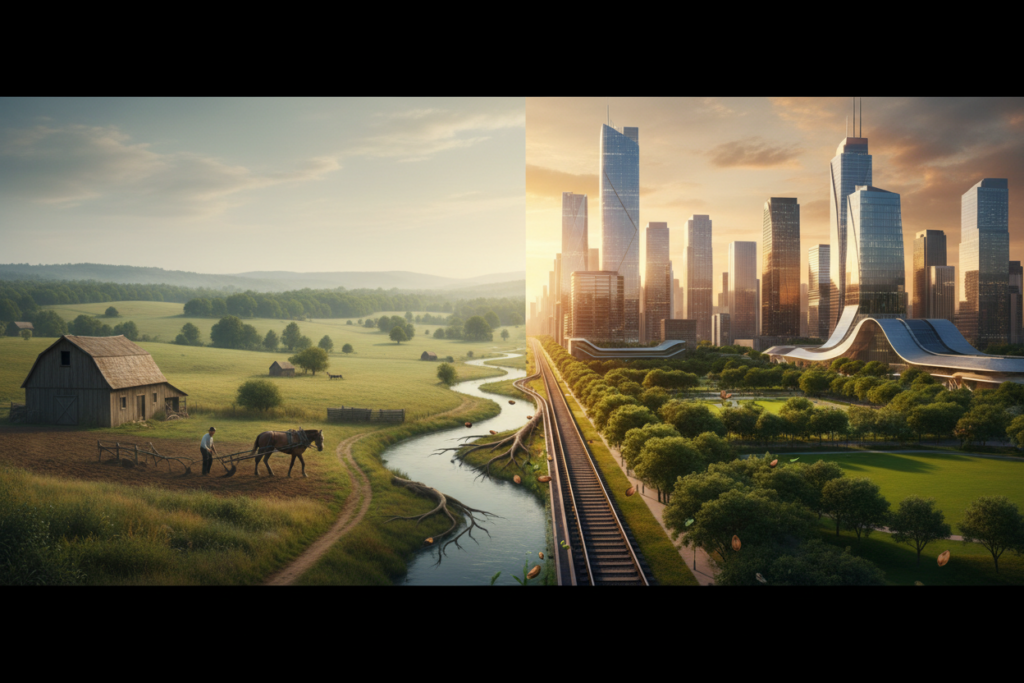
The Bronx stands today as a vibrant testament to urban transformation, but its journey from rolling farmland to bustling borough tells one of America’s most compelling stories of change. This northernmost borough of New York City has weathered decades of evolution, challenge, and renewal, emerging as a cultural powerhouse that continues to shape the American narrative. Let’s dive deep into the fascinating history of how pastoral fields became the birthplace of hip-hop and home to iconic landmarks like Yankee Stadium.
The Agricultural Roots: When the Bronx Was Green
Before skyscrapers pierced the skyline and subway trains rumbled beneath busy streets, the Bronx was a patchwork of fertile farmland and quiet rural communities. In the 17th and 18th centuries, Dutch and English settlers established sprawling farms across what would eventually become one of New York’s most densely populated areas.
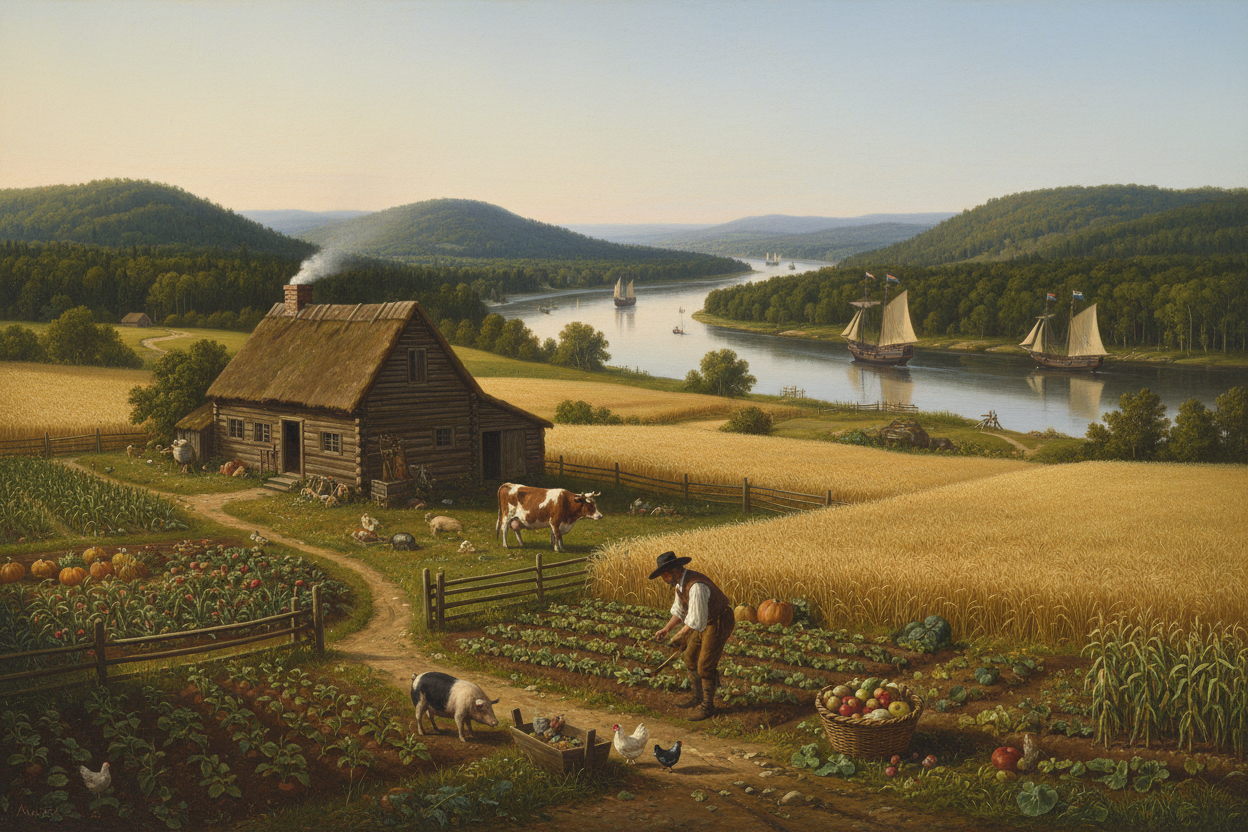
The Bronck family, for whom the borough would eventually be named, operated one of the most successful farming operations in the region. Jonas Bronck, a Swedish settler, purchased 500 acres of land from the Dutch West India Company in 1639, establishing what locals called “Bronck’s Land” or “the Broncks.” His farm stretched along the Harlem River, where he grew crops and raised livestock that fed the growing population of New Amsterdam.
These early agricultural communities weren’t isolated outposts. The Bronx River provided a natural highway for transporting goods, while Native American trails crisscrossed the landscape, connecting settlements and facilitating trade. Farmers here supplied fresh produce, dairy products, and meat to Manhattan’s markets, establishing economic relationships that would prove crucial as urbanization accelerated.
The Transportation Revolution: Rails, Roads, and Rapid Growth
The mid-19th century brought dramatic changes that would forever alter the Bronx landscape. The arrival of railroad lines in the 1840s and 1850s marked the beginning of the end for the area’s agricultural character. The New York and Harlem Railroad, followed by other rail lines, connected the Bronx directly to Manhattan, making it an attractive destination for city workers seeking more space and cleaner air.
Suddenly, what had been a day’s journey by horse and wagon became a comfortable commute by train. Developers recognized the opportunity, and farmland began disappearing beneath new residential neighborhoods. The transformation wasn’t immediate, but it was inexorable. By the 1870s, entire farming communities had given way to suburban developments designed to house Manhattan’s growing middle class.
The construction of the Third Avenue Elevated Railway in 1888 accelerated this process exponentially. Now residents could live in the Bronx and work in Manhattan with unprecedented ease. Real estate speculation reached fever pitch, and the remaining farms found themselves surrounded by streets, houses, and commercial districts.
Becoming a Borough: The Great Consolidation of 1898
The year 1898 represents a pivotal moment in Bronx history. When New York City consolidated its five boroughs, the Bronx officially became part of the greater metropolitan area. This political transformation brought city services, infrastructure investment, and urban planning to what had previously been a collection of separate towns and rural areas.
The consolidation triggered massive infrastructure projects that would define the modern Bronx. New water systems, electric grids, and transportation networks connected previously isolated communities. The Grand Concourse, designed as the “Champs-Élysées of the Bronx,” became a magnificent boulevard lined with Art Deco apartment buildings that attracted middle-class families seeking urban sophistication with suburban comfort.
During this period, the Bronx experienced its first major wave of immigration. Irish, Italian, and Jewish families moved north from Manhattan’s crowded tenements, establishing vibrant ethnic neighborhoods that would become the foundation of the borough’s cultural identity. Each group brought traditions, foods, and customs that enriched the Bronx’s developing character.
The Golden Age: Culture, Sports, and Community
The early to mid-20th century marked what many consider the Bronx’s golden age. This era saw the construction of iconic landmarks that would become symbols of American culture. Yankee Stadium, built in 1923, earned the nickname “The House That Ruth Built” and established the Bronx as a pilgrimage destination for baseball fans worldwide.
The Bronx Zoo, which opened in 1899, grew into one of the world’s premier zoological institutions. The New York Botanical Garden became a center for scientific research and public education. These institutions didn’t just serve the local community; they attracted visitors from across the globe and established the Bronx as a cultural destination.
Residential development during this period reflected the optimism and prosperity of the era. The Grand Concourse became lined with elegant apartment buildings featuring Art Deco facades, modern amenities, and spacious layouts. Middle-class families found in the Bronx the perfect balance between urban convenience and suburban tranquility.
Challenges and Decline: The Mid-Century Crisis
The post-World War II era brought significant challenges that tested the Bronx’s resilience. White flight to the suburbs, combined with discriminatory housing practices and disinvestment, led to economic decline in many neighborhoods. The construction of the Cross-Bronx Expressway in the 1950s and 1960s, while improving regional transportation, divided communities and displaced thousands of residents.
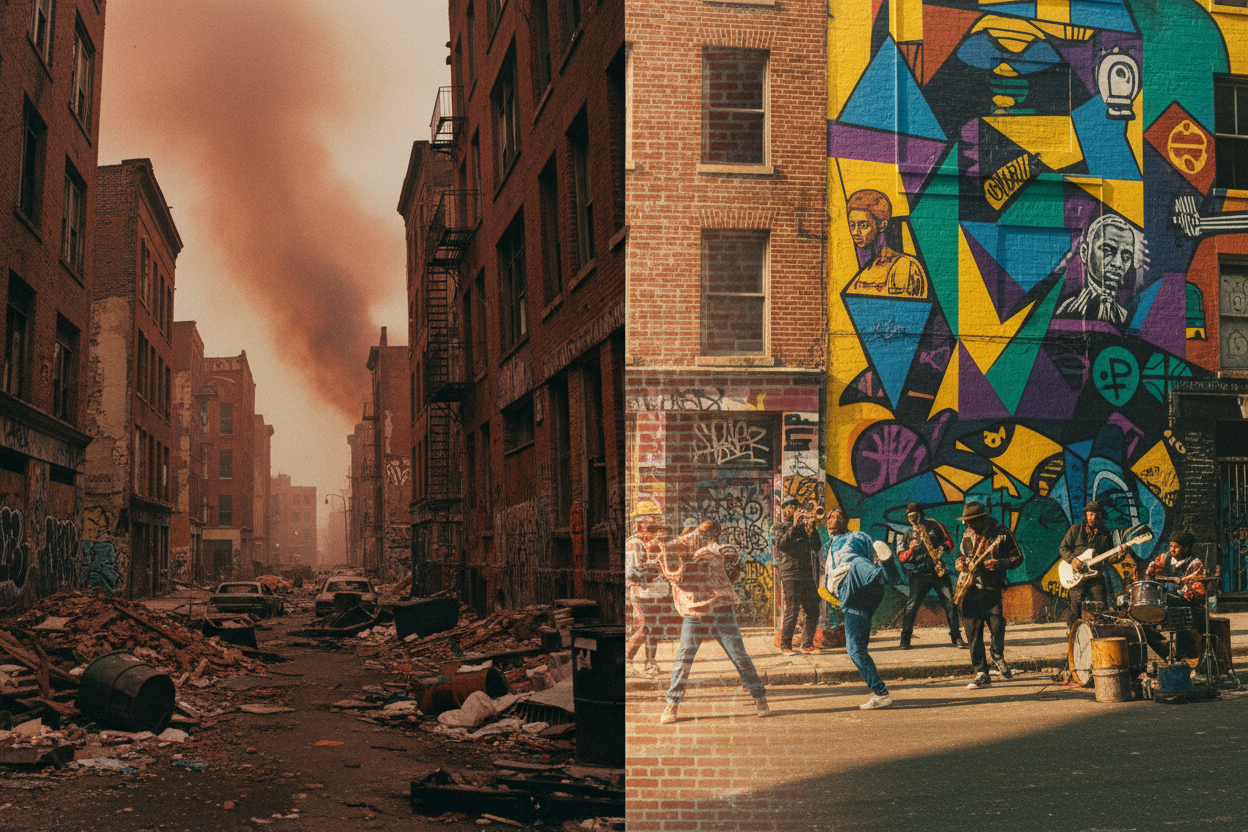
By the 1970s, parts of the Bronx had become synonymous with urban decay. Abandoned buildings, crime, and poverty created a narrative of decline that overshadowed the borough’s rich history and ongoing contributions to American culture. The phrase “The Bronx is burning” became a national symbol of urban crisis, though it painted an incomplete picture of a borough that was simultaneously experiencing cultural renaissance.
Even during these difficult decades, the Bronx continued to innovate and create. The birth of hip-hop culture in the 1970s, pioneered by artists like DJ Kool Herc in the West Bronx, would eventually become a global phenomenon. This musical and cultural movement emerged from the very communities that mainstream media had written off, proving the enduring creative spirit of Bronx residents.
Renaissance and Renewal: The Modern Bronx Emerges
The late 20th and early 21st centuries have witnessed a remarkable transformation in the Bronx. Community organizations, local leaders, and residents have worked tirelessly to rebuild neighborhoods, attract investment, and celebrate the borough’s unique identity. This grassroots renewal movement has yielded impressive results.
The South Bronx, once a symbol of urban decay, now features new housing developments, cultural institutions, and thriving businesses. The Bronx Museum of the Arts has become a showcase for contemporary culture, while the redevelopment of the Yankee Stadium area has created new economic opportunities and community spaces.
Today’s Bronx reflects incredible diversity, with residents representing cultures from across Latin America, Africa, Asia, and beyond. This multicultural character has created a vibrant food scene, dynamic arts community, and entrepreneurial energy that drives continued growth and innovation.
Looking Forward: The Bronx as Urban Paradise
The transformation from farmland to urban paradise represents more than just physical change; it reflects the adaptability and resilience of communities facing constant evolution. Today’s Bronx successfully balances urban density with green spaces, preserving parks and waterfront areas that provide residents with access to nature within the city.
Recent developments include the expansion of the Metro-North Railroad service, which will improve connections to Manhattan and other regions. Waterfront redevelopment projects are creating new recreational opportunities along the Harlem and Bronx Rivers. These investments, combined with ongoing community-led initiatives, position the Bronx for continued growth and prosperity.
The borough’s universities and cultural institutions continue to attract students, researchers, and visitors from around the world. Fordham University, the Albert Einstein College of Medicine, and other educational institutions contribute to the Bronx’s reputation as a center for learning and innovation.
Conclusion: A Legacy of Transformation
The story of the Bronx from farmland to urban paradise illustrates the dynamic nature of American cities and the power of communities to shape their own destinies. This remarkable transformation reminds us that urban development isn’t just about buildings and infrastructure; it’s about people, culture, and the endless human capacity for reinvention.
As we look at today’s Bronx, with its world-class cultural institutions, diverse neighborhoods, and innovative spirit, we see not just the end result of historical processes, but an ongoing story of growth and change. The borough continues to evolve, welcoming new residents while honoring its rich past, creating spaces where tradition and innovation coexist.
The Bronx’s journey from pastoral farmland to vibrant urban center offers lessons for cities everywhere about resilience, community engagement, and the importance of preserving cultural identity amid rapid change. It stands as proof that with vision, investment, and community commitment, any neighborhood can transform challenges into opportunities and write new chapters in the ongoing story of American urban life.