
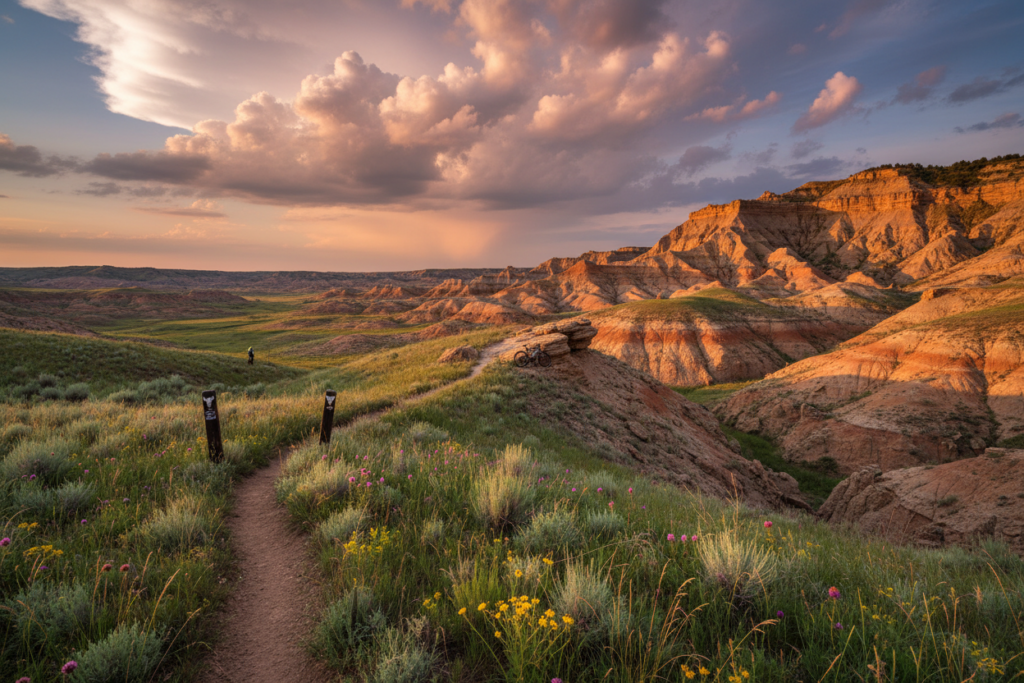
Hidden within the rugged badlands of North Dakota lies one of America’s most spectacular yet underrated outdoor treasures. The Maah Daah Hey Trail, stretching 144 miles through some of the most dramatic landscape in the Midwest, offers adventurers an unparalleled backcountry experience that rivals any trail in the continental United States. Whether you’re seeking a challenging mountain bike ride, an epic hiking adventure, or simply want to immerse yourself in pristine wilderness, this remarkable trail delivers an unforgettable journey through America’s heartland.
Named after a Mandan phrase meaning “an area that has been or will be around for a long time,” the Maah Daah Hey Trail truly lives up to its moniker. This single-track trail winds through Theodore Roosevelt National Park and surrounding public lands, showcasing the same breathtaking badlands that once captivated our 26th president and shaped his conservation philosophy.
The Trail That Time Built: History and Development
The Maah Daah Hey Trail didn’t appear overnight. Its creation represents decades of collaborative effort between the U.S. Forest Service, National Park Service, and countless volunteers who shared a vision of creating something extraordinary in North Dakota’s badlands. Construction began in the 1990s, with the trail officially opening in sections throughout the early 2000s.
What makes this trail particularly special is how it seamlessly connects different public land units. Starting near Medora and extending north to the CCC Campground near Watford City, the trail creates a continuous corridor through some of North Dakota’s most pristine wilderness areas. The trail builders carefully designed each section to minimize environmental impact while maximizing the spectacular views and challenging terrain that make this route so memorable.
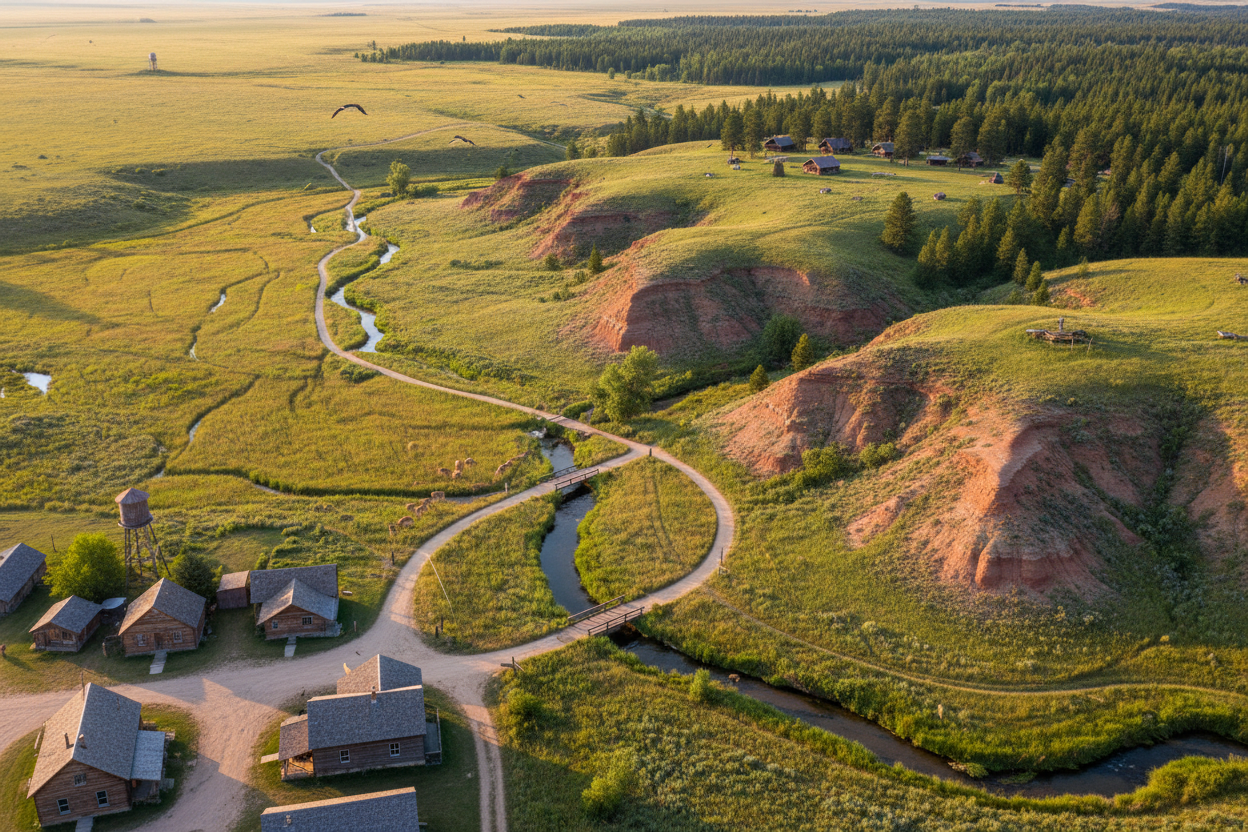
The development process involved extensive collaboration with local communities, ensuring that the trail would benefit both visitors and residents. Today, the Maah Daah Hey Trail stands as a testament to what’s possible when passionate individuals work together to create something truly remarkable for future generations.
Trail Highlights: What Makes Maah Daah Hey Special
The diversity of landscapes along the Maah Daah Hey Trail is simply staggering. As you traverse the 144-mile route, you’ll encounter towering buttes, deep canyons, rolling grasslands, and dense woodlands. The trail’s elevation changes are dramatic, with some sections climbing over 400 feet in just a few miles, providing both challenging terrain and rewarding panoramic views.
One of the most striking features is the colorful sedimentary rock formations that define the badlands. These layers tell a geological story spanning millions of years, with bands of red, yellow, and gray creating a natural artwork that changes with the light throughout the day. Wildlife viewing opportunities are exceptional, with chances to spot bison, elk, deer, prairie dogs, and over 200 bird species.
The trail’s remote sections offer something increasingly rare in our connected world: true solitude. There are stretches where you might not see another person for hours, allowing for deep connection with nature and genuine wilderness experience. The night skies here are particularly spectacular, with minimal light pollution revealing stars in their full glory.
Planning Your Maah Daah Hey Adventure
Successfully tackling the Maah Daah Hey Trail requires careful planning, regardless of whether you’re attempting the full 144-mile route or exploring shorter sections. The trail is designed primarily for mountain biking and hiking, with equestrian use permitted on certain segments. Most visitors choose to experience the trail over multiple days, taking advantage of designated camping areas and nearby accommodations.
Water availability is perhaps the most critical planning consideration. The badlands environment can be harsh, with limited natural water sources along much of the route. Successful adventurers plan their water resupply carefully, utilizing the few reliable sources and carrying sufficient supplies for dry stretches. Cache systems and support vehicles are common strategies for longer expeditions.
Weather conditions can change rapidly in this region, making appropriate gear selection essential. Summer temperatures can soar above 100 degrees, while spring and fall weather can be unpredictable with sudden storms. Winter conditions make most of the trail impassable, so the prime season runs from late spring through early fall.
Best Sections for Different Skill Levels
The beauty of the Maah Daah Hey Trail lies in its accessibility to adventurers of varying skill levels. Beginners often start with the southern sections near Theodore Roosevelt National Park’s South Unit, where the terrain is challenging but manageable, and bailout options are more readily available.
Intermediate adventurers gravitate toward the middle sections, which offer some of the trail’s most spectacular scenery while providing a good balance of challenge and accessibility. These sections feature the classic badlands terrain that makes the trail famous, with rolling hills, scenic overlooks, and diverse ecosystems.
Advanced users seeking the ultimate challenge tackle the northern sections, where the trail becomes more remote and technically demanding. These areas require self-sufficiency and advanced navigation skills, but they reward experienced adventurers with some of the most pristine wilderness experiences available in the continental United States.
Day hikers and casual mountain bikers can enjoy numerous shorter segments that provide a taste of what makes this trail special without requiring multi-day commitments. Popular day trips include loops around the Burning Coal Vein and sections near the Elkhorn Ranch site.
Wildlife and Natural Wonders
The Maah Daah Hey Trail serves as a wildlife corridor connecting diverse habitats across the badlands ecosystem. Bison herds roam freely through Theodore Roosevelt National Park sections, creating unforgettable encounters for trail users. These magnificent animals, once nearly extinct, now thrive in their native habitat and represent one of America’s greatest conservation success stories.
Prairie dog towns dot the landscape, providing entertainment and ecological education opportunities. These “ecosystem engineers” create habitat for numerous other species while demonstrating the interconnected nature of grassland ecosystems. Hawks, eagles, and other raptors soar overhead, hunting the abundant small mammals that call the badlands home.
The plant life along the trail is equally impressive, with over 400 species documented in the area. Spring wildflowers create spectacular displays, while hardy prairie grasses demonstrate remarkable adaptation to the challenging climate. Juniper and cottonwood trees provide welcome shade in strategic locations, often marking water sources or sheltered camping spots.
Essential Gear and Safety Considerations
Proper preparation can make the difference between an epic adventure and a dangerous situation on the Maah Daah Hey Trail. Navigation equipment is essential, as the trail can be challenging to follow in certain sections, particularly during adverse weather conditions. GPS devices, detailed maps, and compass skills are all valuable assets.
Water purification systems are mandatory for longer trips, as natural water sources require treatment before consumption. Many experienced trail users carry both filtration systems and purification tablets as backup. Electrolyte replacement becomes critical during hot weather, when dehydration can occur rapidly.
Emergency communication devices provide peace of mind in remote sections where cell phone coverage is nonexistent. Satellite messengers or personal locator beacons can be lifesavers in serious emergency situations. First aid knowledge and supplies are essential, as help may be hours away in remote sections.
Weather protection gear should accommodate the full range of potential conditions. Layering systems work best, allowing for adjustment as conditions change throughout the day. Rain gear is essential, as storms can appear quickly and create challenging trail conditions.
When to Visit: Seasonal Considerations
Timing your Maah Daah Hey Trail adventure significantly impacts the experience quality and safety. Late spring through early fall represents the prime season, with each period offering distinct advantages and challenges.
Spring visits reward adventurers with wildflower displays and moderate temperatures, but weather can be unpredictable with potential for late season storms. Trail conditions may be muddy in sections, particularly after snowmelt or rain events.
Summer provides the most stable weather conditions and longest daylight hours, making it ideal for longer expeditions. However, heat becomes a significant factor, requiring early starts and careful hydration planning. Wildlife activity may be reduced during the hottest parts of the day.
Fall offers perhaps the most pleasant trail conditions, with comfortable temperatures and fewer crowds. The changing vegetation creates beautiful scenery, and wildlife activity increases as animals prepare for winter. However, weather can change quickly, and daylight hours decrease as the season progresses.
Winter conditions make most of the trail impassable for its intended uses, though some sections near developed areas may be accessible for snowshoeing or cross-country skiing by experienced winter adventurers.
Frequently Asked Questions
How long does it take to complete the entire Maah Daah Hey Trail?
Most mountain bikers complete the full 144-mile trail in 3-5 days, while hikers typically require 7-10 days. The exact time depends on fitness level, weather conditions, and how much time you spend enjoying the scenery and wildlife.
Is the Maah Daah Hey Trail suitable for beginners?
While the full trail is challenging, many sections are suitable for beginners. The southern portions near Theodore Roosevelt National Park offer good introduction opportunities with easier access to services and support.
What’s the best way to handle water resupply on longer trips?
Water planning is critical. Options include caching water at road crossings, arranging support vehicle meetings, utilizing the few reliable natural sources with proper purification, and carrying sufficient supplies for dry sections between resupply points.
Are there camping facilities along the trail?
Designated camping areas are available at several points along the trail, including developed campgrounds and primitive backcountry sites. Advance planning and reservations are recommended, especially during peak season.
What wildlife should I be prepared to encounter?
Bison are the primary safety concern, particularly in Theodore Roosevelt National Park sections. Other wildlife includes elk, deer, prairie dogs, coyotes, and various snake species. Proper food storage and wildlife awareness are essential.
Is the trail well-marked and easy to follow?
The trail is generally well-marked with distinctive brown and yellow blazes, but navigation skills and backup systems are recommended. Some sections can be challenging to follow in adverse weather or low-light conditions.
The Maah Daah Hey Trail represents something truly special in America’s outdoor recreation landscape. It offers genuine wilderness adventure in an accessible format, challenging visitors while rewarding them with some of the most spectacular scenery in the Midwest. Whether you’re seeking a weekend getaway or a life-changing expedition, this remarkable trail delivers experiences that will stay with you long after you’ve returned home. The badlands are calling – will you answer?