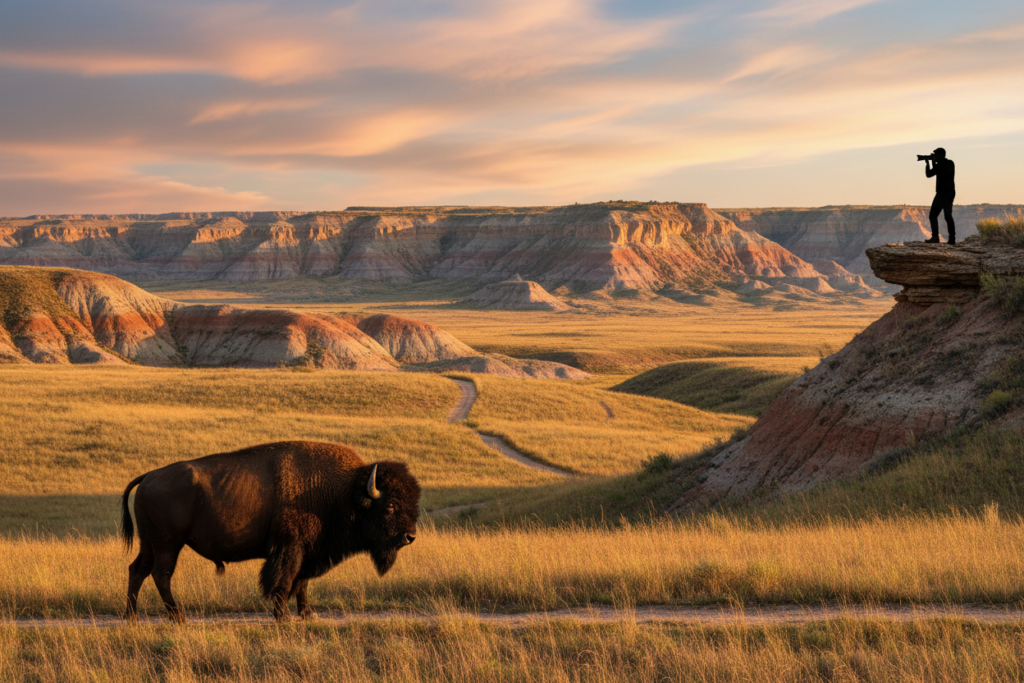
Nestled in the rugged badlands of North Dakota, Theodore Roosevelt National Park stands as a testament to both the raw beauty of the American West and the conservation legacy of our 26th president. This hidden gem offers visitors an authentic wilderness experience that feels worlds away from the crowded corridors of more famous national parks. Whether you’re an avid wildlife photographer, passionate hiker, or simply someone seeking solitude in nature’s embrace, this comprehensive guide will help you make the most of your Theodore Roosevelt National Park adventure.
Named after the president who once called this landscape home during his ranching days, the park encompasses over 70,000 acres of painted canyons, wild rivers, and endless prairie. It’s a place where bison roam freely across rolling hills, where golden eagles soar overhead, and where every sunset paints the badlands in spectacular hues of orange and red.
Planning Your Visit to Theodore Roosevelt National Park
Before diving into the specifics of wildlife viewing and trail adventures, it’s essential to understand the park’s unique layout and seasonal considerations. Theodore Roosevelt National Park consists of three distinct units: the South Unit near Medora, the North Unit near Watford City, and the remote Elkhorn Ranch Unit where Roosevelt’s ranch once stood.
The South Unit serves as most visitors’ introduction to the park, featuring the visitor center, scenic drive, and several popular trails. The North Unit offers a more secluded experience with dramatic river views and excellent wildlife viewing opportunities. The Elkhorn Ranch Unit, while historically significant, requires more planning due to its remote location and limited facilities.
Timing your visit can significantly impact your experience. Spring and fall offer comfortable temperatures and active wildlife, while summer brings longer days but also heat and crowds. Winter visits reward hardy souls with snowy landscapes and unique photographic opportunities, though many facilities operate on reduced schedules.
Wildlife Viewing: A Safari in the American West
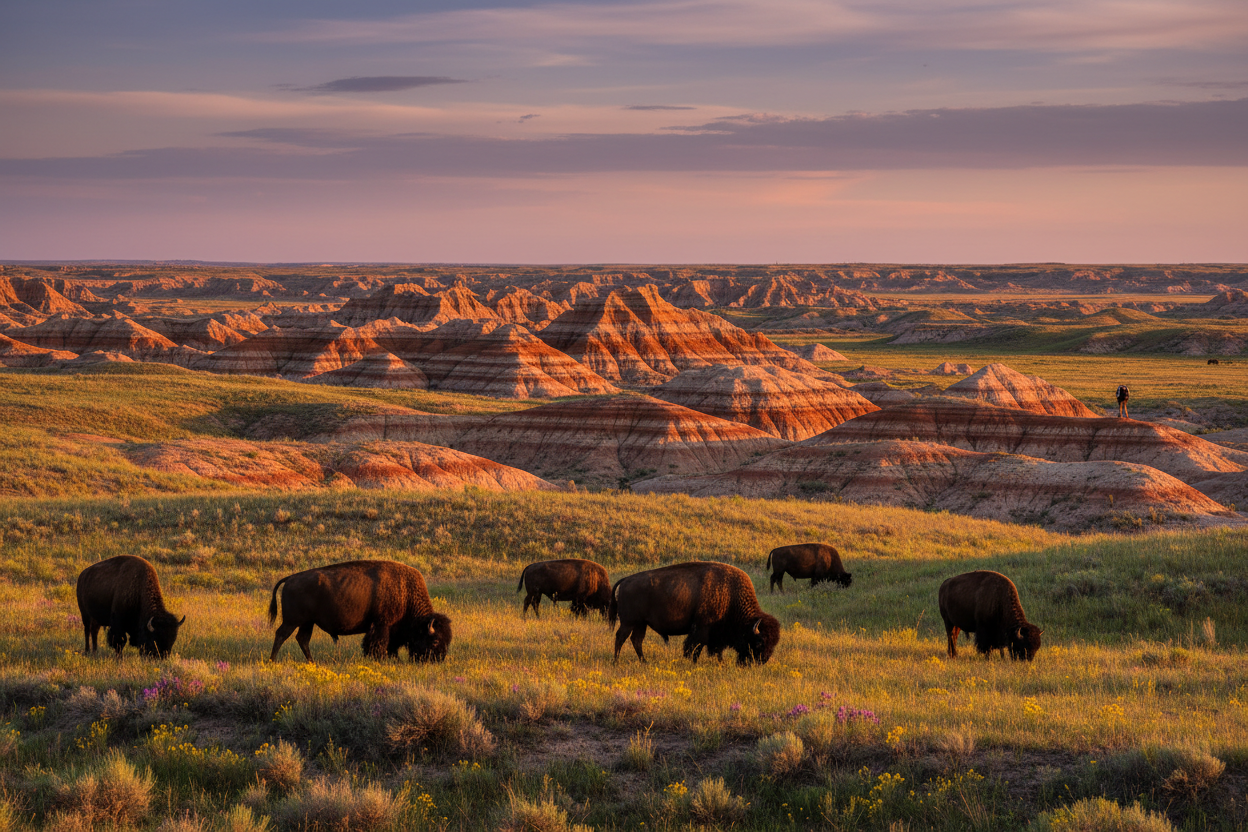
Theodore Roosevelt National Park hosts an impressive array of wildlife that thrives in this protected badlands ecosystem. The park’s most iconic residents are undoubtedly the American bison, descendants of the great herds that once thundered across the Great Plains. These magnificent creatures can often be spotted grazing in the grasslands or wallowing in dust baths during warmer months.
Wild horses add another layer of excitement to wildlife viewing. These feral horses, descendants of ranch stock, roam freely throughout the park. Watching a band of horses gallop across the prairie at sunset creates memories that last a lifetime. Remember to maintain a safe distance of at least 25 yards from these powerful animals.
The park’s diverse habitats support numerous other species. Prairie dogs create bustling communities in their underground cities, providing endless entertainment as they pop up from their burrows to survey their surroundings. Elk, white-tailed deer, and mule deer browse the woodlands and grasslands, while pronghorn antelope sprint across open areas with remarkable speed.
Bird enthusiasts will find Theodore Roosevelt National Park particularly rewarding. Golden eagles and turkey vultures ride thermal currents above the badlands, while great blue herons stalk the riverbanks. Sharp-tailed grouse perform their elaborate mating dances in spring, and over 180 bird species call the park home throughout the year.
For the best wildlife viewing experiences, plan early morning or late afternoon excursions when animals are most active. The scenic drives in both units provide excellent opportunities for roadside wildlife observation, but don’t forget to explore on foot for more intimate encounters.
Essential Hiking Trails for Every Adventure Level
Theodore Roosevelt National Park offers hiking opportunities that cater to every fitness level and interest. The trail system showcases the park’s diverse landscapes, from river bottoms to badlands peaks, each offering unique perspectives on this remarkable ecosystem.
The Ridgeline Nature Trail in the South Unit provides an excellent introduction to badlands geology and ecology. This easy 0.6-mile loop trail features interpretive signs that explain the area’s natural and cultural history. It’s perfect for families with young children or visitors with limited mobility.
For those seeking moderate challenges, the Wind Canyon Trail offers spectacular views with minimal effort. This 0.4-mile trail leads to an overlook where the Little Missouri River curves through colorful badlands formations. The payoff comes at sunset when the entire landscape glows with warm light.
Adventure seekers should tackle the Petrified Forest Loop Trail, a challenging 10.4-mile journey through some of the park’s most remote and beautiful terrain. This trail rewards hikers with ancient petrified wood specimens, panoramic vistas, and a true sense of wilderness solitude. Proper preparation, including plenty of water and navigation tools, is essential for this backcountry experience.
The North Unit’s Caprock Coulee Trail presents another moderate option with exceptional wildlife viewing potential. This 4.1-mile trail winds through diverse habitats where bison, elk, and wild horses frequently graze. The trail’s varied terrain keeps things interesting while offering numerous photography opportunities.
Don’t overlook the park’s shorter trails, which often provide the most rewarding experiences per mile walked. The Maltese Cross Cabin Trail combines history with natural beauty, leading visitors to Roosevelt’s reconstructed ranch cabin while showcasing typical badlands scenery.
Photography Tips for Capturing the Perfect Shot
Theodore Roosevelt National Park presents photographers with endless opportunities to capture the American West’s raw beauty. The key to successful photography here lies in understanding the unique lighting conditions and landscape characteristics that define the badlands.
Golden hour photography reaches new heights in Theodore Roosevelt National Park. The layered rock formations and rolling grasslands come alive during the first and last hours of daylight when warm light enhances the natural colors of the landscape. Plan to be in position at least 30 minutes before sunrise or sunset to capture the full range of lighting conditions.
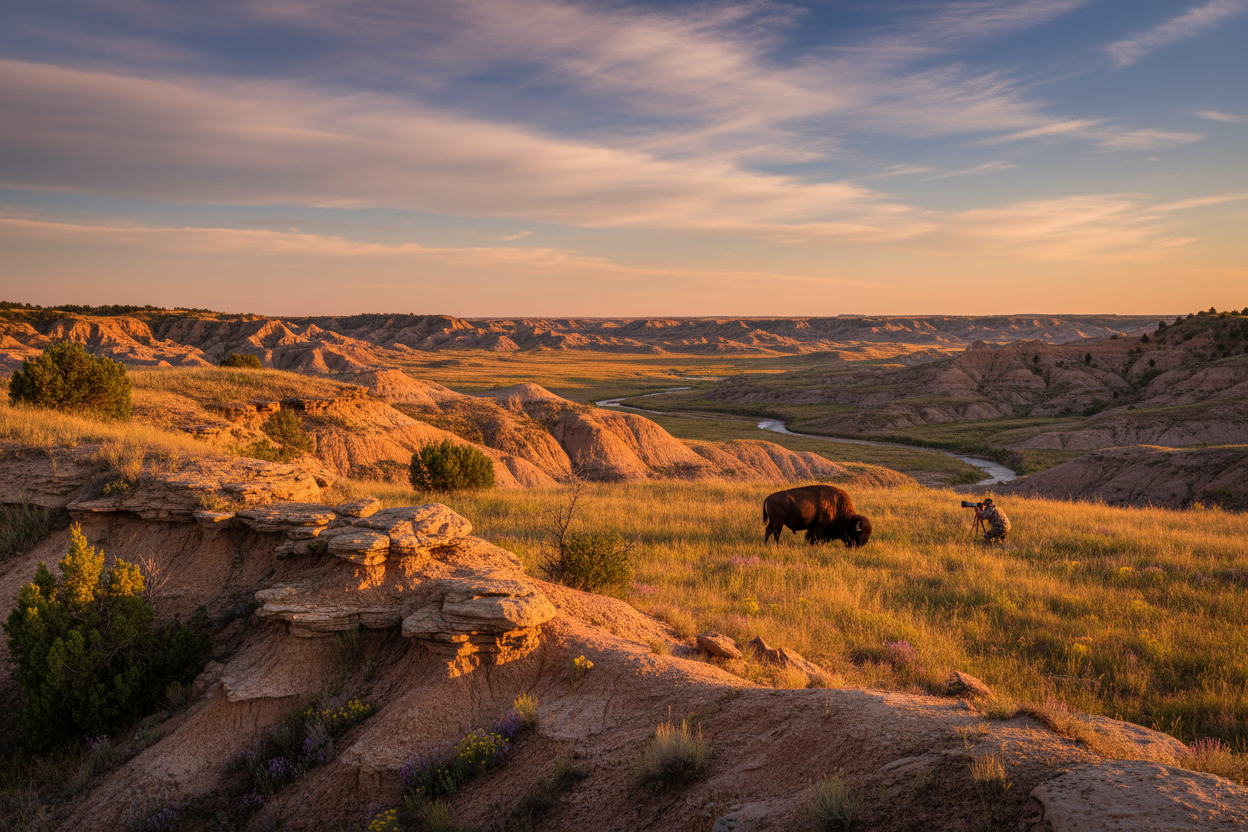
Wildlife photography requires patience and respect for the animals’ natural behaviors. A telephoto lens becomes essential for maintaining safe distances while capturing detailed shots. The 70-200mm range works well for most situations, though longer lenses provide more flexibility for photographing skittish species like pronghorn antelope.
Landscape photographers should consider the park’s unique geological features when composing shots. The colorful striations in the rock formations tell millions of years of geological history, while the contrast between rugged badlands and gentle grasslands creates compelling visual narratives. Wide-angle lenses help capture the expansive nature of the landscape, while telephoto lenses can isolate interesting rock formations or compress distant layers for dramatic effect.
Weather conditions significantly impact photographic opportunities in Theodore Roosevelt National Park. Stormy skies create dramatic backdrops for landscape photography, while fresh snow transforms the badlands into a winter wonderland. Don’t pack up your camera when conditions turn challenging – some of the most memorable images emerge from difficult weather.
Night photography opens up entirely new creative possibilities. The park’s remote location and minimal light pollution create excellent conditions for astrophotography. The Milky Way becomes visible on clear nights, providing opportunities to capture the cosmos above the badlands. Remember to bring a sturdy tripod and dress warmly for extended nighttime sessions.
Seasonal Considerations and Best Times to Visit
Each season brings distinct advantages and challenges to Theodore Roosevelt National Park, making it a year-round destination for different types of experiences. Understanding seasonal patterns helps visitors plan trips that align with their interests and comfort levels.
Spring arrives gradually in the badlands, typically beginning in April and extending through May. This season offers some of the best wildlife viewing opportunities as animals emerge from winter’s grip and begin their breeding seasons. Prairie dog towns become particularly active, and bird migration brings temporary residents to supplement the park’s year-round species. Wildflowers begin blooming in late spring, adding splashes of color to the grasslands.
Summer brings the warmest weather and longest days, making it ideal for extended hiking adventures and camping experiences. However, temperatures can become quite hot, especially during midday hours. Early morning and evening activities become even more important during summer months. This season also brings the highest visitor numbers, so popular areas may feel more crowded than during other times of year.
Fall transforms Theodore Roosevelt National Park into a photographer’s paradise. Cottonwood trees along the river bottoms burst into golden colors, creating stunning contrasts against the red and tan badlands formations. Wildlife remains active as animals prepare for winter, and cooler temperatures make hiking more comfortable. September and October typically offer the most pleasant weather conditions.
Winter visits require more preparation but reward adventurous souls with unique experiences. Snow-covered badlands create ethereal landscapes that few visitors witness. Wildlife viewing becomes more challenging but potentially more rewarding, as animals concentrate around water sources and sheltered areas. Cross-country skiing and snowshoeing become viable activities when snow conditions permit.
Frequently Asked Questions
What’s the best time of day to see wildlife in Theodore Roosevelt National Park?
Early morning (sunrise to 10 AM) and late afternoon (4 PM to sunset) offer the best wildlife viewing opportunities. Animals are most active during these cooler periods and tend to seek shade during midday hours.
How far apart are the North and South Units of the park?
The North and South Units are approximately 70 miles apart via US Highway 85. Plan about 1.5 hours of driving time between units, making it possible to visit both in a single day, though each unit deserves more extended exploration.
Are pets allowed on trails in Theodore Roosevelt National Park?
Pets are allowed in the park but must remain on leash at all times. They’re permitted on roads, in campgrounds, and in parking areas, but are not allowed on trails or in the backcountry for the protection of both wildlife and pets.
What should I do if I encounter a bison or wild horse?
Maintain a minimum distance of 25 yards from all large animals. If an animal approaches you, slowly back away and seek shelter behind a vehicle or substantial barrier. Never attempt to feed or approach wildlife, as this can be dangerous and is illegal.
Is camping available in Theodore Roosevelt National Park?
Yes, both the North and South Units offer campgrounds with basic amenities. The Cottonwood Campground in the South Unit and Juniper Campground in the North Unit provide sites for both tents and RVs, though reservations are recommended during peak seasons.
What photography equipment should I bring to the park?
A versatile camera setup should include wide-angle lenses for landscapes (14-35mm), telephoto lenses for wildlife (70-200mm or longer), a sturdy tripod for low-light conditions, extra batteries (cold weather drains them quickly), and lens cleaning supplies for dusty conditions.
Theodore Roosevelt National Park offers an authentic slice of the American West that continues to inspire visitors just as it inspired our 26th president over a century ago. Whether you’re drawn by the promise of wildlife encounters, challenging hiking adventures, or spectacular photographic opportunities, this remarkable landscape delivers experiences that connect us to both our natural heritage and our nation’s conservation legacy. Plan your visit thoughtfully, respect the wildlife and landscapes that make this place special, and prepare for an adventure that will leave you understanding why Theodore Roosevelt called this rugged country home.