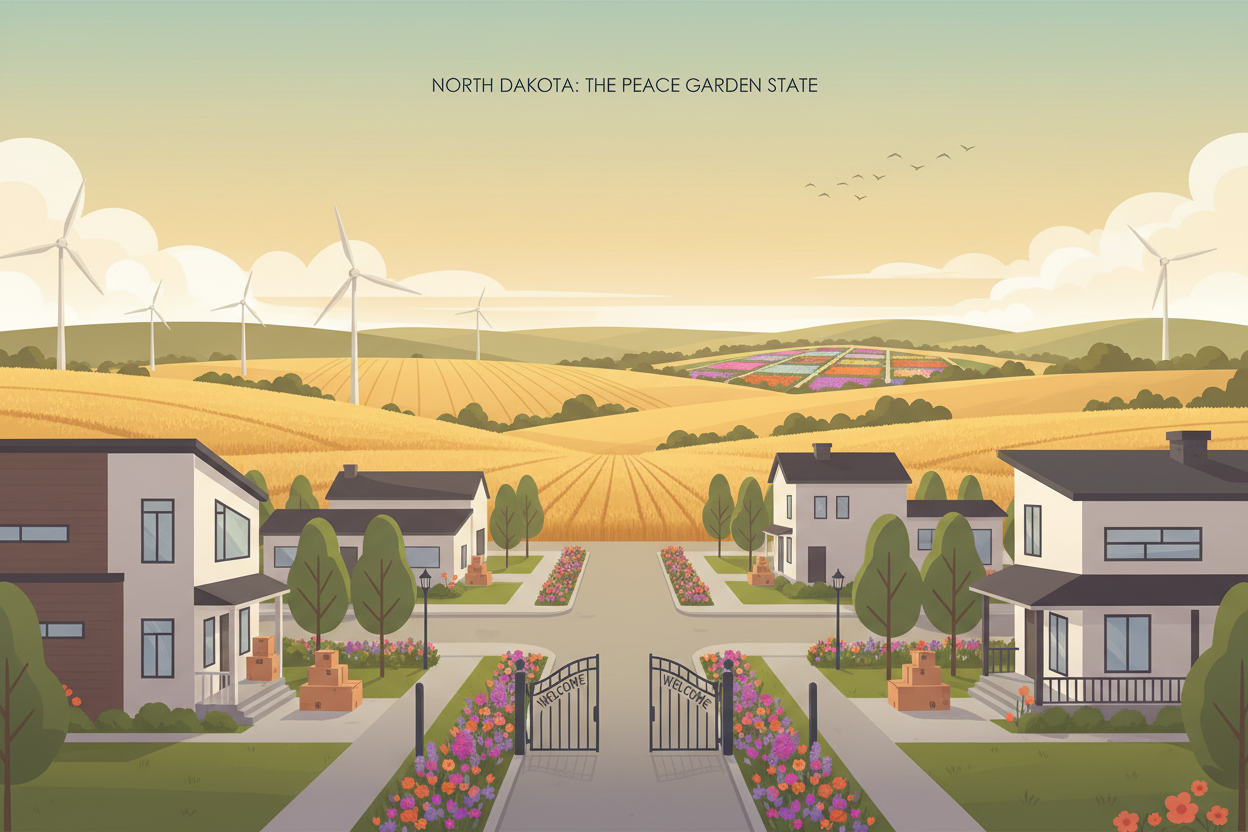
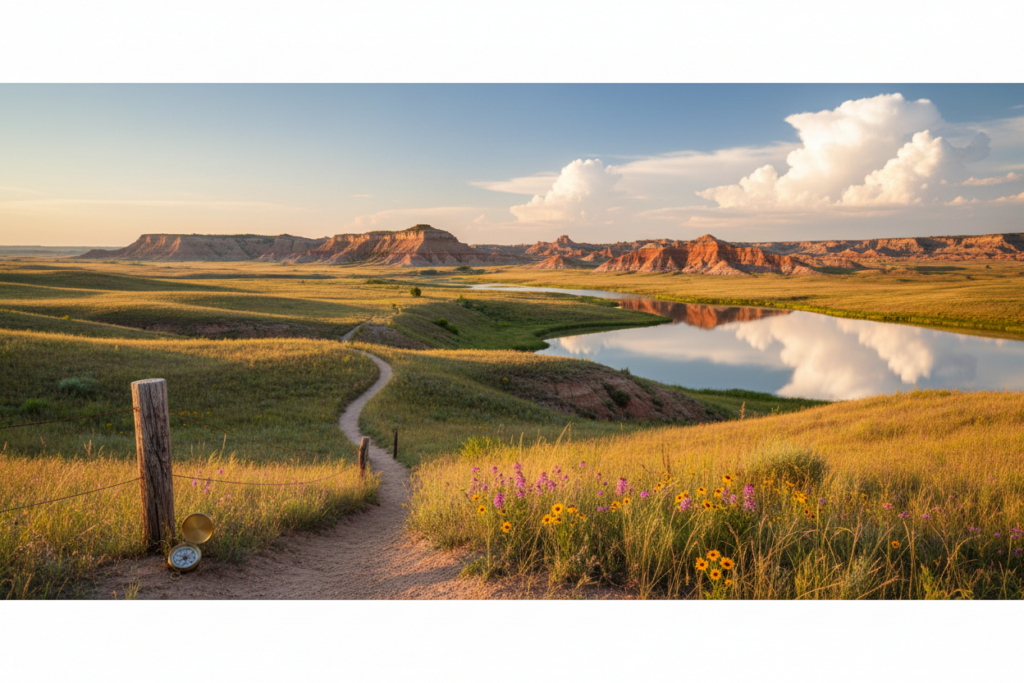
When most people think of North Dakota, they might picture endless wheat fields and harsh winters. But here’s the thing – this underrated state is absolutely brimming with incredible hidden treasures that would make even the most seasoned travelers stop in their tracks. I’ve spent countless hours exploring the Peace Garden State, and let me tell you, it never fails to surprise me.
From otherworldly badlands that look like they belong on Mars to quirky roadside attractions that’ll have you scratching your head in the best possible way, North Dakota offers experiences you simply can’t find anywhere else. The best part? You’ll often have these amazing spots practically to yourself, making your adventure feel like a private discovery.
Ready to uncover some of North Dakota’s best-kept secrets? Let’s dive into ten hidden gems that will completely change how you think about this remarkable state.
The Enchanted Highway: World’s Largest Scrap Metal Sculptures
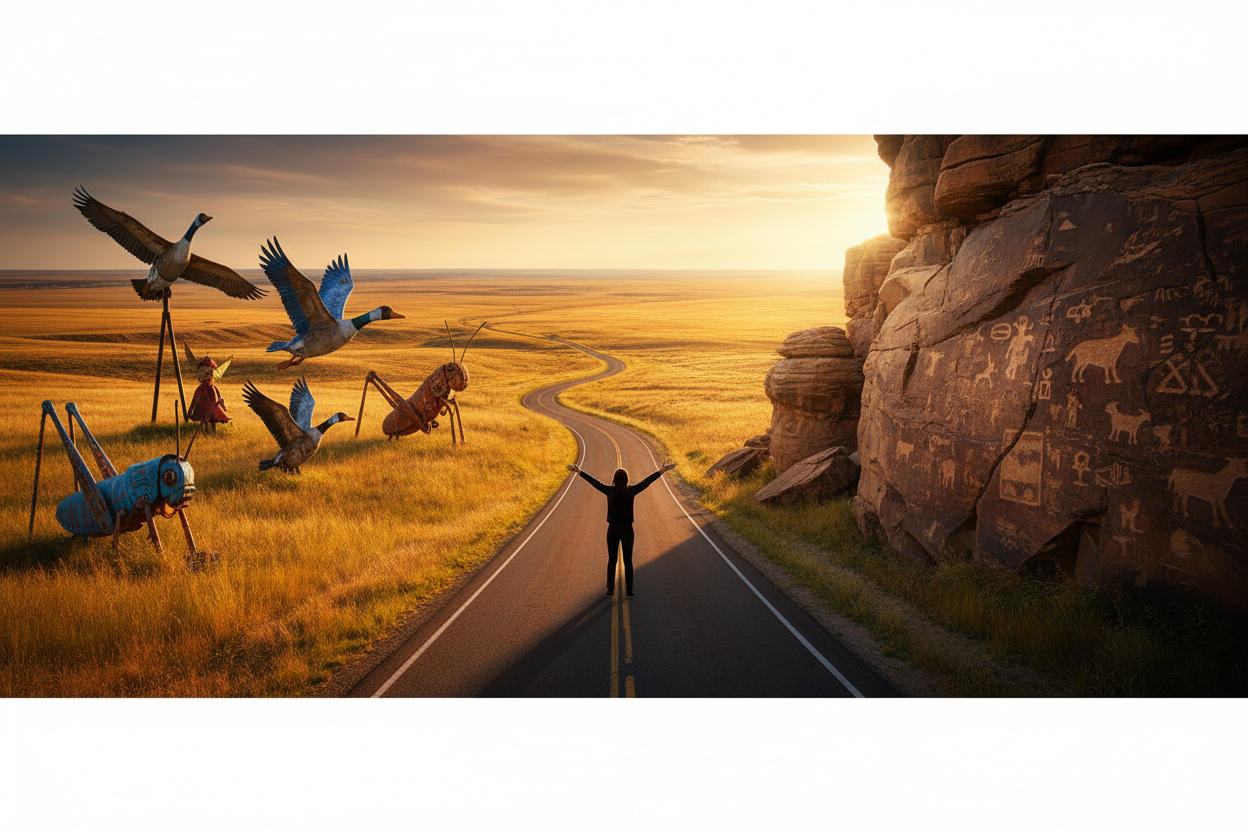
Picture this: you’re driving down a quiet country road when suddenly, a 110-foot-tall grasshopper appears on the horizon. Welcome to the Enchanted Highway, a 32-mile stretch of road between Gladstone and Regent that showcases the world’s largest collection of scrap metal sculptures.
Created by local artist Gary Greff, these massive installations include “Geese in Flight,” “Deer Crossing,” and the absolutely mind-blowing “Teddy Roosevelt Rides Again.” Each sculpture tells a story about North Dakota’s heritage and wildlife. What started as one man’s mission to bring visitors to his small town has become one of the state’s most photographed attractions.
The drive itself is therapeutic, winding through rolling prairie hills dotted with these artistic giants. I recommend timing your visit for golden hour – the way the setting sun illuminates these metal masterpieces is nothing short of magical.
Maah Daah Hey Trail: A Mountain Biker’s Paradise in the Badlands
Don’t let North Dakota’s reputation as a flat state fool you. The Maah Daah Hey Trail offers 144 miles of some of the most challenging and scenic mountain biking in the Midwest. This single-track trail winds through the rugged badlands, offering riders an adrenaline-pumping journey through colorful rock formations, deep canyons, and prairie overlooks.
The trail’s name means “an area that has been or will be around for a long time” in the Mandan language, and riding it feels like traveling through geological history. You’ll encounter fossils embedded in rock walls, spot wildlife like bighorn sheep and wild horses, and experience terrain that changes dramatically around every bend.
Even if you’re not into mountain biking, portions of the trail are perfect for hiking. The views from the overlooks, especially near Medora, will leave you speechless. It’s hard to believe you’re still in North Dakota when you’re surrounded by these dramatic landscapes.
International Peace Garden: Where Two Nations Meet in Harmony
Straddling the border between North Dakota and Manitoba, Canada, the International Peace Garden represents something beautiful in our often-divided world. This 2,339-acre botanical garden was established in 1932 to commemorate the peaceful relationship between the United States and Canada.
What makes this place truly special isn’t just its symbolic significance – it’s the stunning display of over 150,000 flowers arranged in formal gardens, the peaceful walking trails through native prairie, and the unique experience of literally walking between two countries. The Peace Tower, standing 120 feet tall, offers panoramic views of the surrounding countryside.
During summer, the garden hosts the annual Music Camp, where young musicians from both countries come together to learn and perform. There’s something deeply moving about watching these talented kids collaborate across borders, embodying the garden’s peaceful mission.
Knife River Indian Villages National Historic Site: Ancient Native American Heritage
Long before Lewis and Clark made their famous expedition, the Knife River area was home to thriving Native American communities. This national historic site preserves the remains of three Hidatsa and Mandan villages that were inhabited for over 500 years.
Walking through the reconstructed earth lodge gives you an incredible glimpse into how these ingenious people adapted to life on the Great Plains. The circular depressions scattered across the prairie mark where dozens of earth lodges once stood, housing families in structures that were perfectly suited to the harsh Dakota winters.
The visitor center houses an impressive collection of artifacts, but what really brings the site to life are the ranger-led programs. During these presentations, you’ll learn about the sophisticated trading networks these villages maintained and how they served as crucial meeting points for tribes across the region.
Sullys Hill National Game Preserve: North Dakota’s Wildlife Sanctuary
Tucked away near Devil’s Lake, Sullys Hill National Game Preserve feels like North Dakota’s best-kept wildlife secret. This 1,674-acre preserve is home to a incredible variety of animals, including bison, elk, white-tailed deer, and prairie dogs.
The four-mile auto tour route takes you through diverse habitats, from native prairie to dense woodlands. What I love most about this place is how close you can get to the wildlife. The bison here are particularly impressive – seeing these massive creatures roaming freely across the prairie is an unforgettable experience.
The preserve also features several hiking trails that wind through different ecosystems. The Prairie Dog Town is always entertaining to watch, especially if you visit during their most active periods in early morning or late afternoon. Kids absolutely love this place, and it’s an excellent introduction to North Dakota’s native wildlife.
Pembina Gorge: North Dakota’s Hidden Canyon Adventure
Most people don’t associate North Dakota with dramatic gorges and rushing rivers, but the Pembina Gorge will quickly change that perception. This 40-mile-long valley cuts through the northeastern part of the state, creating a landscape that feels more like Colorado than the Great Plains.
The Pembina River winds through the bottom of this 400-foot-deep gorge, creating perfect conditions for canoeing and kayaking. The steep walls are covered with dense forests of oak, maple, and basswood – a stark contrast to the surrounding prairie. During fall, the gorge explodes with color as these deciduous trees turn brilliant shades of red, orange, and yellow.
Frost Fire Mountain offers downhill skiing in winter and mountain biking trails in summer. The area also features several campgrounds and hiking trails that provide stunning overlook views. It’s like discovering a secret world hidden in plain sight.
Bonanzaville USA: Step Back into Pioneer Times
Located in West Fargo, Bonanzaville USA is far more than just another pioneer village. This 12-acre historical site features over 40 buildings that have been carefully moved and restored to create an authentic representation of late 1800s and early 1900s North Dakota life.
What sets Bonanzaville apart is the incredible attention to detail. The general store is stocked with period-appropriate merchandise, the one-room schoolhouse still has lessons written on the chalkboard, and the blacksmith shop contains tools that were actually used by local craftsmen. Each building tells a unique story about the hardy pioneers who settled this challenging land.
The museum also houses an impressive collection of vintage automobiles, farm equipment, and household items. During special events, costumed interpreters demonstrate traditional crafts like blacksmithing, weaving, and cooking over wood-fired stoves. It’s living history at its finest.
Turtle River State Park: A Forested Oasis in Prairie Country
Nestled along the meandering Turtle River, this state park feels like an oasis in the middle of North Dakota’s prairie landscape. The park’s 784 acres encompass dense hardwood forests, rolling hills, and peaceful river valleys that seem almost out of place in this predominantly agricultural region.
The park offers excellent hiking opportunities, with trails that wind through different ecosystems and provide glimpses of diverse wildlife. The river itself is perfect for canoeing, especially during spring when water levels are highest. What really makes this park special is how different it feels from the surrounding landscape – it’s like stumbling upon a secret forest kingdom.
Winter transforms the park into a cross-country skiing paradise. The groomed trails wind through snow-covered forests and across frozen meadows, offering a peaceful way to experience North Dakota’s winter beauty. The warming house provides a cozy retreat where skiers can warm up and share stories of their adventures.
Writing Rock State Historic Site: Ancient Petroglyphs and Native American History
Hidden in a quiet valley near Grenora, Writing Rock State Historic Site preserves one of North Dakota’s most mysterious archaeological treasures. The site features a large boulder covered with petroglyphs – ancient rock carvings created by Native Americans hundreds of years ago.
The symbols carved into the rock include animal figures, human forms, and geometric patterns whose meanings are still debated by archaeologists. Standing before this ancient artwork, you can’t help but feel connected to the people who created these images long before European settlers arrived in the area.
The site also offers beautiful views of the surrounding countryside and serves as a peaceful place for reflection. Interpretive signs provide context about the petroglyphs and the Native American cultures that once thrived in this region. It’s a humbling reminder of the rich history that existed here long before modern North Dakota took shape.
Scandinavian Heritage Park: A Slice of Norway in North Dakota
Located in Minot, the Scandinavian Heritage Park celebrates the strong Nordic roots that run deep through North Dakota’s culture. This unique attraction features authentic replicas of traditional Scandinavian buildings, including a Norwegian stave church, Swedish Dala horse, and Danish windmill.
The centerpiece is the Gol Stave Church, a detailed replica of a 13th-century Norwegian church. The craftsmanship is absolutely stunning – every carved detail has been meticulously recreated by skilled artisans. Walking through the church feels like stepping back into medieval Norway.
The park also features a Scandinavian heritage center with exhibits about immigration patterns and the cultural traditions that Norwegian, Swedish, and Danish settlers brought to North Dakota. During summer festivals, the park comes alive with traditional music, dancing, and authentic Scandinavian food. It’s a beautiful celebration of the cultural diversity that makes North Dakota unique.
Conclusion: North Dakota’s Surprising Treasures Await
North Dakota might not be the first state that comes to mind when planning your next adventure, but that’s exactly what makes it so special. These hidden gems offer experiences that are both unique and authentic – you won’t find crowds of tourists or commercialized attractions here, just genuine discoveries waiting to be made.
From the artistic wonder of the Enchanted Highway to the ancient mysteries of Writing Rock, each of these destinations tells a different story about North Dakota’s rich heritage and natural beauty. The state’s greatest treasure might be its ability to surprise visitors who arrive with preconceived notions and leave with a completely new appreciation for what the Peace Garden State has to offer.
So pack your sense of adventure and prepare to be amazed. North Dakota is ready to show you that sometimes the best travel experiences come from the most unexpected places. These hidden gems are just waiting for curious travelers like you to discover them.
Frequently Asked Questions
What’s the best time of year to visit these North Dakota hidden gems?
Late spring through early fall (May through September) offers the best weather for outdoor activities and sightseeing. However, winter visits can be magical, especially for places like Turtle River State Park for cross-country skiing or the badlands for a snow-covered landscape experience.
How many days should I plan for visiting these hidden gems?
A week-long road trip would allow you to comfortably visit most of these locations while enjoying the journey between them. However, you could easily spend 2-3 days exploring just the western attractions like Theodore Roosevelt National Park area and the Enchanted Highway.
Are these attractions family-friendly?
Absolutely! Most of these hidden gems are perfect for families with children. Places like Bonanzaville USA, Sullys Hill National Game Preserve, and the Scandinavian Heritage Park are particularly engaging for kids, offering hands-on learning experiences and wildlife viewing opportunities.
Do I need special equipment or permits to visit these locations?
Most locations don’t require special permits, though some state parks may charge small entrance fees. For activities like mountain biking on the Maah Daah Hey Trail or canoeing in the Pembina Gorge, you’ll need appropriate equipment, which can often be rented locally.
How far apart are these attractions from each other?
North Dakota is a large state, so distances can be significant. The western attractions (Enchanted Highway, Maah Daah Hey Trail) are clustered together, while eastern sites like the International Peace Garden and Pembina Gorge are several hours apart. Plan your route carefully and consider it a scenic road trip adventure.
Are there accommodations near these hidden gems?
Yes, though options vary by location. Larger towns like Minot, Fargo, and Medora offer hotels and restaurants, while smaller areas may have campgrounds, bed and breakfasts, or require staying in nearby communities. Booking ahead is recommended, especially during summer months.