Woody Guthrie Center: Celebrating a Folk Legend in Oklahoma
In the heart of Tulsa, Oklahoma, stands a remarkable institution that pays tribute to one of America’s most influential folk musicians and social activists. The Woody Guthrie Center serves as both a museum and cultural hub, celebrating the life, music, and enduring legacy of Woodrow Wilson “Woody” Guthrie. This isn’t just another museum – it’s a living testament to the power of music to inspire social change and unite communities across generations.
For music lovers, history enthusiasts, and anyone interested in American culture, the Woody Guthrie Center offers an immersive experience that brings to life the story of a man whose songs became anthems for social justice and human dignity. From his humble beginnings in Oklahoma to his rise as a folk music icon, Guthrie’s journey reflects the struggles and hopes of everyday Americans during some of the nation’s most challenging times.
The Man Behind the Music: Woody Guthrie’s Oklahoma Roots
Born in Okemah, Oklahoma, in 1912, Woody Guthrie’s early life was shaped by the dust storms, economic hardship, and social upheaval that defined the Great Depression era. His experiences growing up in Oklahoma during this tumultuous period would later inspire some of his most powerful songs, including the iconic “Dust Bowl Blues” and “Tom Joad.”
Guthrie’s connection to Oklahoma runs deeper than birthplace alone. The state’s landscape, its people’s struggles, and the resilience he witnessed firsthand became central themes in his music. His famous guitar bore the inscription “This Machine Kills Fascists,” but it was in Oklahoma where he first learned that music could be a powerful tool for storytelling and social commentary.
The decision to locate the Woody Guthrie Center in Tulsa wasn’t arbitrary – it represents a homecoming for an artist whose work was deeply rooted in the American heartland. Oklahoma’s rich musical heritage and its role in shaping Guthrie’s worldview make it the perfect setting for preserving and sharing his legacy.
Exploring the Woody Guthrie Center: What Visitors Can Expect
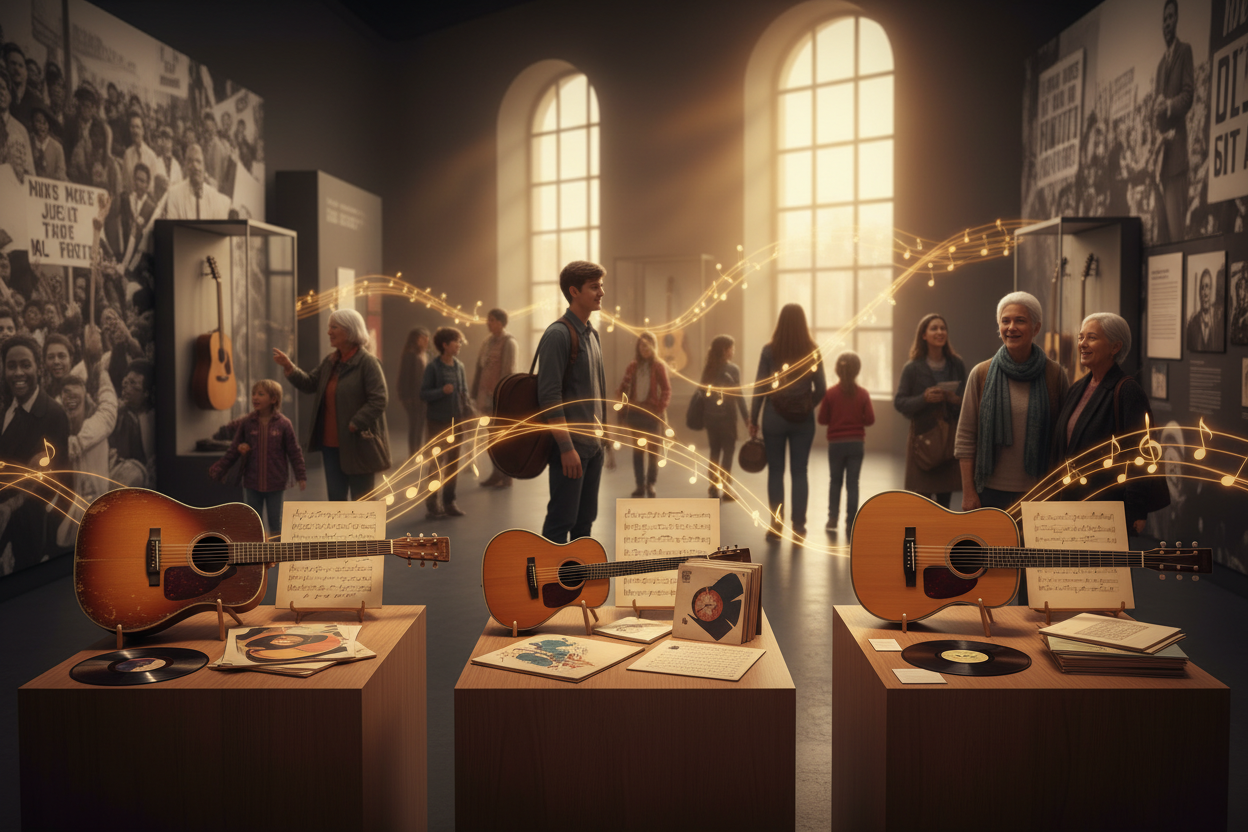
Walking into the Woody Guthrie Center feels like stepping into a carefully curated journey through 20th-century American history. The center’s exhibits are thoughtfully designed to engage visitors of all ages, combining interactive displays, rare artifacts, and multimedia presentations that bring Guthrie’s story to life.
The permanent collection includes original manuscripts, personal letters, photographs, and musical instruments that offer intimate glimpses into Guthrie’s creative process. Visitors can see handwritten lyrics to songs like “This Land Is Your Land” and discover how Guthrie’s personal experiences influenced his songwriting. The center also houses an impressive collection of his artwork, revealing another dimension of his creative talents that many people don’t know about.
One of the most compelling aspects of the center is how it contextualizes Guthrie’s work within the broader social and political movements of his time. Interactive exhibits explore the Dust Bowl migration, labor movements, and civil rights struggles that shaped his music and activism. This approach helps visitors understand not just what Guthrie sang about, but why his messages resonated so powerfully with audiences then and continue to do so today.
Interactive Exhibits and Educational Programs
The Woody Guthrie Center goes beyond traditional museum displays by offering hands-on experiences that make learning engaging and memorable. The center features listening stations where visitors can explore Guthrie’s extensive catalog of recordings, many of which have been digitally remastered for optimal sound quality.
Educational programs at the center cater to diverse audiences, from school groups to adult learners. Workshop sessions teach visitors about folk music traditions, songwriting techniques, and the historical context of Guthrie’s era. These programs often include opportunities for participants to try their hand at writing their own songs, following in the footsteps of the master storyteller himself.
The center also hosts regular events, including concerts, lectures, and community discussions that explore themes relevant to Guthrie’s work. These programs create opportunities for meaningful dialogue about social justice, economic inequality, and the role of art in promoting positive change – issues that remain as relevant today as they were during Guthrie’s lifetime.
The Archives: A Treasure Trove for Researchers and Fans
For serious scholars and dedicated fans, the Woody Guthrie Center’s archives represent an invaluable resource. The collection includes thousands of documents, recordings, and artifacts that provide unprecedented insight into Guthrie’s life and work. Researchers can access materials that shed light on his creative process, his political beliefs, and his relationships with other prominent figures of his era.
The archives also contain materials related to Guthrie’s family, including items from his son Arlo Guthrie, who followed in his father’s musical footsteps. This multi-generational perspective helps visitors understand how Woody’s influence extended beyond his own lifetime and continues to shape American folk music today.
Digital accessibility has been a priority for the center, with many archival materials available online for researchers who can’t visit in person. This commitment to accessibility ensures that Guthrie’s legacy can reach global audiences and continue inspiring new generations of musicians and activists.
Special Events and Concerts at the Center
Throughout the year, the Woody Guthrie Center hosts a variety of special events that celebrate folk music and social activism. The annual Woody Guthrie Folk Festival draws performers and fans from around the world, creating a vibrant celebration of folk music traditions and their continued relevance in contemporary society.
Concert series at the center feature both established artists and emerging talents who carry on Guthrie’s tradition of using music as a vehicle for social commentary. These performances often take place in intimate settings that allow for meaningful connections between artists and audiences, reflecting the community-centered spirit that Guthrie championed throughout his career.
The center also collaborates with other cultural institutions to present special exhibitions and programs that explore connections between Guthrie’s work and other artistic movements. These partnerships help demonstrate the far-reaching influence of folk music and its continued importance in American culture.
Planning Your Visit to the Woody Guthrie Center
Located in Tulsa’s vibrant Arts District, the Woody Guthrie Center is easily accessible and makes for an excellent addition to any Oklahoma itinerary. The center is open Tuesday through Sunday, with extended hours during peak tourist seasons and special events.
Admission fees are reasonable, with discounts available for students, seniors, and groups. The center also offers membership programs that provide benefits like free admission, exclusive event access, and discounts in the museum shop, which features books, recordings, and unique merchandise related to Guthrie’s legacy.
Visitors should plan to spend at least two to three hours exploring the exhibits thoroughly, though music enthusiasts might find themselves staying much longer. The center’s location in the Arts District means there are plenty of nearby restaurants, cafes, and other cultural attractions to round out a perfect day of exploration.
Why the Woody Guthrie Center Matters Today
In an era of increasing social and political division, the Woody Guthrie Center serves as a powerful reminder of music’s ability to unite people around shared values and common humanity. Guthrie’s songs spoke to universal themes of justice, dignity, and hope that transcend political boundaries and continue to resonate with audiences today.
The center’s educational mission extends beyond preserving historical artifacts – it actively promotes the values that Guthrie championed throughout his life. By encouraging visitors to think critically about social issues and consider their own roles in creating positive change, the center carries forward Guthrie’s legacy of activism and engagement.
For young people especially, the center provides inspiration and encouragement to use their voices and talents to address the challenges facing their communities and the world. This continuation of Guthrie’s mission ensures that his impact will continue growing for generations to come.
The Woody Guthrie Center stands as more than just a museum – it’s a living celebration of an artist whose music helped define American folk traditions and whose message of social justice remains as powerful today as it was decades ago. Whether you’re a longtime fan of folk music or simply curious about American cultural history, a visit to this remarkable institution offers insights, inspiration, and a deeper appreciation for the enduring power of music to change the world.
As you walk through the exhibits and listen to Guthrie’s recordings, you’ll understand why his simple yet profound message that “this land is your land” continues to resonate with people from all walks of life. The Woody Guthrie Center ensures that this message, and the man who delivered it, will never be forgotten.
Frequently Asked Questions
What are the operating hours of the Woody Guthrie Center?
The Woody Guthrie Center is open Tuesday through Sunday from 10 AM to 6 PM. The center is closed on Mondays except for federal holidays. Hours may be extended during special events or peak tourist seasons.
How much does admission to the Woody Guthrie Center cost?
General admission is $12 for adults, $8 for students and seniors (65+), and free for children under 12. Group discounts are available for parties of 10 or more with advance booking.
Is the Woody Guthrie Center wheelchair accessible?
Yes, the center is fully wheelchair accessible with elevators, ramps, and accessible restrooms throughout the facility. Assistive listening devices are also available upon request.
Can I take photographs inside the Woody Guthrie Center?
Photography is permitted in most areas of the center for personal use, but flash photography and tripods are not allowed. Some special exhibits may have photography restrictions, which will be clearly marked.
Does the Woody Guthrie Center offer guided tours?
Yes, guided tours are available for groups of 10 or more with advance reservation. Self-guided tours are also available using the center’s mobile app, which provides additional context and audio content throughout the exhibits.
Is there parking available at the Woody Guthrie Center?
The center offers limited parking on-site, and additional street parking is available in the surrounding Arts District. Several paid parking lots and garages are also located within walking distance.
What other attractions are near the Woody Guthrie Center?
The center is located in Tulsa’s Arts District, near the Philbrook Museum of Art, Tulsa Art Museum, and numerous galleries, restaurants, and cafes. The historic Brady Arts District and downtown Tulsa are also within easy walking distance.