
Rock and Roll Hall of Fame: Why Cleveland is Music’s Holy Grail
When most people think of music’s most sacred destinations, cities like Nashville, Los Angeles, or New York often come to mind. But nestled along the shores of Lake Erie sits a city that holds the ultimate crown in rock and roll history: Cleveland, Ohio. Home to the legendary Rock and Roll Hall of Fame, Cleveland has earned its place as music’s holy grail, drawing pilgrims from around the world who come to pay homage to the artists who shaped the soundtrack of our lives.
The story of how Cleveland became the keeper of rock and roll’s most treasured artifacts and memories is as compelling as the music itself. From its humble beginnings as an industrial powerhouse to its transformation into a cultural mecca, Cleveland’s journey to musical prominence is a testament to the power of passion, persistence, and pure rock and roll spirit.
The Birth of Rock and Roll in Cleveland
Long before the iconic pyramid-shaped building graced Cleveland’s skyline, the city was already making waves in the music world. In the early 1950s, a young DJ named Alan Freed began spinning rhythm and blues records on Cleveland’s WJW radio station. Freed didn’t just play music; he created a movement. He coined the term “rock and roll” and organized some of the first integrated concerts in American history, breaking down racial barriers through the universal language of music.
The Moondog Coronation Ball, held at the Cleveland Arena on March 21, 1952, is widely considered the first rock and roll concert ever staged. Though the event was cut short due to overcrowding, it marked a pivotal moment in music history. Cleveland had officially become the birthplace of rock and roll, setting the stage for its future role as the genre’s spiritual home.

This rich musical heritage didn’t go unnoticed when plans for a rock and roll hall of fame began taking shape in the 1980s. While several cities vied for the honor of hosting this prestigious institution, Cleveland’s authentic connection to rock and roll’s origins made it the natural choice.
The Architectural Marvel on Lake Erie
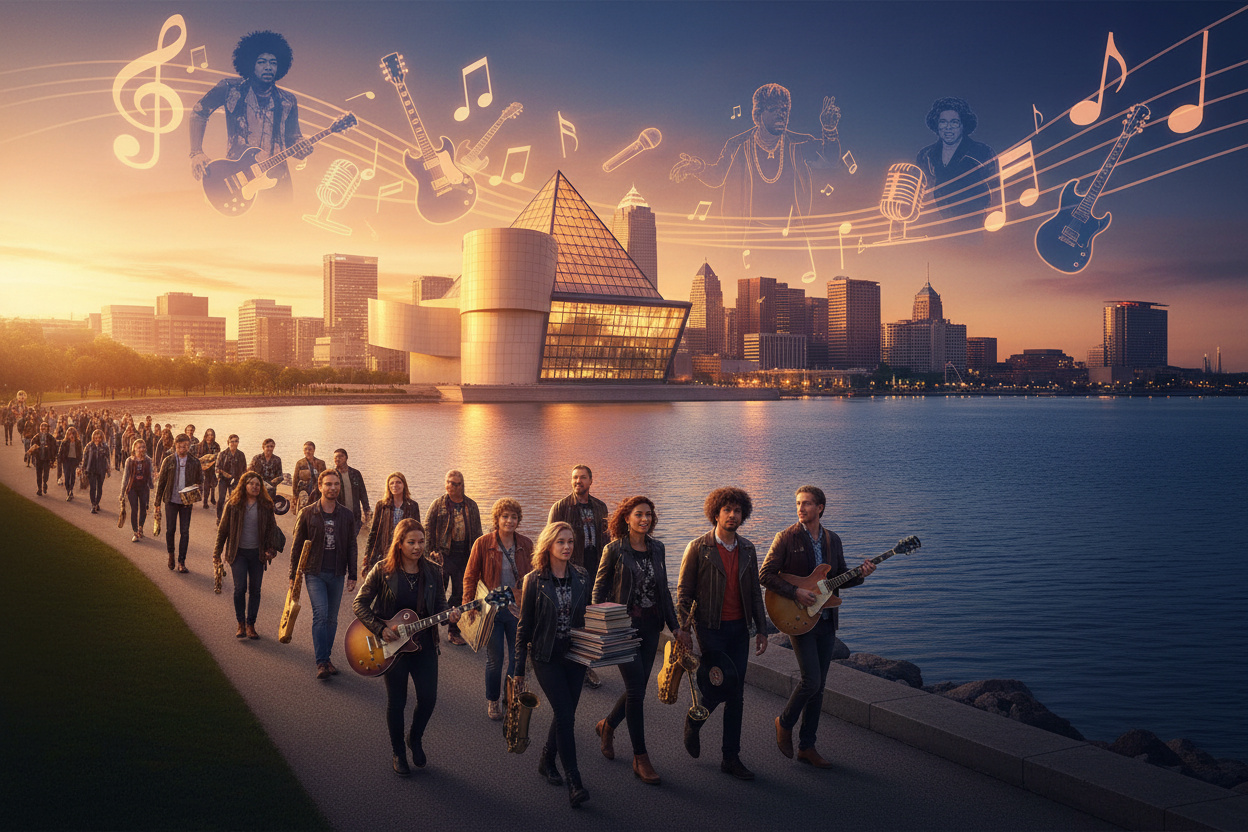
Designed by renowned architect I.M. Pei, the Rock and Roll Hall of Fame building is itself a work of art. The striking geometric structure, with its bold glass pyramid and cylindrical tower, creates a dramatic silhouette against Cleveland’s skyline. Opened in 1995, the 150,000-square-foot museum was conceived as more than just a repository for musical artifacts; it was designed to be an immersive experience that would transport visitors through the evolution of rock and roll.
The building’s design reflects the energy and innovation of rock music itself. Natural light floods the interior spaces, creating an atmosphere that feels both reverent and electric. Every angle, every surface seems to pulse with the rhythm of the music it houses. Walking through the Hall of Fame isn’t just about viewing exhibits; it’s about feeling the heartbeat of rock and roll history.
The location on Cleveland’s North Coast Harbor was carefully chosen to maximize the building’s impact. Positioned where the Cuyahoga River meets Lake Erie, the Hall of Fame serves as a beacon for music lovers, visible from miles away and symbolic of Cleveland’s role as a lighthouse guiding the evolution of popular music.
Legendary Artifacts and Priceless Collections
Step inside the Rock and Roll Hall of Fame, and you’re immediately surrounded by pieces of music history that will make any fan’s heart skip a beat. The museum’s collection includes over 100,000 artifacts, ranging from handwritten lyrics and rare recordings to stage costumes and instruments that created some of the most memorable sounds in music history.
Among the most treasured items are John Lennon’s Rickenbacker guitar, Elvis Presley’s leather jacket from his 1968 comeback special, and Janis Joplin’s psychedelic Porsche. These aren’t just objects behind glass; they’re tangible connections to the artists who changed the world through their music. Each piece tells a story, whether it’s the guitar that recorded a chart-topping hit or the notebook containing lyrics that would become anthems for generations.
The museum’s rotating exhibits ensure that there’s always something new to discover. Recent exhibitions have explored everything from the influence of hip-hop on rock music to the role of women in shaping the genre’s evolution. These carefully curated displays don’t just showcase artifacts; they weave narratives that help visitors understand the cultural and social impact of rock and roll music.
The Induction Ceremony: Music’s Most Prestigious Honor
Every year, the music world turns its attention to Cleveland for the Rock and Roll Hall of Fame induction ceremony. This star-studded event brings together legendary performers, industry executives, and passionate fans to celebrate the artists who have made lasting contributions to rock and roll music. The ceremony itself has become a cultural phenomenon, often featuring once-in-a-lifetime collaborations and emotional reunions.
The selection process for inductees is rigorous and sometimes controversial, sparking passionate debates among fans and critics alike. To be eligible, artists must have released their first recording at least 25 years prior to induction. A voting body of more than 1,000 historians, journalists, and music industry professionals determines who receives this ultimate honor.
What makes the induction ceremony particularly special is its ability to bring together different generations and genres of musicians. It’s not uncommon to see punk rockers sharing the stage with soul legends, or hip-hop pioneers collaborating with classic rock icons. These moments of musical magic happen because Cleveland provides the perfect backdrop for celebrating the diversity and evolution of rock and roll.
Beyond the Hall: Cleveland’s Thriving Music Scene
While the Rock and Roll Hall of Fame is undoubtedly Cleveland’s most famous musical attraction, the city’s commitment to music extends far beyond the museum walls. Cleveland’s music scene is alive and thriving, with venues ranging from intimate clubs to world-class concert halls hosting both emerging artists and established superstars.
The Grog Shop, Beachland Ballroom, and House of Blues Cleveland are just a few of the venues where music lovers can experience live performances any night of the week. These spaces maintain the authentic, gritty atmosphere that has always been central to rock and roll culture. Local bands cut their teeth on these stages, while touring acts often speak of the special energy they feel when performing in Cleveland.
The city’s musical education programs and community initiatives also deserve recognition. Organizations like the Cleveland Music School Settlement and various youth programs ensure that Cleveland’s musical legacy continues to inspire new generations of artists. These grassroots efforts keep the spirit of rock and roll alive at the community level, fostering creativity and providing opportunities for young musicians to develop their talents.
The Economic and Cultural Impact
The Rock and Roll Hall of Fame has transformed Cleveland’s cultural landscape and economic profile. Since opening its doors, the museum has welcomed millions of visitors from around the world, generating hundreds of millions of dollars in economic activity for the region. Hotels, restaurants, and local businesses have all benefited from the steady stream of music pilgrims who come to pay their respects at rock’s most sacred site.
More importantly, the Hall of Fame has helped reshape Cleveland’s identity. Once known primarily as a rust belt industrial city, Cleveland now proudly wears its title as the rock and roll capital of the world. This cultural renaissance has attracted creative professionals, sparked urban renewal projects, and given residents a renewed sense of pride in their city’s unique contributions to American culture.
The museum’s educational programs reach far beyond Cleveland, with traveling exhibits, online resources, and partnerships with schools across the country. These initiatives ensure that the stories and lessons of rock and roll history continue to inspire and educate people regardless of their geographic location.
A Pilgrimage Worth Taking
For music lovers, visiting the Rock and Roll Hall of Fame isn’t just a tourist activity; it’s a pilgrimage. There’s something deeply moving about standing in the presence of instruments that created the songs that defined your youth, or reading the handwritten lyrics to a song that helped you through a difficult time. The museum provides a space for reflection, celebration, and connection with the universal power of music.
Cleveland’s role as music’s holy grail extends beyond the physical artifacts and exhibits housed within the Hall of Fame. It represents the democratizing power of rock and roll, a genre that broke down barriers and gave voice to the voiceless. In Cleveland, you can feel the weight of that history and the ongoing influence of rock music on our culture and society.
Whether you’re a casual music fan or a devoted scholar of rock history, Cleveland offers an experience that’s both educational and deeply emotional. The city has successfully preserved and celebrated the legacy of rock and roll while continuing to nurture new musical talent and innovation.
Cleveland’s designation as music’s holy grail isn’t just about the past; it’s about the ongoing story of rock and roll and its power to inspire, unite, and transform. In a world that often feels divided, Cleveland stands as a reminder of music’s ability to bring people together and create lasting change. For that reason alone, it truly deserves its place as the keeper of rock and roll’s most sacred flame.