Hocking Hills State Park: The Crown Jewel of Ohio’s Natural Wonders
When most people think of Ohio, they picture flat farmland and industrial cities. But tucked away in the southeastern corner of the Buckeye State lies a geological masterpiece that rivals the most celebrated natural destinations in America. Hocking Hills State Park stands as Ohio’s crown jewel, offering visitors a stunning landscape of towering cliffs, cascading waterfalls, and mysterious caves that seem more fitting for Kentucky or Tennessee than the heart of the Midwest.
This 2,356-acre wonderland has been captivating nature lovers, photographers, and adventure seekers for decades. From the iconic Old Man’s Cave to the breathtaking Ash Cave, Hocking Hills proves that Ohio holds its own when it comes to natural beauty. Whether you’re planning your first visit or you’re a seasoned explorer looking to rediscover this remarkable destination, there’s always something new to uncover in these ancient sandstone formations.
The Geological Marvel Behind Hocking Hills’ Beauty
The story of Hocking Hills begins over 350 million years ago when this region lay beneath a vast inland sea. Layer upon layer of sediment accumulated on the ocean floor, eventually forming the distinctive Blackhand sandstone that defines the park’s dramatic landscape today. As the sea receded and millennia passed, wind and water carved intricate patterns into these sandstone cliffs, creating the gorges, caves, and rock shelters that make Hocking Hills so extraordinary.
What makes this geological formation particularly special is its resistance to erosion in some areas while remaining surprisingly soft in others. This unique characteristic has resulted in the creation of massive overhanging cliffs that shelter delicate ecosystems below, while streams have carved deep gorges that reveal layers of geological history spanning hundreds of millions of years.

The park’s most famous features owe their existence to this ancient process. The recess caves, which aren’t true caves but rather deep indentations in the cliff faces, formed as softer layers of rock eroded away while harder caprock remained intact. This natural architecture creates cathedral-like spaces that have provided shelter for everything from Native American tribes to modern-day hikers seeking refuge from the elements.
Old Man’s Cave: The Heart of Hocking Hills
No visit to Hocking Hills State Park would be complete without exploring Old Man’s Cave, the park’s most famous and frequently visited attraction. This stunning gorge stretches for about a mile and features a series of waterfalls, pools, and rock formations that have earned it recognition as one of Ohio’s most photographed natural landmarks.
The cave gets its name from Richard Rowe, a hermit who lived in the large recess cave during the 1800s. Today, visitors can follow the well-maintained trail that winds through the gorge, passing by Upper Falls, Lower Falls, and the Devil’s Bathtub – a perfectly round pothole carved by swirling water over thousands of years. The trail is relatively easy, making it accessible to families with children, though the stone steps can be slippery when wet.
What truly sets Old Man’s Cave apart is the way light filters through the forest canopy and reflects off the sandstone walls, creating an almost ethereal atmosphere. During autumn, when the surrounding forest erupts in brilliant oranges, reds, and yellows, the gorge becomes a photographer’s paradise. Even in winter, when ice formations cling to the cliff faces and waterfalls freeze into crystalline sculptures, Old Man’s Cave maintains its magical appeal.
Ash Cave: Nature’s Grand Cathedral
If Old Man’s Cave is the heart of Hocking Hills, then Ash Cave is surely its soul. This massive horseshoe-shaped recess cave stretches 700 feet from end to end and soars 90 feet high, making it the largest recess cave in Ohio. The sheer scale of Ash Cave is breathtaking – standing beneath its towering ceiling feels like entering a natural cathedral designed by forces far greater than human imagination.
The cave earned its name from the massive piles of ashes found there by early settlers, evidence of centuries of use by Native American tribes who recognized this shelter’s value. Archaeological evidence suggests that people have been seeking refuge in Ash Cave for over 7,000 years, making it one of Ohio’s most historically significant natural sites.
The quarter-mile paved trail to Ash Cave makes it the most accessible attraction in the park, suitable for visitors of all ages and abilities. During spring, a 90-foot waterfall cascades over the cave’s rim, creating a spectacular display that draws visitors from across the region. Even during dry periods, the constant seepage through the sandstone creates a cool, moist environment that supports unique plant communities rarely found elsewhere in Ohio.
Cedar Falls: A Hidden Gem Worth Discovering
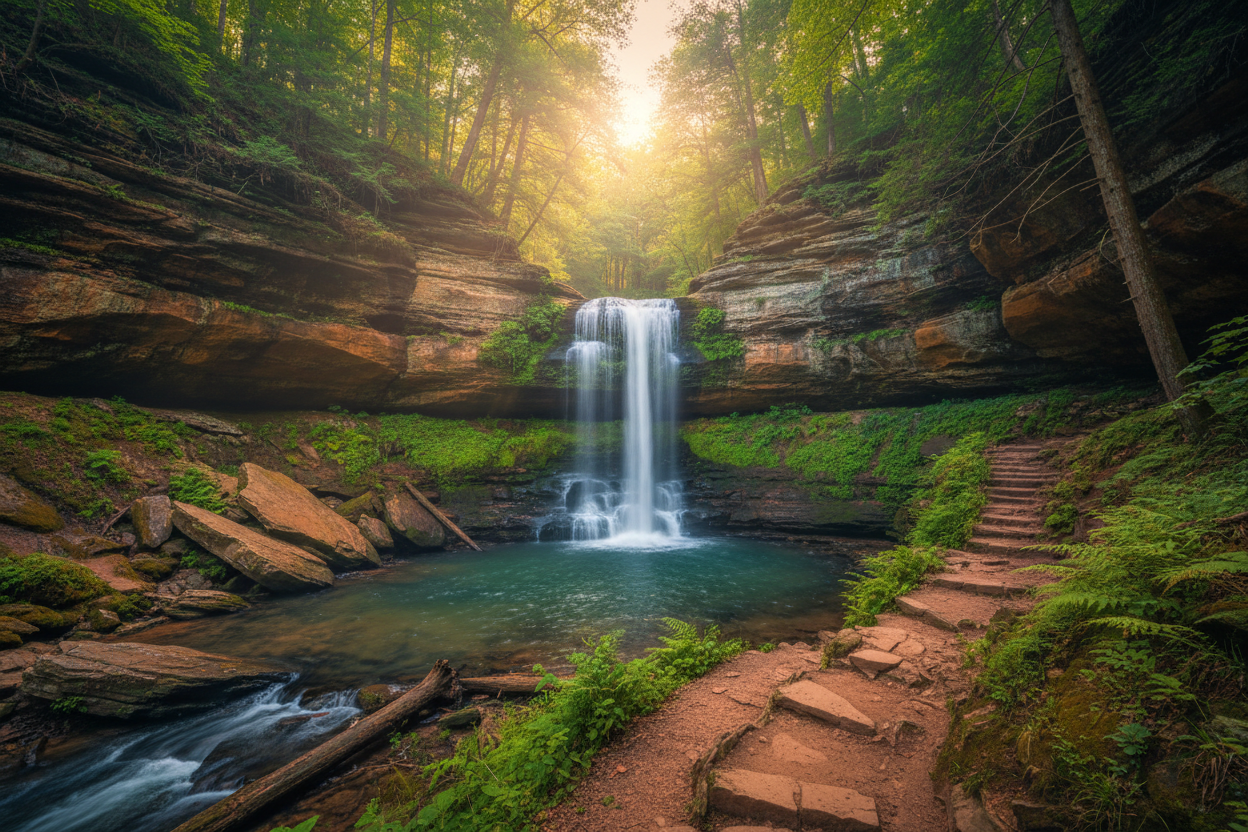
While Cedar Falls might be the smallest of the park’s major waterfalls, it’s arguably the most picturesque. This 50-foot cascade tumbles over a series of rock ledges into a serene pool below, surrounded by towering hemlock trees that create a cool, shaded environment even on the hottest summer days.
The trail to Cedar Falls is moderate in difficulty, featuring some steep sections and stone steps that require a bit more effort than the paths to Old Man’s Cave or Ash Cave. However, this additional challenge means fewer crowds, allowing visitors to enjoy a more intimate experience with nature. The sound of water cascading over rock, combined with the filtered sunlight streaming through the forest canopy, creates a sense of tranquility that’s hard to find in our increasingly busy world.
During winter months, Cedar Falls transforms into something truly spectacular. The waterfall often freezes into a stunning ice formation, while the surrounding cliffs become adorned with massive icicles that can stretch from the cliff top to the gorge floor. This frozen wonderland attracts ice climbers and winter photographers who brave the cold to witness one of Ohio’s most beautiful seasonal transformations.
Rock House: Ohio’s Only True Cave
Unlike the recess caves that make up most of Hocking Hills’ famous formations, Rock House stands apart as Ohio’s only true cave open to the public. This tunnel-like corridor stretches 200 feet through a sandstone cliff and features seven window-like openings that provide glimpses of the forest beyond.
The formation of Rock House differs significantly from the park’s other attractions. Rather than being carved by water from the outside, this cave was created by underground water that dissolved the softer middle layer of sandstone while leaving the harder upper and lower layers intact. The result is a unique corridor cave with multiple “windows” that create dramatic lighting effects throughout the day.
The trail to Rock House is considered moderate to difficult, featuring steep climbs and narrow passages that add an element of adventure to the experience. This additional challenge is well worth the effort, as Rock House offers some of the most unique photographic opportunities in the park. The interplay of light and shadow through the cave’s windows creates constantly changing patterns that have inspired countless artists and photographers.
Cantwell Cliffs: The Park’s Best-Kept Secret
For those seeking a more secluded experience, Cantwell Cliffs offers all the natural beauty of Hocking Hills’ more famous attractions with significantly fewer crowds. This deep, narrow gorge features towering sandstone cliffs, small waterfalls, and rock formations that rival anything else in the park.
The trail system at Cantwell Cliffs is more challenging than other areas of the park, with steep climbs, narrow passages, and some sections that require basic rock scrambling skills. This increased difficulty level means that Cantwell Cliffs attracts primarily serious hikers and nature enthusiasts, creating an atmosphere of wilderness solitude that’s increasingly rare in Ohio’s state parks.
What makes Cantwell Cliffs particularly special is its diverse ecosystem. The deep gorge creates multiple microclimates that support an unusual variety of plant and animal life. Rare ferns cling to the moist cliff faces, while the rim areas support oak and hickory forests typical of southern Ohio. This biological diversity makes Cantwell Cliffs a favorite destination for botanists and wildlife photographers.
Planning Your Perfect Hocking Hills Adventure
The beauty of Hocking Hills State Park lies not just in its individual attractions, but in the way these natural wonders combine to create an unforgettable outdoor experience. Most visitors find that a full day allows them to explore the major attractions at a comfortable pace, though serious hikers and photographers often prefer to spend multiple days in the area.
Spring and fall represent the peak seasons for visiting Hocking Hills, each offering distinct advantages. Spring brings wildflowers, flowing waterfalls, and comfortable hiking temperatures, while autumn transforms the forest into a brilliant tapestry of color that attracts visitors from across the Midwest. Summer visits offer the advantage of longer daylight hours and warm weather perfect for picnicking, though the trails can be crowded on weekends.
Winter visits provide a completely different perspective on the park’s beauty. Snow-covered trails, frozen waterfalls, and ice-adorned cliffs create a winter wonderland that rivals any mountain destination. However, winter hiking requires appropriate gear and caution, as trails can become icy and dangerous.
For the best experience, consider starting your visit early in the morning when the light is soft and the trails are less crowded. Pack plenty of water, wear sturdy hiking shoes with good traction, and don’t forget your camera – you’ll encounter photo opportunities around every bend.
Conclusion: Discovering Ohio’s Natural Masterpiece
Hocking Hills State Park stands as undeniable proof that natural wonders exist in the most unexpected places. This remarkable destination challenges preconceptions about Ohio’s landscape while offering visitors an opportunity to connect with geological forces that have been shaping our planet for millions of years.
From the cathedral-like grandeur of Ash Cave to the intimate beauty of Cedar Falls, from the mysterious corridors of Rock House to the wilderness solitude of Cantwell Cliffs, Hocking Hills offers something for every type of outdoor enthusiast. Whether you’re seeking adventure, tranquility, photographic inspiration, or simply a chance to reconnect with nature, you’ll find it among these ancient sandstone cliffs and rushing waterfalls.
As you plan your visit to this crown jewel of Ohio’s natural wonders, remember that Hocking Hills is more than just a destination – it’s a reminder of the incredible beauty that surrounds us when we take the time to look. In a world increasingly dominated by technology and urban landscapes, places like Hocking Hills State Park serve as essential refuges where we can rediscover our connection to the natural world and gain perspective on our place within it.