
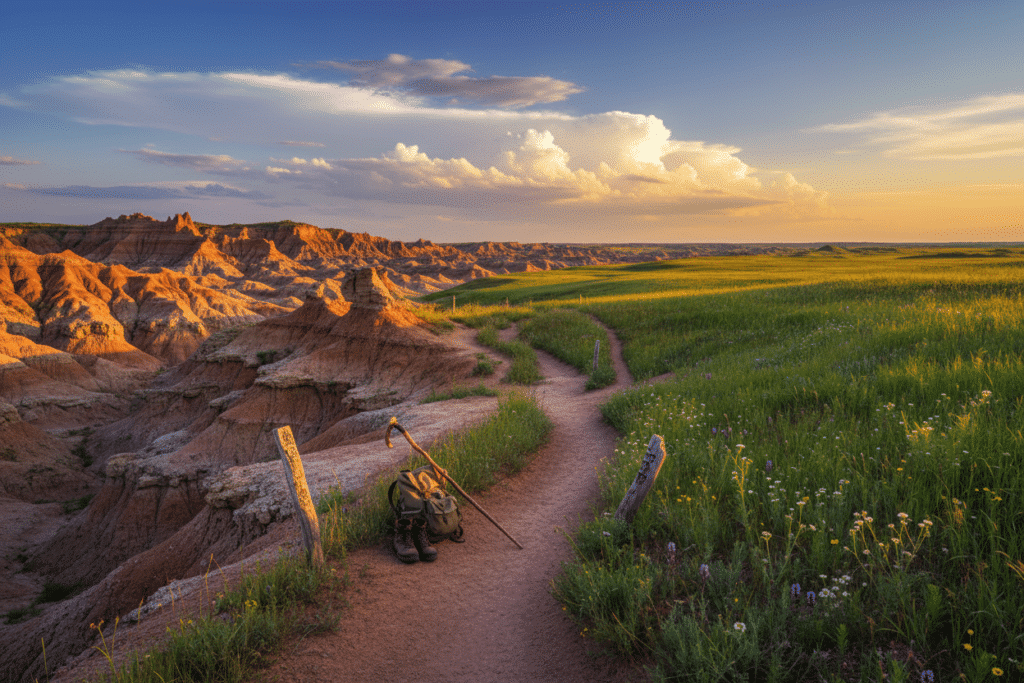
When most people think of hiking destinations, North Dakota might not immediately come to mind. But let me tell you, the Peace Garden State is hiding some absolutely spectacular trails that will completely change your perspective. From the rugged beauty of Theodore Roosevelt National Park to the rolling prairie grasslands that stretch to the horizon, North Dakota offers hiking experiences that are both unique and unforgettable.
Having spent countless weekends exploring these trails myself, I can confidently say that North Dakota’s diverse landscape provides something for every type of hiker. Whether you’re seeking dramatic badlands formations, peaceful prairie walks, or challenging backcountry adventures, this state delivers in ways that will surprise you.
Why North Dakota is a Hidden Gem for Hikers
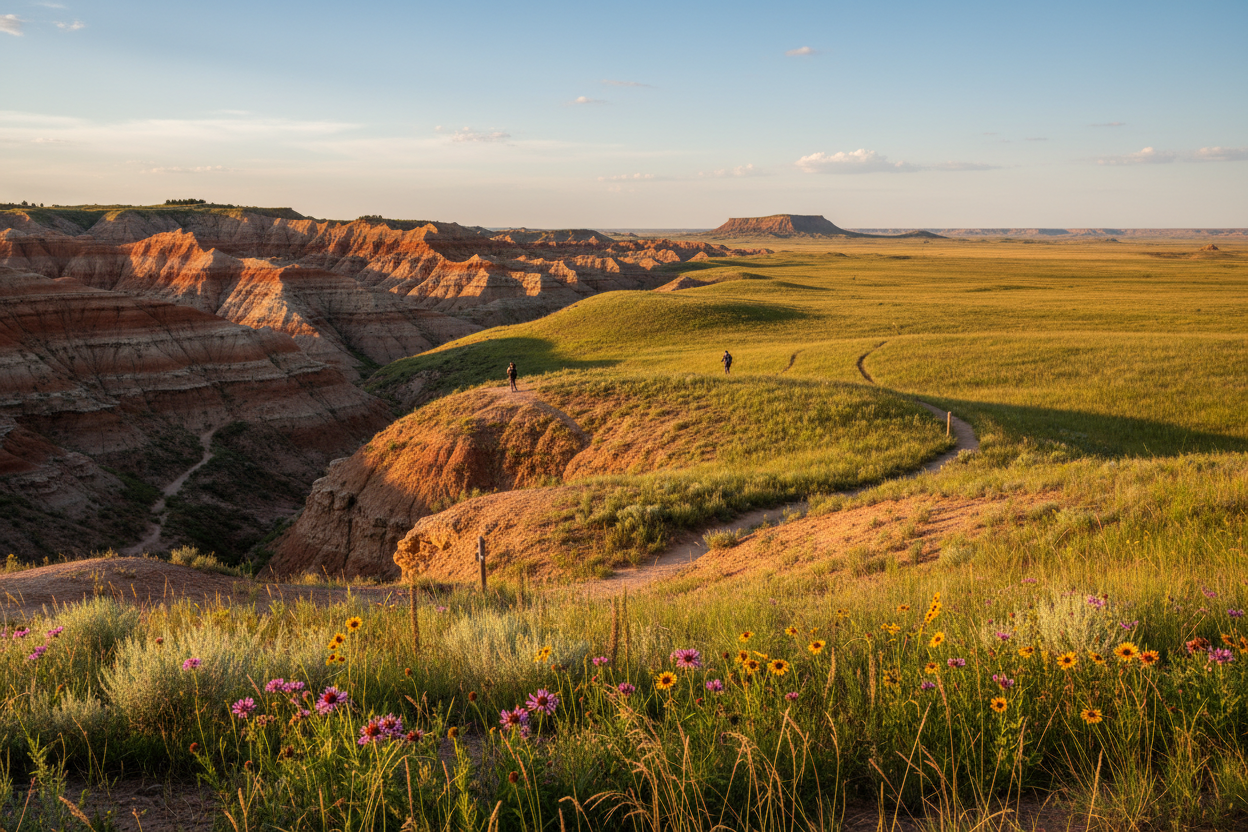
North Dakota’s hiking scene is refreshingly uncrowded compared to more popular destinations. You’ll often find yourself alone with nature, watching bison graze in the distance or catching sight of wild horses roaming free. The state’s geological diversity is remarkable – from the colorful sedimentary layers of the badlands to the vast prairie ecosystems that once covered much of North America.
The weather here can be challenging, but it also creates some of the most dramatic skies you’ll ever see. I’ve watched thunderstorms roll across the prairie from miles away, and witnessed sunsets that painted the badlands in colors that seemed almost unreal.
Badlands Adventures: Theodore Roosevelt National Park
Petrified Forest Loop Trail
Starting with one of my absolute favorites, the Petrified Forest Loop Trail offers a moderate 10.4-mile hike through some of the most stunning badlands scenery in the state. This trail takes you through an ancient petrified forest where you can see fossilized tree stumps that are millions of years old. The trail can be challenging due to its length and some steep sections, but the payoff is incredible.
What makes this hike special is the sense of walking through prehistoric time. The colorful rock formations tell the story of ancient rivers and forests, and on clear days, you can see for miles across the badlands. I recommend starting early in the morning to avoid the heat and catch the best lighting for photography.
Caprock Coulee Trail
The Caprock Coulee Trail is a fantastic 4.3-mile loop that showcases the classic badlands landscape. This moderately difficult trail features steep climbs and descents, but rewards hikers with panoramic views of the Little Missouri River valley. The trail winds through colorful rock formations and offers excellent opportunities for wildlife viewing.
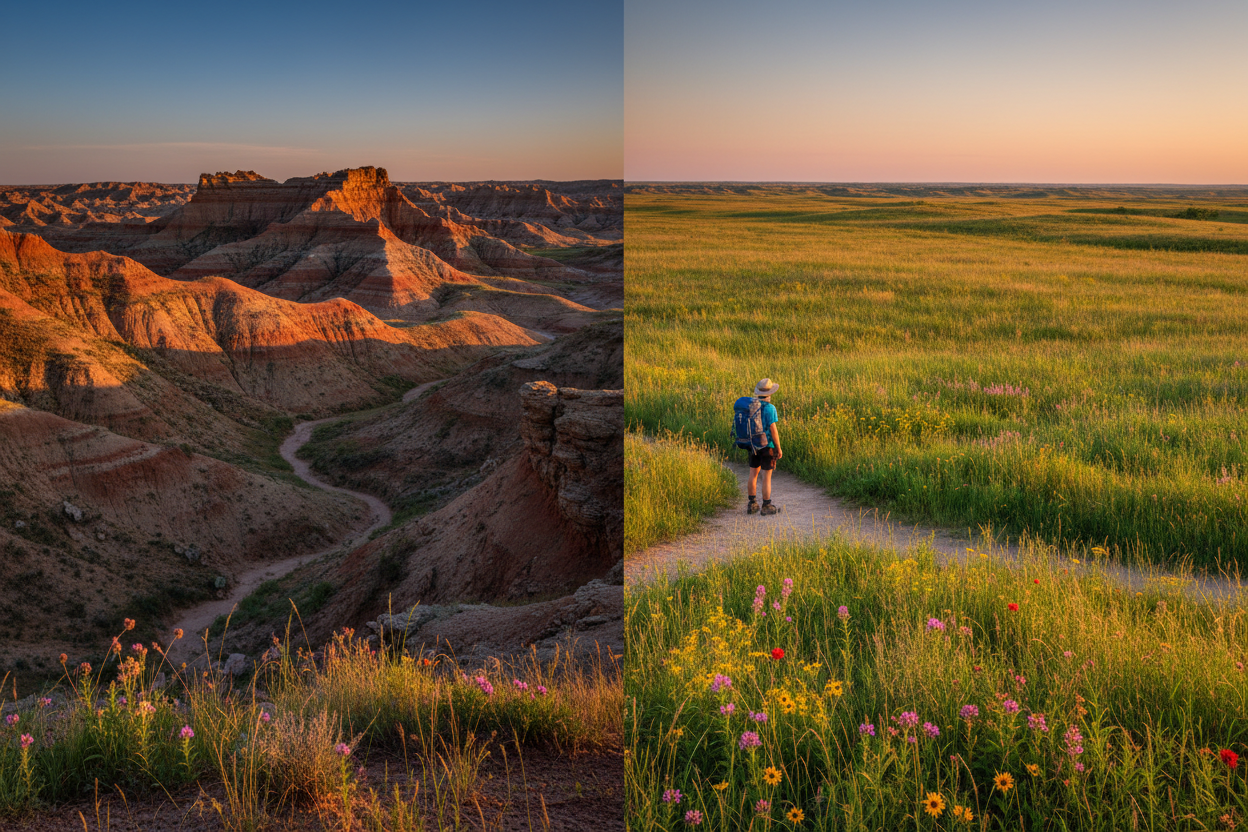
I’ve encountered bison, prairie dogs, and various bird species on this trail. The caprock formations are particularly impressive – these hard sandstone layers have protected the softer rocks below, creating the distinctive layered appearance that makes the badlands so photogenic.
Achenbach Trail
For serious hikers looking for a challenge, the Achenbach Trail is an 18-mile backcountry adventure that requires overnight camping. This trail takes you deep into the wilderness of Theodore Roosevelt National Park, following the Little Missouri River through remote badlands terrain.
The Achenbach Trail offers solitude and pristine wilderness experiences that are hard to find elsewhere. You’ll need a backcountry permit and should be prepared for primitive camping conditions, but the experience of spending a night under the vast North Dakota sky is unforgettable.
Wind Canyon Trail
Don’t let the short 0.4-mile distance fool you – the Wind Canyon Trail packs a serious punch in terms of scenery. This easy trail leads to one of the most photographed overlooks in Theodore Roosevelt National Park, offering sweeping views of the Little Missouri River and the surrounding badlands.
This trail is perfect for sunset viewing, and I’ve spent many evenings here watching the light change across the landscape. It’s also wheelchair accessible, making it a great option for families or anyone with mobility limitations.
Buckhorn Trail
The Buckhorn Trail is an 11.2-mile challenging hike that takes you through diverse badlands terrain. This trail features significant elevation changes and can be quite strenuous, but it offers some of the most remote and pristine hiking experiences in the park.
What I love about this trail is how it showcases the variety within the badlands ecosystem. You’ll walk through grasslands, climb over rocky ridges, and descend into hidden coulees. The trail can be difficult to follow in places, so good navigation skills are essential.
Prairie and Grassland Trails
Maah Daah Hey Trail
The Maah Daah Hey Trail is North Dakota’s premier long-distance trail, stretching 144 miles through the badlands and connecting Theodore Roosevelt National Park’s north and south units. While most people experience it in sections, even a day hike on this trail provides an excellent taste of North Dakota’s diverse landscapes.
The trail passes through private and public lands, offering hikers a chance to see working ranches alongside wild areas. I recommend the sections near Medora for day hiking, where you’ll get beautiful badlands views without committing to the full trail.
Little Missouri State Park Trails
Little Missouri State Park offers several shorter trails that are perfect for families or those looking for easier hiking options. The park features well-maintained trails that wind through prairie grasslands and along the Little Missouri River.
These trails are particularly beautiful in late spring and early summer when wildflowers are blooming. The park also offers excellent bird watching opportunities, and I’ve seen everything from meadowlarks to hawks during my visits.
Cross Ranch State Park Nature Trail
The Cross Ranch State Park Nature Trail is a 1.5-mile interpretive trail that provides an excellent introduction to prairie ecosystems. This easy trail features informative signs about native plants and wildlife, making it educational as well as scenic.
The trail follows the Missouri River and offers beautiful river views along with prairie landscapes. It’s a great option for families with children or anyone interested in learning more about North Dakota’s natural history.
Unique Natural Areas and Hidden Gems
Killdeer Mountain Four Bears Trail
Located on the Fort Berthold Indian Reservation, the Killdeer Mountain Four Bears Trail offers a unique hiking experience with cultural significance. This moderate trail provides panoramic views of Lake Sakakawea and the surrounding countryside.
The trail has historical importance to the Three Affiliated Tribes, and hiking here provides insight into both natural beauty and Native American heritage. The views from the summit are spectacular, especially during sunrise or sunset.
Icelandic State Park Trail
Icelandic State Park offers several miles of trails through diverse habitats including prairie, wetlands, and woodland areas. The trails here are relatively easy and perfect for bird watching and wildlife photography.
The park’s location along the Tongue River creates a unique ecosystem that supports a variety of plant and animal species. I’ve had great luck spotting deer, various waterfowl, and numerous songbird species here.
Sheyenne River Valley Trail
The Sheyenne River Valley offers some of the most scenic hiking in eastern North Dakota. The trail system here winds through hardwood forests and prairie openings, following the meandering Sheyenne River.
This area is particularly beautiful in fall when the deciduous trees change colors. The relatively flat terrain makes it accessible to hikers of all skill levels, and the river provides numerous opportunities for rest stops and wildlife viewing.
Fort Abraham Lincoln State Park Trails
Fort Abraham Lincoln State Park combines natural beauty with historical significance. The trail system here includes both prairie hiking and visits to reconstructed military buildings and Native American earth lodges.
The trails offer excellent views of the Missouri River and provide opportunities to learn about the area’s military and Native American history. The Custer House and On-A-Slant Indian Village are particularly interesting stops along the way.
Sully Creek State Park Trail
Sully Creek State Park offers a peaceful hiking experience through prairie and creek bottom environments. The trails here are relatively short but provide excellent opportunities for solitude and wildlife observation.
The park’s location in a remote area of southwestern North Dakota means you’re likely to have the trails to yourself. I’ve encountered deer, various bird species, and even the occasional coyote during my visits here.
Lake Metigoshe State Park Trails
Located in the Turtle Mountains near the Canadian border, Lake Metigoshe State Park offers a different kind of North Dakota hiking experience. The trails here wind through mixed forest and around the beautiful lake.
This area feels more like Minnesota or Wisconsin than typical North Dakota landscape, with its dense forests and clear lake waters. The trails are well-maintained and offer excellent opportunities for both hiking and cross-country skiing in winter.
Planning Your North Dakota Hiking Adventure
When planning your North Dakota hiking trips, timing is crucial. The best hiking weather typically occurs from late spring through early fall, though each season offers its own unique beauty. Summer can be hot, especially in the badlands, so early morning or evening hikes are often more comfortable.
Weather in North Dakota can change rapidly, so always check forecasts and be prepared for sudden changes. I always carry extra water, especially in the badlands where shade is limited and dehydration can happen quickly.
Wildlife encounters are common throughout North Dakota, particularly with bison in Theodore Roosevelt National Park. Always maintain safe distances from wildlife and never approach or feed wild animals. Bison may look docile, but they’re unpredictable and can be dangerous.
Essential Gear and Safety Tips
North Dakota’s open landscapes mean you’ll often be exposed to the elements, so sun protection is essential. I always carry sunscreen, a hat, and sunglasses, even on cloudy days. The wind can be intense, so windproof layers are important.
Navigation can be challenging on some trails, particularly in the badlands where landmarks can look similar. A GPS device or smartphone with offline maps is highly recommended. Some areas have limited cell phone coverage, so don’t rely solely on your phone for navigation.
Water sources are limited on many trails, so carry more water than you think you’ll need. The dry climate and wind can lead to dehydration more quickly than you might expect, especially if you’re not used to the conditions.
Frequently Asked Questions
What is the best time of year to hike in North Dakota?
The best hiking season in North Dakota is typically from May through September. Late spring and early summer offer wildflower blooms and mild temperatures, while fall provides beautiful colors and fewer insects. Winter hiking is possible but requires proper gear and experience with cold weather conditions.
Do I need permits for hiking in North Dakota?
Most day hiking in North Dakota doesn’t require permits, but backcountry camping in Theodore Roosevelt National Park does require a free permit. Some trails on private or tribal lands may have restrictions, so always check current regulations before your visit.
Are the trails well-marked?
Trail marking varies significantly across North Dakota. Trails in state and national parks are generally well-marked, but backcountry trails and some remote areas may have minimal signage. Always carry a map and compass or GPS device, especially on longer or more remote trails.
What wildlife should I be aware of while hiking?
North Dakota is home to bison, mountain lions, black bears (rare), rattlesnakes, and various other wildlife. Bison are the most commonly encountered large animals and should be given a wide berth. Always make noise while hiking to avoid surprising wildlife, and store food properly when camping.
Can I bring my dog on these trails?
Pet policies vary by location. Dogs are allowed on most trails in state parks but must be leashed. In Theodore Roosevelt National Park, dogs are allowed on some trails but not others, and they must always be leashed. Check specific regulations for each area before bringing your pet.
Are there guided hiking options available?
While North Dakota doesn’t have as many commercial guiding services as some states, Theodore Roosevelt National Park offers ranger-led programs during the summer months. Some local outdoor clubs and organizations also offer group hikes and educational programs.
North Dakota’s hiking trails offer something truly special – the chance to experience vast, uncrowded landscapes that showcase the beauty of America’s prairie heritage. From the dramatic badlands formations to the endless grasslands, these trails provide opportunities for both adventure and solitude that are increasingly rare in our busy world. Whether you’re seeking a challenging backcountry experience or a peaceful nature walk, North Dakota’s trails are waiting to surprise and inspire you.