
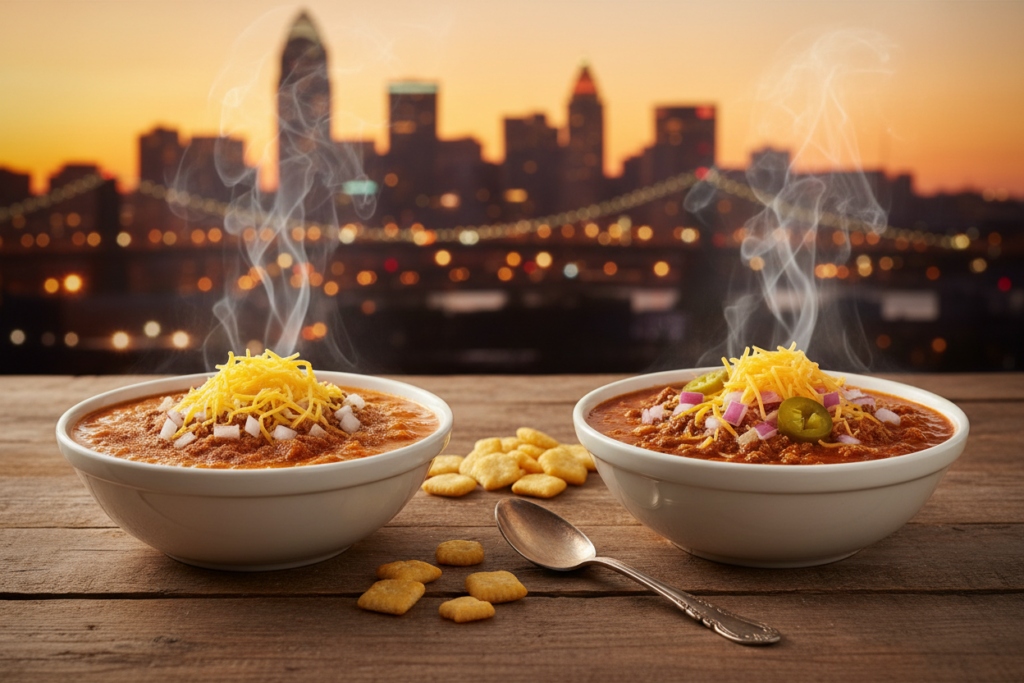
Walk into any Cincinnati neighborhood, and you’ll quickly discover that locals take their chili seriously. Not the thick, bean-laden Texas variety or the spicy New Mexican green chili, but a unique, Mediterranean-spiced concoction served over spaghetti that has sparked passionate debates for decades. At the heart of this culinary controversy lies the eternal question: Skyline or Gold Star?
This isn’t just about food preferences. It’s about family traditions, childhood memories, and regional pride all rolled into one steaming bowl of controversy. Whether you’re a lifelong Cincinnatian or a curious outsider trying to understand what all the fuss is about, the Cincinnati chili wars represent something deeper than restaurant rivalries.
Understanding Cincinnati Chili: More Than Just a Regional Quirk
Before diving into the great Skyline versus Gold Star debate, it’s essential to understand what makes Cincinnati chili so distinctive. Created by Macedonian immigrants in the 1920s, this unique dish bears little resemblance to traditional American chili. Instead of chunks of meat and beans, Cincinnati chili features a thin, almost sauce-like consistency with finely ground beef and a secret blend of spices that typically includes cinnamon, allspice, cloves, and sometimes chocolate.
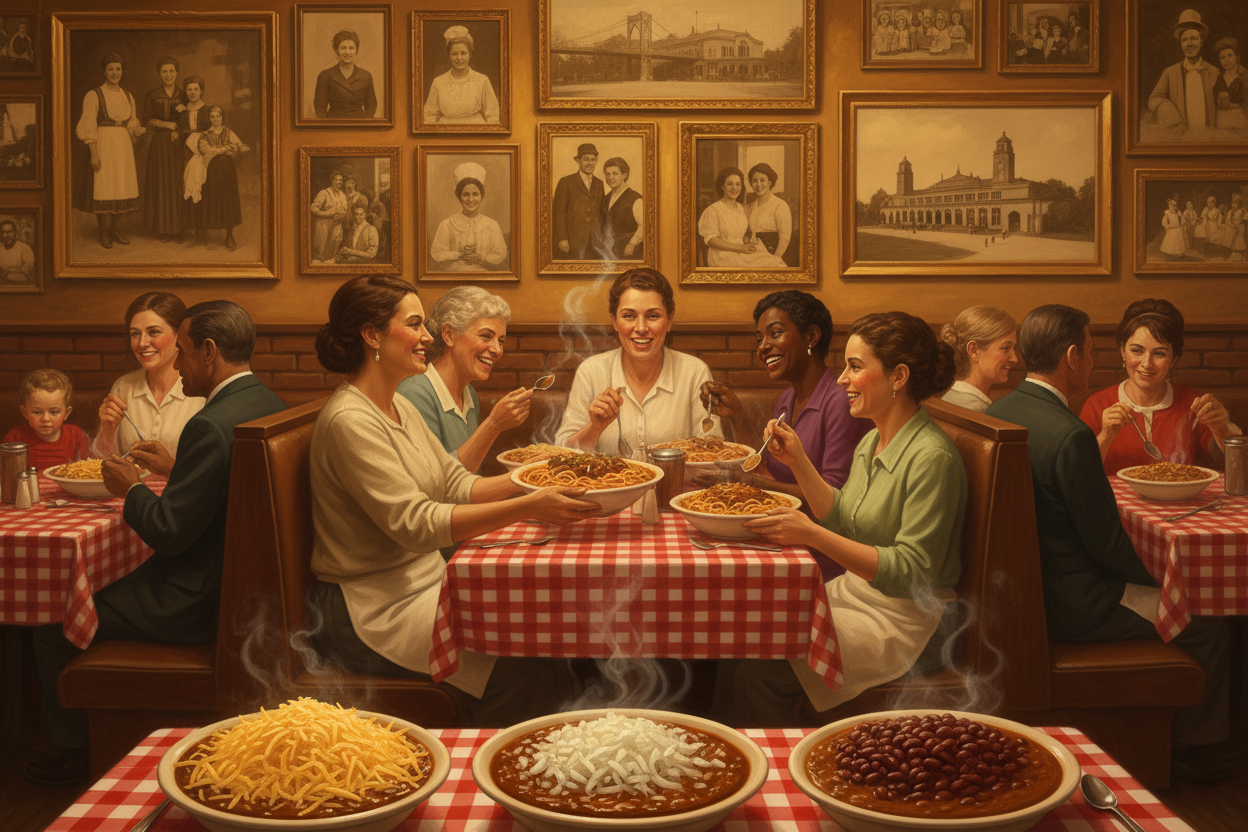
The traditional serving method involves ladling this aromatic mixture over a bed of spaghetti, creating what locals call a “two-way.” Add shredded cheddar cheese for a “three-way,” diced onions for a “four-way,” or kidney beans for the full “five-way” experience. This numerical system has become as much a part of Cincinnati culture as the chili itself.
What strikes many first-time visitors is how polarizing this dish can be. You either love the sweet-savory complexity or find yourself bewildered by the unusual flavor profile. There’s rarely middle ground, which perhaps explains why the local chili chains inspire such fierce loyalty.
Skyline Chili: The Blue-Collar Champion
Founded in 1949 by Nicholas Lambrinides, Skyline Chili has grown from a single location in downtown Cincinnati to over 160 restaurants across the Midwest. The chain’s success stems not just from expansion but from maintaining a consistent product that resonates with working-class families and college students alike.
Skyline’s chili tends to be slightly sweeter than its competitors, with a more pronounced cinnamon flavor that some describe as almost dessert-like. The consistency is notably thin, allowing it to coat the spaghetti evenly without overwhelming the pasta. Regular customers often praise Skyline’s cheese portions, claiming the restaurant is more generous with the sharp cheddar that crowns each dish.
The Skyline experience extends beyond just the food. The restaurants maintain a casual, no-frills atmosphere where conversations flow freely between strangers at the counter. Many locations still feature the classic diner-style setup with red stools and Formica countertops, creating an authentic slice of mid-century Americana.
From a business perspective, Skyline has mastered the art of brand loyalty. Their canned chili products are available in grocery stores throughout the region, allowing homesick Cincinnatians to recreate the experience anywhere. The company has also embraced social media and merchandise, turning their logo into a symbol of Cincinnati pride.
Gold Star Chili: The Sophisticated Alternative
Established in 1965 by the Daoud brothers, Gold Star Chili positioned itself as a more upscale alternative to the existing chili parlors. With fewer locations than Skyline but a devoted following, Gold Star has carved out its niche by focusing on what they consider a more refined recipe and dining experience.
Gold Star’s chili recipe leans toward a more savory profile, with less sweetness and a more complex spice blend. Supporters argue that this creates a more sophisticated flavor that doesn’t rely on sugar to mask other ingredients. The consistency is slightly thicker than Skyline’s, which some prefer because it clings better to the spaghetti without creating a soupy mess.
The restaurant atmosphere at Gold Star locations tends to be more family-oriented, with booth seating and a slightly more polished interior design. While this appeals to some customers, others miss the authentic diner feel that characterizes many Skyline locations.
Gold Star has also differentiated itself through menu innovation, offering more diverse options beyond traditional chili ways. Their coneys (chili dogs) are particularly popular, and they’ve experimented with items like chili burritos and salads that incorporate their signature sauce.
The Taste Test: Breaking Down the Differences
When conducting blind taste tests, the differences between Skyline and Gold Star become more apparent. Skyline’s sweeter profile makes it more approachable for newcomers, especially children who might be intimidated by stronger spices. The thinner consistency also means the flavors distribute more evenly throughout each bite.
Gold Star’s more complex spice blend appeals to those who prefer savory over sweet. The slightly thicker consistency provides more texture, and some argue it feels more substantial as a meal. However, this same thickness can make the dish feel heavier, which might not appeal to everyone.
The cheese quality varies between locations rather than brands, making it difficult to declare a clear winner in this category. Both chains use similar sharp cheddar, though portion sizes can differ significantly between individual restaurants.
Temperature consistency is another factor where experiences vary. Both chains struggle with keeping the chili at optimal serving temperature, though this seems more related to individual location management than corporate standards.
Beyond the Big Two: Cincinnati’s Chili Diversity
While Skyline and Gold Star dominate the conversation, Cincinnati’s chili scene includes several other noteworthy players. Camp Washington Chili, operating since 1940, maintains a cult following among purists who appreciate its unchanged recipe and authentic diner atmosphere. Many consider it the most traditional representation of Cincinnati chili.
Pleasant Ridge Chili offers a grittier, more working-class experience with a recipe that some claim comes closest to the original Macedonian immigrants’ vision. The small chain has resisted expansion, maintaining just a few locations that feel like neighborhood secrets.
Dixie Chili, primarily located in Northern Kentucky, provides another variation with its own loyal customer base. Their recipe falls somewhere between Skyline’s sweetness and Gold Star’s complexity, creating what some consider the perfect middle ground.
These smaller chains and independent chili parlors remind us that the Cincinnati chili tradition extends far beyond corporate competition. Each represents different aspects of the immigrant experience and working-class culture that gave birth to this unique culinary tradition.
The Cultural Impact: More Than Just Food
The Skyline versus Gold Star debate reflects deeper cultural divisions within Cincinnati. Skyline’s blue-collar image appeals to those who value authenticity and tradition over refinement. Gold Star’s slightly upscale positioning attracts customers who want the Cincinnati chili experience but with more sophistication.
These preferences often correlate with neighborhood demographics, family traditions, and even generational differences. Many families pass down their chili loyalty like other cultural traditions, creating multi-generational customer bases that resist change.
The debate also serves as a bonding experience for Cincinnatians, providing common ground for strangers to connect. Whether defending your preferred chain or playfully arguing with friends, chili conversations create social connections that transcend economic and social boundaries.
For transplants and visitors, choosing a side in the chili wars becomes a way of integrating into local culture. It’s a relatively low-stakes decision that nonetheless signals your willingness to embrace Cincinnati’s unique identity.
Making Your Choice: A Personal Journey
Ultimately, the Cincinnati chili debate cannot be resolved through objective analysis. Personal taste, childhood memories, and individual preferences will always trump any systematic comparison. The beauty lies not in determining a winner but in appreciating the passion and tradition both chains represent.
For newcomers, the best approach involves trying both options multiple times before declaring loyalty. Visit different locations, try various “ways,” and pay attention to how each version makes you feel. The right choice is the one that creates positive memories and satisfies your particular palate.
Consider also exploring the smaller chains and independent parlors that contribute to Cincinnati’s chili diversity. These experiences often provide insight into the tradition’s roots and help you understand why this unusual dish inspires such devotion.
The Cincinnati chili debate will likely continue as long as both chains exist, and that’s exactly as it should be. This friendly rivalry keeps both companies innovating while preserving the traditions that make Cincinnati chili special. Whether you’re Team Skyline, Gold Star loyal, or somewhere in between, you’re participating in a uniquely American food culture that deserves celebration rather than resolution.
So the next time someone asks about your chili preference, remember that you’re not just choosing a restaurant—you’re joining a conversation that connects you to decades of Cincinnati history, immigrant innovation, and the simple pleasure of a warm meal shared with community. In that context, maybe the real winner is the city itself, blessed with such a deliciously contentious culinary tradition.