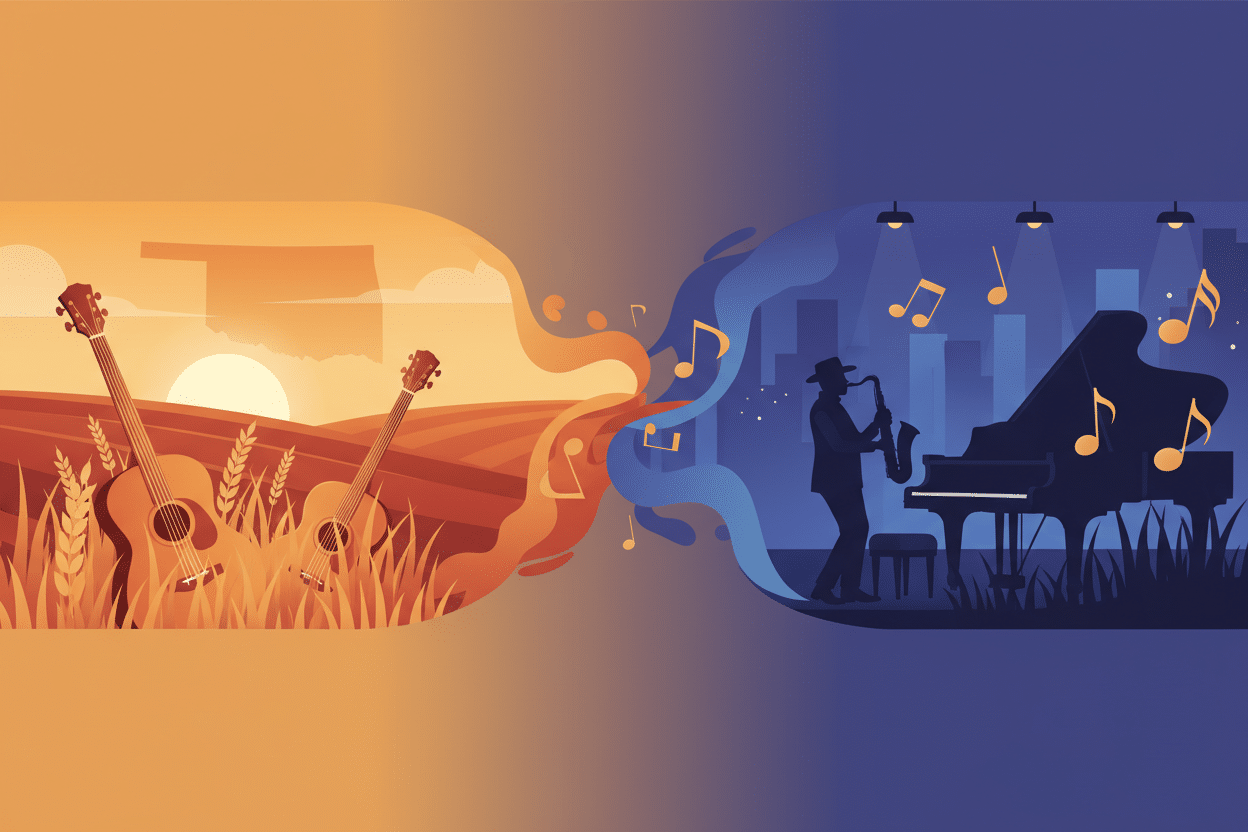
Oklahoma Music Scene: From Red Dirt to Jazz
Oklahoma’s musical landscape is as vast and diverse as its sprawling plains. From the soulful strains of red dirt country echoing across rural highways to the sophisticated jazz rhythms that once made Tulsa a musical mecca, the Sooner State has cultivated a rich tapestry of sound that continues to influence artists worldwide. This unique musical heritage reflects the state’s complex cultural identity, shaped by Native American traditions, frontier spirit, oil boom prosperity, and the resilience born from hardship.
While many associate Oklahoma primarily with country music, the state’s musical story encompasses far more than cowboy ballads and honky-tonk anthems. It’s a narrative that includes pioneering jazz musicians, influential folk artists, rock innovators, and the distinctly Oklahoma phenomenon known as red dirt music. Understanding this musical evolution offers insight into not just Oklahoma’s cultural identity, but also the broader American musical experience.
The Roots of Oklahoma’s Musical Heritage
Oklahoma’s musical foundation was laid long before statehood in 1907. Native American tribes brought their own rich musical traditions to the territory, with ceremonial songs, drumming, and storytelling that would later influence the state’s broader musical identity. The forced relocation known as the Trail of Tears brought together diverse tribal cultures, creating a unique blend of indigenous musical expressions that persist today.
The arrival of European settlers and African Americans added new layers to this musical foundation. Gospel music found fertile ground in rural communities, while the blues took root in the state’s growing urban centers. The discovery of oil in the early 1900s brought sudden wealth and cultural exchange, attracting musicians and music lovers from across the nation.
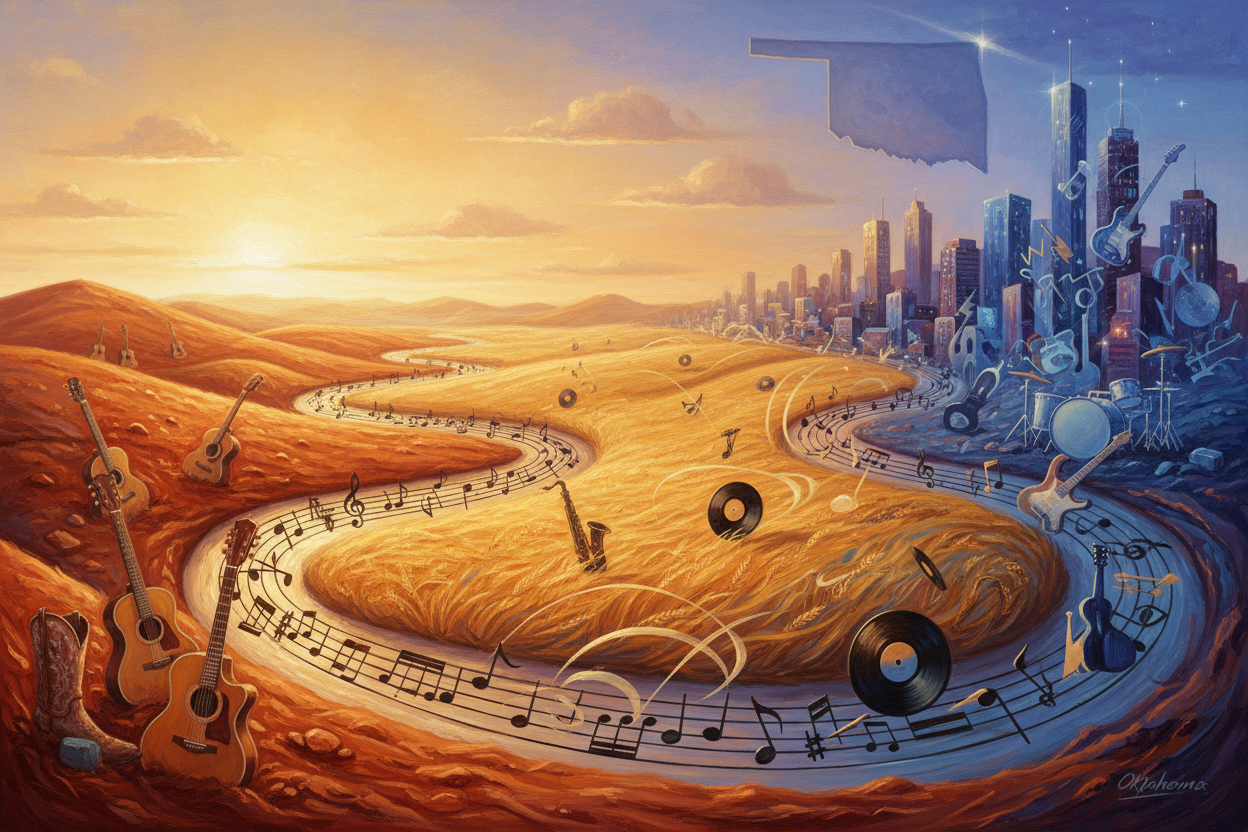
This convergence of cultures created an environment where musical experimentation flourished. Traditional folk songs mixed with blues progressions, gospel harmonies blended with Native American rhythms, and the resulting sound became uniquely Oklahoman. These early musical fusions would later influence everything from Western swing to modern red dirt country.
Red Dirt Country: Oklahoma’s Signature Sound
Perhaps no musical genre is more closely associated with Oklahoma than red dirt country. Named after the state’s distinctive reddish soil, this style emerged in the 1970s and 1980s as a reaction against the increasingly polished Nashville sound. Red dirt artists sought to return country music to its roots, emphasizing authentic storytelling, raw emotion, and a connection to the land.
The movement found its spiritual home in Stillwater, where college students and local musicians gathered in venues like The Tumbleweed Ballroom. Artists like Cross Canadian Ragweed, Jason Boland & The Stragglers, and Stoney LaRue became the face of this distinctly Oklahoma sound. Their music spoke to working-class experiences, small-town life, and the struggles and triumphs of ordinary people.
What sets red dirt apart from mainstream country is its emphasis on artistic integrity over commercial appeal. These artists typically maintain creative control over their music, often releasing albums on independent labels or through their own companies. The lyrics tend to be more personal and introspective, dealing with themes of love, loss, redemption, and the search for meaning in an increasingly complex world.
The red dirt scene has produced numerous artists who’ve achieved both critical acclaim and commercial success. Turnpike Troubadours, perhaps the most successful red dirt band, has sold out major venues across the country while maintaining their Oklahoma roots. Their temporary hiatus and subsequent reunion demonstrated the deep emotional connection fans have with this music.
Jazz Legacy: Oklahoma’s Sophisticated Side
While red dirt country captures Oklahoma’s rural soul, the state’s jazz heritage reveals its cosmopolitan aspirations. During the early to mid-20th century, Oklahoma produced an remarkable number of influential jazz musicians who helped shape the genre’s development. This wasn’t coincidental – the state’s unique cultural mix and economic opportunities created ideal conditions for musical innovation.
Tulsa, in particular, became a significant jazz center during the oil boom years. The city’s Greenwood District, known as “Black Wall Street,” was home to numerous jazz clubs and venues that attracted top-tier talent. The area’s prosperity allowed for a thriving entertainment scene that rivaled those in Kansas City and Chicago.
Oklahoma’s most famous jazz export is undoubtedly Charlie Christian, the electric guitar pioneer from Bonham who revolutionized jazz guitar playing. His innovative use of the electric guitar as a lead instrument rather than just rhythm support influenced countless musicians and helped establish the guitar as a central jazz instrument. Christian’s brief but brilliant career with the Benny Goodman Sextet showcased the sophisticated musical education available in Oklahoma.
Other notable Oklahoma jazz artists include pianist Claude Williams, who played with Count Basie’s orchestra, and saxophonist Barney Kessel. The state’s jazz tradition continues today with venues like Tulsa’s Jazz Hall of Fame, which preserves and celebrates this important musical legacy.
Folk and Americana Traditions
Oklahoma’s folk music tradition runs deep, rooted in the experiences of pioneers, farmers, and oil workers who shaped the state’s character. This tradition gained national attention during the folk revival of the 1960s, when artists began looking to authentic American experiences for musical inspiration.
Woody Guthrie stands as Oklahoma’s most influential folk artist, though his relationship with his home state was complicated. Born in Okemah, Guthrie experienced firsthand the hardships of the Dust Bowl era, which profoundly influenced his songwriting. His songs like “Dust Bowl Blues” and “I Ain’t Got No Home” captured the struggles of ordinary Americans during the Great Depression.
While Guthrie achieved his greatest fame after leaving Oklahoma, his influence on the state’s musical identity cannot be overstated. His commitment to social justice and authentic storytelling established a template that continues to influence Oklahoma artists today. The annual Woody Guthrie Folk Festival in Okemah celebrates this legacy while showcasing contemporary folk and Americana artists.
Modern Oklahoma folk and Americana artists like John Fullbright and Parker Millsap carry forward this tradition of thoughtful songwriting and social consciousness. Their music demonstrates how the folk tradition continues to evolve while maintaining its core values of authenticity and emotional honesty.
Rock and Alternative Music Scene
Oklahoma’s rock and alternative music scene may not receive the same attention as its country and folk traditions, but it has produced several notable artists who’ve achieved national recognition. The state’s rock heritage includes everything from garage rock pioneers to modern alternative acts.
The Flaming Lips, arguably Oklahoma’s most internationally successful rock band, emerged from Oklahoma City in the 1980s with a psychedelic sound that defied easy categorization. Led by Wayne Coyne, the band has maintained strong Oklahoma ties throughout their career, often incorporating local references and imagery into their music and performances.
Other notable Oklahoma rock acts include All American Rejects from Stillwater, who achieved mainstream success in the early 2000s with radio-friendly alternative rock, and Hinder from Oklahoma City, who found success in the hard rock/post-grunge scene. These artists demonstrate that Oklahoma’s musical creativity extends far beyond traditional genres.
The state’s alternative and indie music scene continues to develop, with venues in Oklahoma City and Tulsa supporting emerging artists. While these acts may not achieve the same level of recognition as red dirt country artists, they represent an important part of Oklahoma’s contemporary musical landscape.
Modern Oklahoma Music Scene
Today’s Oklahoma music scene reflects both continuity and change. Red dirt country remains strong, with new artists like Koe Wetzel and Whiskey Myers (though technically from Texas and Mississippi respectively, they’re heavily influenced by the Oklahoma sound) gaining national attention. Established artists continue to tour and record, maintaining the genre’s authenticity while reaching new audiences.
The rise of streaming services and social media has allowed Oklahoma artists to reach global audiences without leaving their home state. This has been particularly beneficial for red dirt and Americana artists, whose music appeals to listeners seeking authentic alternatives to mainstream country and pop.
Venues across the state continue to support live music, from intimate songwriter rounds to major festival productions. The annual Rocklahoma festival brings national rock acts to Pryor, while smaller venues throughout the state provide crucial support for developing artists.
Music education in Oklahoma has also evolved, with programs at universities like the University of Oklahoma and Oklahoma State University producing well-trained musicians who contribute to the state’s musical vitality. These programs help ensure that Oklahoma’s musical traditions continue while also fostering innovation and creativity.
Conclusion: The Continuing Oklahoma Musical Journey
Oklahoma’s musical journey from red dirt to jazz represents more than just stylistic diversity – it reflects the state’s complex cultural identity and its ongoing contribution to American music. Whether it’s the authentic storytelling of red dirt country, the sophisticated improvisation of jazz, the social consciousness of folk music, or the creative energy of rock and alternative acts, Oklahoma music speaks to universal human experiences while maintaining its distinctive regional character.
This musical heritage continues to evolve as new artists build upon established traditions while exploring fresh creative directions. The state’s commitment to supporting live music, preserving its musical history, and fostering new talent ensures that Oklahoma will remain an important part of America’s musical landscape for generations to come.
For music lovers, Oklahoma offers a rich tapestry of sounds that reward deeper exploration. From the honky-tonks of Stillwater to the jazz clubs of Tulsa, from the folk festivals of Okemah to the rock venues of Oklahoma City, the state’s musical diversity provides something for every taste while telling the ongoing story of American music itself.
Frequently Asked Questions
What is red dirt music and how did it originate?
Red dirt music is a subgenre of country music that originated in Oklahoma in the 1970s and 1980s. Named after Oklahoma’s distinctive red soil, it emphasizes authentic storytelling, raw emotion, and independence from Nashville’s commercial country music industry. The movement centered around Stillwater and college venues, with artists maintaining creative control over their music.
Who are some famous jazz musicians from Oklahoma?
Oklahoma has produced several influential jazz musicians, most notably Charlie Christian, the electric guitar pioneer who revolutionized jazz guitar playing. Other notable artists include pianist Claude Williams, who played with Count Basie, and guitarist Barney Kessel. Tulsa was particularly important during the jazz era, especially the Greenwood District.
How did Woody Guthrie influence Oklahoma’s music scene?
Woody Guthrie, born in Okemah, became one of America’s most influential folk musicians. His songs about the Dust Bowl and Great Depression established a tradition of socially conscious songwriting that continues to influence Oklahoma artists today. Though he achieved fame after leaving Oklahoma, his legacy is celebrated annually at the Woody Guthrie Folk Festival.
What venues support live music in Oklahoma today?
Oklahoma has numerous venues supporting live music, from intimate songwriter rounds to major festivals. Key venues include various clubs in Stillwater’s red dirt scene, Tulsa’s jazz venues, and Oklahoma City’s rock clubs. The state also hosts festivals like Rocklahoma and the Woody Guthrie Folk Festival.
How has streaming technology affected Oklahoma musicians?
Streaming services and social media have allowed Oklahoma artists to reach global audiences without leaving the state. This has been particularly beneficial for red dirt and Americana artists, whose authentic sound appeals to listeners seeking alternatives to mainstream music. It has helped preserve the independence that characterizes much of Oklahoma’s music scene.