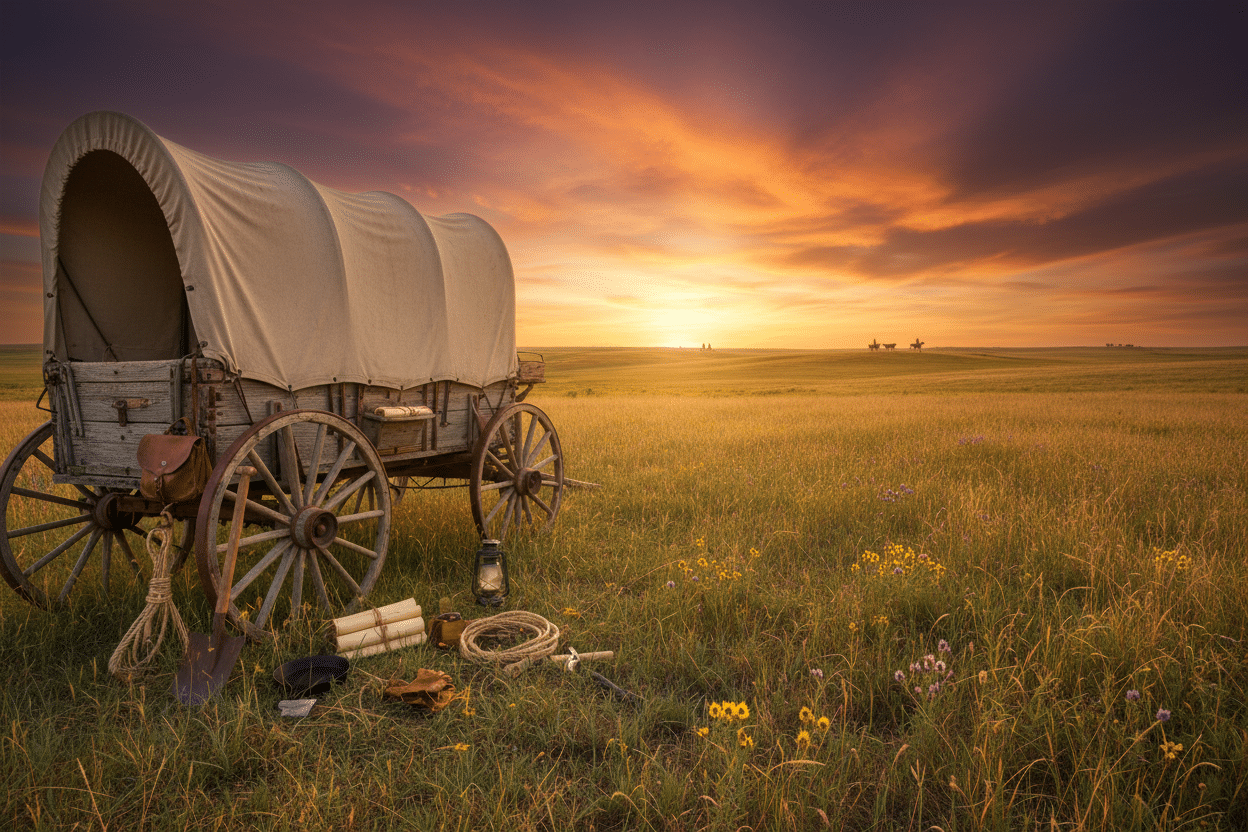
Pioneer History in Oklahoma: A Journey Back in Time
Step into the dusty boots of the brave souls who ventured into the untamed wilderness of Oklahoma Territory in the late 1800s. The story of Oklahoma’s pioneers isn’t just a collection of dates and names in a history book—it’s a tapestry woven with courage, determination, and the unwavering spirit of those who dared to dream of a better life on the frontier. From the thunderous Land Runs to the quiet perseverance of families building homesteads from scratch, Oklahoma’s pioneer history offers us a fascinating glimpse into an era that shaped the very foundation of the Sooner State.
As we embark on this journey back in time, you’ll discover the remarkable stories of ordinary people who accomplished extraordinary things. Whether you’re a history enthusiast, a descendant of Oklahoma pioneers, or simply curious about the Old West, this exploration of pioneer life will transport you to a time when the horizon held infinite possibilities and every sunset marked another day survived on the frontier.
The Great Land Runs: Oklahoma’s Most Dramatic Chapter
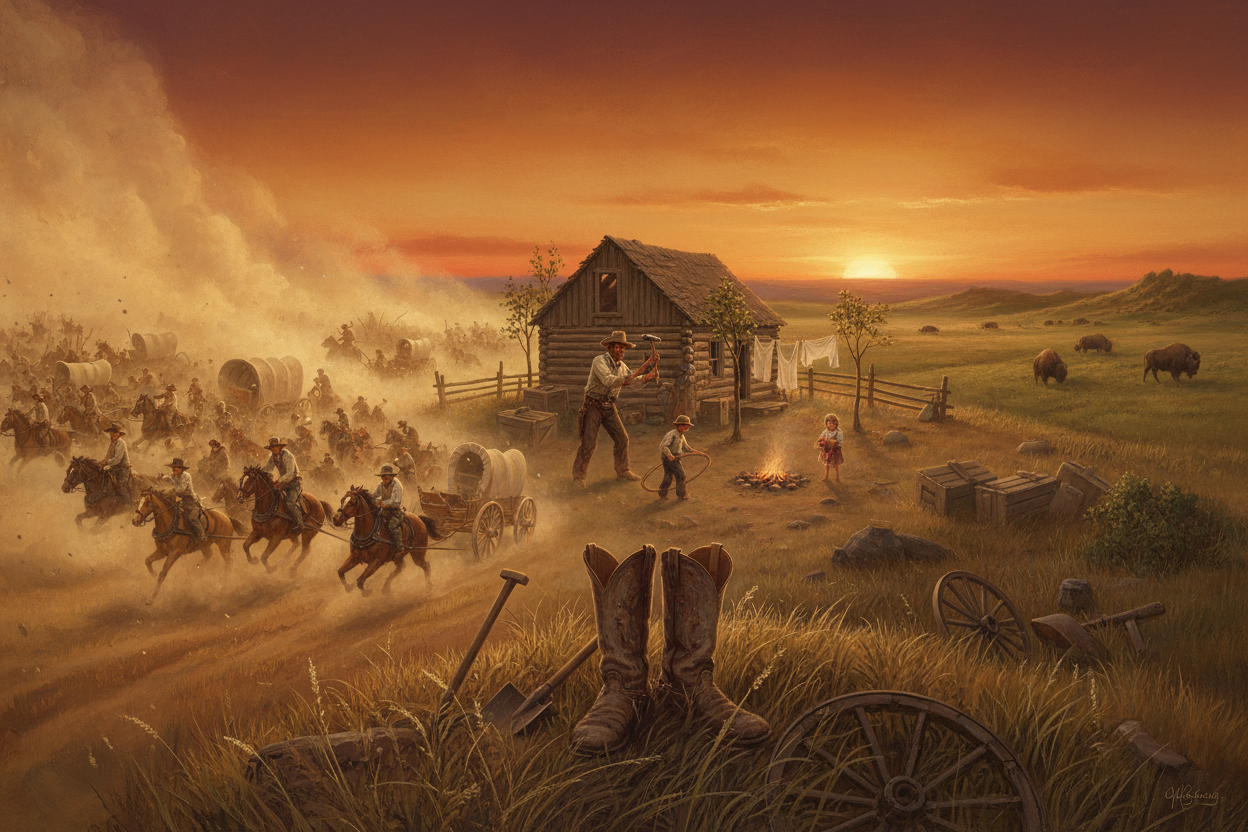
Picture this: thousands of hopeful settlers lined up at the border, their wagons loaded with everything they owned, waiting for the crack of a gunshot that would signal the start of the most famous land rush in American history. The Oklahoma Land Run of 1889 wasn’t just an event—it was a phenomenon that captured the imagination of the entire nation.
On April 22, 1889, at precisely high noon, an estimated 50,000 people raced into the Unassigned Lands of central Oklahoma Territory. In a single day, towns like Oklahoma City and Guthrie sprang up from empty prairie, complete with makeshift businesses, temporary shelters, and the organized chaos that comes with instant civilization. The sight must have been absolutely breathtaking—a human wave spreading across the landscape like water breaking through a dam.
But the 1889 Land Run was just the beginning. Oklahoma would witness several more land runs between 1891 and 1895, each bringing new waves of settlers eager to claim their piece of the American Dream. The Cherokee Outlet Run of 1893 was the largest, with over 100,000 participants racing for 40,000 homesteads. These events weren’t just about acquiring land; they represented hope, opportunity, and the chance to start fresh in a place where your past didn’t define your future.
Daily Life on the Oklahoma Frontier
While the Land Runs grab the headlines in Oklahoma pioneer history, the real story lies in the daily struggles and triumphs of families who built their lives from the ground up. Imagine arriving at your new homestead with nothing but a wagon full of supplies and 160 acres of raw prairie stretching endlessly in every direction.
The first order of business was shelter. Many pioneer families initially lived in their wagons or hastily constructed dugouts carved into hillsides. These underground homes, while humble, provided protection from the fierce Oklahoma weather—the scorching summers, bone-chilling winters, and those legendary tornadoes that could appear without warning. As time and resources allowed, families would build more permanent structures, often starting with simple sod houses made from prairie grass and dirt.
Water was precious and often scarce. Pioneers had to dig wells by hand, sometimes going down 100 feet or more before hitting water. Women would walk miles to the nearest creek or spring, carrying heavy buckets back to their homesteads. Every drop was treasured and carefully conserved for drinking, cooking, and the occasional luxury of a bath.
Food came from whatever the family could grow, hunt, or trade. Gardens were essential, and pioneer women became experts at preserving vegetables for the long winter months. Wild game supplemented their diet, and many families kept chickens for eggs and the occasional Sunday dinner. The nearest general store might be days away by wagon, so self-sufficiency wasn’t just preferred—it was necessary for survival.
The Role of Women in Pioneer Oklahoma
When we think of Oklahoma pioneers, we often picture rugged men with weathered faces and calloused hands. But the women who ventured into Oklahoma Territory were every bit as brave and resourceful as their male counterparts. These remarkable women didn’t just survive the frontier—they helped civilize it.
Pioneer women wore many hats, often literally and figuratively. They were mothers, teachers, nurses, farmers, and community builders all rolled into one. While their husbands worked the fields or pursued other trades, women managed the household, raised the children, tended gardens, preserved food, made clothes, and provided medical care when doctors were scarce or nonexistent.
Education was a priority for many pioneer families, and women often took the lead in establishing schools. In countless Oklahoma communities, the first school was taught by a young woman who had brought her teaching skills west. These one-room schoolhouses became the heart of many settlements, serving not just as centers of learning but as community gathering places for social events and town meetings.
Some women even participated directly in the Land Runs. Single women over 21 could claim homesteads just like men, and many did. These independent spirits proved that the frontier offered opportunities for women that simply didn’t exist in more established parts of the country.
Building Communities from Scratch
One of the most remarkable aspects of Oklahoma pioneer history is how quickly scattered homesteaders transformed empty prairie into thriving communities. Within months of the first Land Run, tent cities had evolved into organized towns with elected officials, newspapers, and bustling main streets.
The process usually began with a few essential businesses: a general store, a blacksmith shop, and perhaps a saloon. As more families arrived, churches would spring up—often starting as outdoor services under the open sky before congregations could afford to build proper structures. Schools followed close behind, recognizing that education was crucial for the community’s future.
Transportation was vital for these new communities to survive and grow. Towns that managed to attract railroad lines had a significant advantage, as the rails brought supplies, mail, and new residents. The arrival of the first train was often celebrated as a major milestone in a town’s development.
Law and order were constant challenges in these rapidly growing communities. Many towns hired marshals or sheriffs to maintain peace, and vigilante justice wasn’t uncommon when official law enforcement was overwhelmed or absent. The stories of these early lawmen read like something out of a Western novel, because in many ways, they were living in the real-life Wild West.
Challenges and Hardships of Pioneer Life
Life on the Oklahoma frontier was far from easy, and the challenges faced by pioneers would test even the strongest spirits. Weather was perhaps the most unpredictable enemy. Oklahoma’s climate could be brutal—scorching droughts that lasted for months, sudden blizzards that could trap families in their homes for days, and tornadoes that could destroy years of hard work in minutes.
The Dust Bowl of the 1930s, while technically after the pioneer era, had its roots in the farming practices established by early settlers. The breaking up of prairie grassland for farming, while necessary for survival, would later contribute to one of America’s greatest environmental disasters.
Isolation was another constant companion for many pioneer families. The nearest neighbor might be miles away, and trips to town were infrequent and time-consuming. This isolation was particularly hard on women, who often went weeks without adult conversation beyond their immediate family members.
Medical care was primitive at best. Families had to be prepared to handle everything from broken bones to childbirth with whatever knowledge and supplies they had on hand. Many pioneer women became skilled in herbal medicine and folk remedies out of necessity. The mortality rate, especially for children, was heartbreakingly high by today’s standards.
Economic uncertainty was a constant worry. Crop failures, market fluctuations, and natural disasters could wipe out a family’s entire livelihood in a single season. Many pioneers supplemented their farming income with other trades—blacksmithing, carpentry, or operating small businesses from their homesteads.
Native American Relations and Cultural Intersections
The story of Oklahoma’s pioneers cannot be told without acknowledging the complex relationship with the Native American tribes who had called this land home long before the Land Runs began. Oklahoma was designated as Indian Territory, and many tribes had been relocated here from other parts of the United States during the tragic era of forced removals.
When the Land Runs opened certain areas to white settlement, it created a unique situation where pioneer communities developed alongside established Native American communities. These interactions ranged from peaceful trade relationships to tense territorial disputes. Many pioneers learned valuable survival skills from Native Americans, including farming techniques suited to the local climate and knowledge of which wild plants were safe to eat.
Some of the most successful early settlements in Oklahoma were those where pioneers and Native Americans found ways to cooperate and learn from each other. Trading posts became important centers of cultural exchange, where different communities could meet on relatively neutral ground.
However, it’s important to acknowledge that the opening of Oklahoma Territory to white settlement came at a significant cost to Native American communities. The Land Runs represented another chapter in the long history of westward expansion that displaced indigenous peoples from their ancestral lands.
Legacy of Oklahoma’s Pioneer Spirit
The pioneer era in Oklahoma lasted roughly from 1889 to the early 1900s, but its impact on the state’s character and culture continues to this day. The values that sustained those early settlers—self-reliance, community cooperation, determination in the face of adversity, and optimism about the future—became deeply embedded in Oklahoma’s identity.
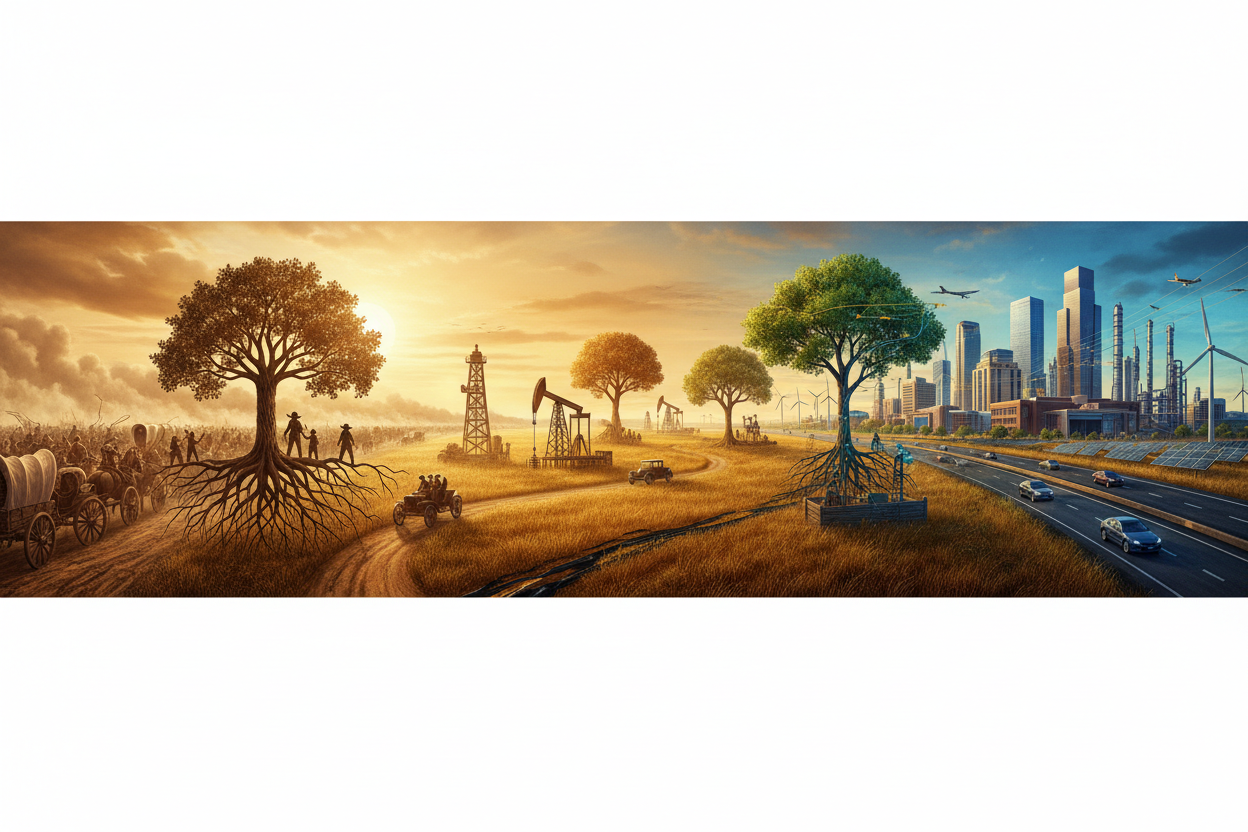
Many of Oklahoma’s most prominent families can trace their roots back to those brave souls who lined up at the border for the Land Runs. Their descendants went on to build the state’s oil industry, establish its universities, and create the modern Oklahoma we know today. The entrepreneurial spirit that drove people to risk everything for a chance at free land evolved into the business acumen that would make Oklahoma a leader in energy, agriculture, and aerospace.
The rapid community building that characterized the pioneer era also left its mark on Oklahoma’s approach to civic engagement. The tradition of neighbors helping neighbors, of communities coming together to solve problems, and of citizen involvement in local government all have their roots in those early frontier settlements where everyone’s contribution was essential for survival.
Today, you can still see evidence of Oklahoma’s pioneer heritage throughout the state. Historic districts in cities like Guthrie preserve the architecture and layout of those early boom towns. Museums across Oklahoma display artifacts and tell stories of pioneer life. And every year, communities throughout the state hold festivals and celebrations that commemorate their pioneer founders.
Preserving Pioneer History for Future Generations
As we move further away from the pioneer era, the importance of preserving these stories and artifacts becomes even more critical. Oklahoma has numerous museums, historical societies, and preservation groups working to keep pioneer history alive for future generations.
The Oklahoma History Center in Oklahoma City houses an extensive collection of pioneer artifacts, photographs, and documents. Smaller local museums throughout the state focus on the specific pioneer history of their communities. These institutions don’t just preserve objects—they preserve the human stories that bring history to life.
Many Oklahoma families still possess letters, diaries, photographs, and heirlooms passed down from their pioneer ancestors. These personal items often provide the most intimate glimpses into pioneer life, revealing the hopes, fears, and daily experiences of real people who lived through this remarkable period.
Oral history projects have become increasingly important as the last generation with direct connections to pioneer families passes away. These efforts to record the stories and memories of elderly Oklahomans help ensure that the human dimension of pioneer history isn’t lost to time.
The pioneer era in Oklahoma represents one of the most dramatic and rapid transformations in American history. In just a few decades, empty prairie became a thriving state filled with bustling cities, productive farms, and vibrant communities. The courage, determination, and vision of Oklahoma’s pioneers created the foundation for everything that followed.
As we look back on this remarkable period, we’re reminded that the American Dream isn’t just an abstract concept—it’s something that real people pursued with real consequences. The pioneers who raced across the Oklahoma prairie in 1889 and the years that followed were chasing their version of that dream, and their success or failure would determine not just their own fate, but the future of an entire state.
Their story continues to inspire us today because it reminds us that ordinary people can accomplish extraordinary things when they’re willing to take risks, work hard, and never give up on their dreams. The next time you drive across Oklahoma’s highways and see the cities, towns, and farmland stretching to the horizon, remember that it all began with a few brave souls who heard a gunshot and raced toward an uncertain but hopeful future.
Frequently Asked Questions About Oklahoma Pioneer History
Q: When did the first Oklahoma Land Run take place?
A: The first and most famous Oklahoma Land Run occurred on April 22, 1889, when approximately 50,000 people raced to claim homesteads in the Unassigned Lands of central Oklahoma Territory.
Q: How much land could pioneers claim during the Land Runs?
A: Most homesteaders could claim 160 acres under the Homestead Act. They had to live on the land and improve it for five years before receiving full ownership, or they could purchase it after six months for $1.25 per acre.
Q: What were “Sooners” and how did Oklahoma get its nickname?
A: “Sooners” were people who illegally entered Oklahoma Territory before the official start of the Land Runs to claim the best land. While this was against the rules, the term eventually became Oklahoma’s official nickname, “The Sooner State.”
Q: What types of homes did Oklahoma pioneers initially build?
A: Many pioneers first lived in dugouts carved into hillsides or sod houses made from prairie grass and dirt. These were later replaced with wooden frame houses as lumber became more available and families became more established.
Q: How did pioneer families obtain food and supplies?
A: Pioneer families grew their own vegetables, hunted wild game, raised livestock, and made periodic trips to general stores in nearby towns. Self-sufficiency was crucial since stores might be days away by wagon.
Q: What role did women play in Oklahoma pioneer communities?
A: Pioneer women were essential to frontier life, serving as mothers, teachers, nurses, farmers, and community builders. Single women over 21 could also claim their own homesteads during the Land Runs.
Q: How quickly did towns develop after the Land Runs?
A: Towns developed remarkably quickly. Oklahoma City and Guthrie, for example, went from empty prairie to organized communities with thousands of residents in a single day. Within months, these tent cities had evolved into proper towns with businesses, schools, and government.
Q: What were the biggest challenges faced by Oklahoma pioneers?
A: Pioneers faced numerous challenges including extreme weather, isolation, limited medical care, economic uncertainty, and the difficulty of farming unfamiliar land. Droughts, blizzards, and tornadoes were constant threats.