

The Apache Wars represent one of the most complex and enduring conflicts in American history, spanning nearly four decades from the 1850s to 1886. These conflicts between Apache tribes and the United States military weren’t just battles for territory—they were clashes between fundamentally different worldviews, ways of life, and concepts of survival. Understanding this heritage requires us to examine both the military strategies employed and the rich cultural perspectives that shaped these encounters.
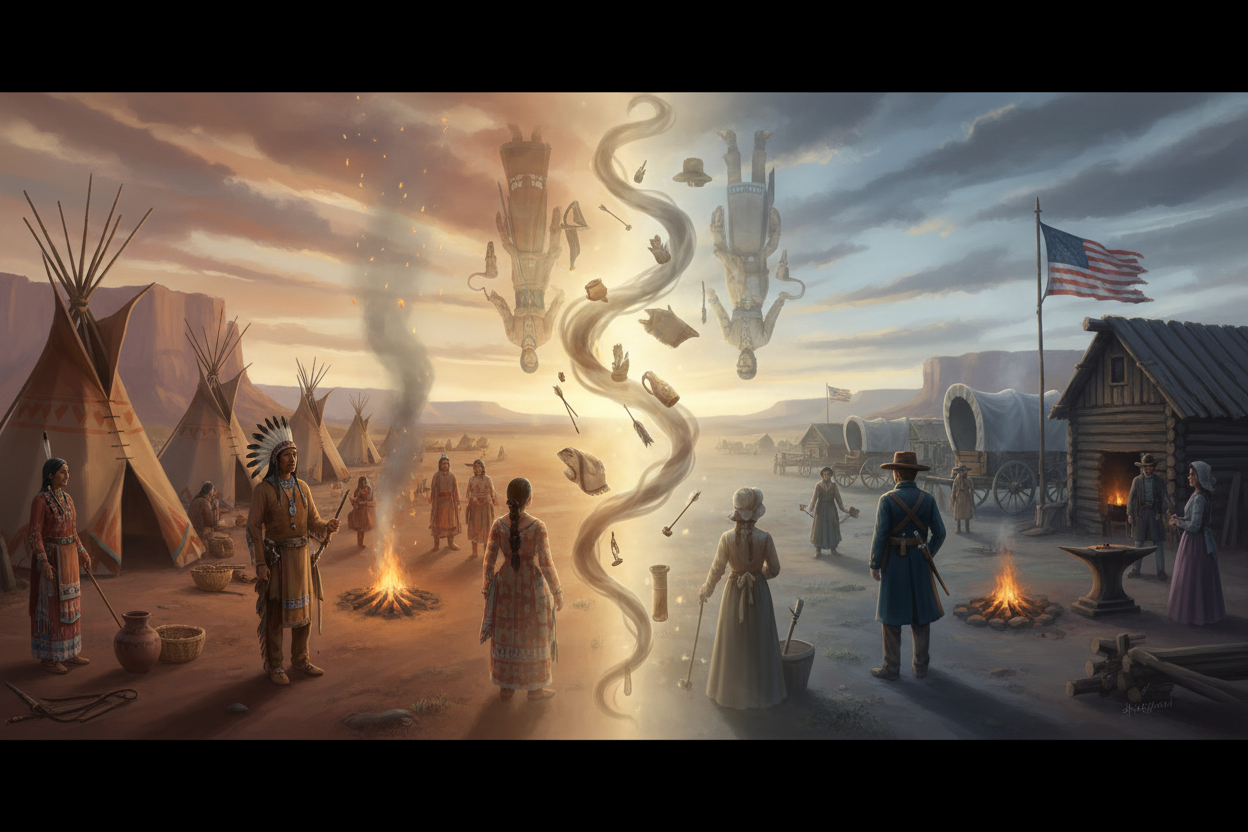
Far from being simple tales of cowboys versus Indians, the Apache Wars reveal intricate stories of resistance, adaptation, and cultural preservation. The legacy of these conflicts continues to influence how we understand indigenous rights, military history, and the complex process of American westward expansion.

Historical Context: The Roots of Conflict
The Apache Wars didn’t emerge in a vacuum. They were the inevitable result of competing claims to the same land, resources, and way of life. When Mexican independence transferred Apache territories to Mexico in 1821, and later when the United States acquired these lands through the Mexican-American War and Gadsden Purchase, the stage was set for prolonged conflict.
The Apache peoples—including the Chiricahua, Mescalero, Jicarilla, and Western Apache—had inhabited the southwestern regions for centuries. Their semi-nomadic lifestyle, based on hunting, gathering, and limited agriculture, brought them into contact with Spanish colonists, Mexican settlers, and eventually American pioneers and military forces.
What many don’t realize is that Apache resistance wasn’t uniform or coordinated. Different bands made separate peace treaties, broke them under various circumstances, and often found themselves fighting not just American forces but also Mexican troops and other Native American groups. This fragmented approach both strengthened and weakened Apache resistance efforts throughout the conflict period.
Key Military Campaigns and Strategies
The military history of the Apache Wars reveals fascinating tactical innovations on both sides. Apache warriors, led by legendary figures like Cochise, Victorio, and Geronimo, perfected guerrilla warfare techniques that would later influence military thinking worldwide. They used their intimate knowledge of desert terrain to conduct lightning raids, disappear into seemingly impossible hiding places, and strike where least expected.
American military leaders gradually learned that conventional warfare tactics proved ineffective against Apache fighters. The establishment of a network of frontier forts, the use of Apache scouts recruited from peaceful bands, and the development of specialized tracking units marked significant adaptations in military strategy.
General George Crook’s innovative approach particularly stands out. Rather than relying solely on large cavalry units, Crook employed Apache scouts who understood the terrain and their adversaries’ tactics. This controversial strategy proved remarkably effective, though it also created lasting divisions within Apache communities between those who cooperated with American forces and those who continued resistance.
Apache Cultural Perspectives and Resistance
From the Apache viewpoint, these weren’t “wars” in the European sense but rather efforts to maintain their traditional way of life against overwhelming external pressure. Apache culture emphasized individual autonomy, spiritual connection to specific landscapes, and complex kinship networks that extended across vast territories.
The concept of raiding held particular significance in Apache society. What Americans labeled as “attacks” or “depredations” were often traditional economic activities essential to Apache survival and cultural identity. Young men gained status through successful raids, and the redistribution of captured goods strengthened community bonds.
Apache spiritual beliefs also played crucial roles in their resistance efforts. Many warriors believed in protective ceremonies and spiritual power that could shield them from harm. Leaders like Geronimo were respected not just as military tacticians but as spiritual figures whose supernatural abilities inspired followers and terrified enemies.
The decision to surrender often came not from military defeat but from the exhaustion of trying to maintain traditional life under impossible circumstances. When families faced starvation and constant pursuit, even the most determined leaders sometimes chose reservation life over continued warfare.
Impact on American Military Development
The Apache Wars significantly influenced American military doctrine and frontier policy. The challenges of fighting in harsh desert terrain against highly mobile enemies forced military leaders to develop new strategies, communication systems, and logistical approaches.
The conflict demonstrated the importance of intelligence gathering, local knowledge, and cultural understanding in military operations. Officers who succeeded against Apache forces were often those who took time to understand their opponents’ motivations, tactics, and social structures.
These experiences also highlighted the limitations of purely military solutions to complex cultural and political problems. The most lasting “victories” often came through negotiation, economic pressure, and gradual cultural change rather than battlefield defeats.
The use of Native American scouts and guides became standard practice, though this strategy created ongoing ethical questions about dividing indigenous communities and exploiting internal conflicts for military advantage.
Cultural Legacy and Modern Understanding
Today’s understanding of the Apache Wars has evolved significantly from earlier romanticized or demonized portrayals. Modern historians and Apache descendants work together to present more nuanced perspectives that acknowledge the complexity of these conflicts and their lasting impacts on all involved communities.
Apache communities have preserved many cultural traditions despite the disruptions of the war period and subsequent reservation life. Language preservation efforts, traditional ceremonies, and oral histories maintain connections to pre-war cultural practices while adapting to contemporary circumstances.
The military heritage of these conflicts appears in numerous museums, battlefield sites, and historical markers throughout the Southwest. However, there’s growing recognition of the need to include Apache perspectives in these interpretations and to acknowledge the human costs of expansion and conquest.
Educational initiatives now emphasize teaching these conflicts as part of broader patterns of cultural contact, adaptation, and survival rather than simple tales of military conquest or heroic resistance.
Lessons for Contemporary Military and Cultural Studies
The Apache Wars offer valuable insights for modern military strategists, anthropologists, and policymakers dealing with cultural conflicts worldwide. The importance of understanding local cultures, the limitations of purely military approaches to complex problems, and the long-term consequences of cultural disruption remain relevant today.
These conflicts also demonstrate how different groups can maintain distinct identities while adapting to changed circumstances. Apache communities today blend traditional practices with modern economic and political participation, showing resilience and adaptability that echoes their ancestors’ survival strategies.
The role of individual leaders in shaping group responses to crisis situations provides insights into leadership, decision-making under pressure, and the complex relationships between personal choice and cultural expectations.
Conclusion
The Apache Wars heritage encompasses far more than military battles and political treaties. These conflicts represent a crucial period in American history when different cultures, worldviews, and ways of life came into direct and often violent contact. Understanding this heritage requires us to examine multiple perspectives, acknowledge complex motivations on all sides, and recognize the lasting impacts of these encounters.
The military history reveals innovative tactics, strategic adaptations, and the gradual development of approaches that would influence American military thinking for generations. The cultural perspectives remind us that behind every battle were real people fighting to preserve their families, traditions, and ways of understanding the world.
As we continue to grapple with questions of cultural preservation, indigenous rights, and the legacy of American expansion, the Apache Wars provide both cautionary tales and examples of remarkable resilience. The heritage of these conflicts belongs not just to military historians or Apache descendants but to all Americans seeking to understand the complex processes that shaped our nation.
By studying this heritage with respect for all perspectives involved, we gain insights that extend far beyond historical curiosity. We learn about human adaptability, the costs of cultural conflict, and the ongoing importance of seeking understanding across cultural divides.
Frequently Asked Questions
How long did the Apache Wars last?
The Apache Wars spanned approximately 35 years, from the early 1850s until Geronimo’s final surrender in 1886. However, tensions and smaller conflicts occurred both before and after these dates.
Who were the most famous Apache leaders during these conflicts?
The most well-known Apache leaders included Cochise, Victorio, Mangas Coloradas, and Geronimo. Each led different bands and employed various strategies in their resistance efforts.
What role did Apache scouts play in the conflicts?
Apache scouts served as guides, trackers, and fighters for the U.S. Army. Their knowledge of terrain and Apache tactics proved invaluable, though their service created lasting divisions within Apache communities.
Where did most of the Apache Wars take place?
The conflicts primarily occurred in present-day Arizona, New Mexico, and northern Mexico, with some activities extending into Texas and Colorado.
How do modern Apache communities view this historical period?
Contemporary Apache communities maintain diverse perspectives on this period, generally emphasizing their ancestors’ courage and resistance while working to preserve cultural traditions and educate others about their history.
What ended the Apache Wars?
The wars effectively ended with Geronimo’s surrender in 1886, though this was the result of exhaustion and impossible living conditions rather than decisive military defeat.