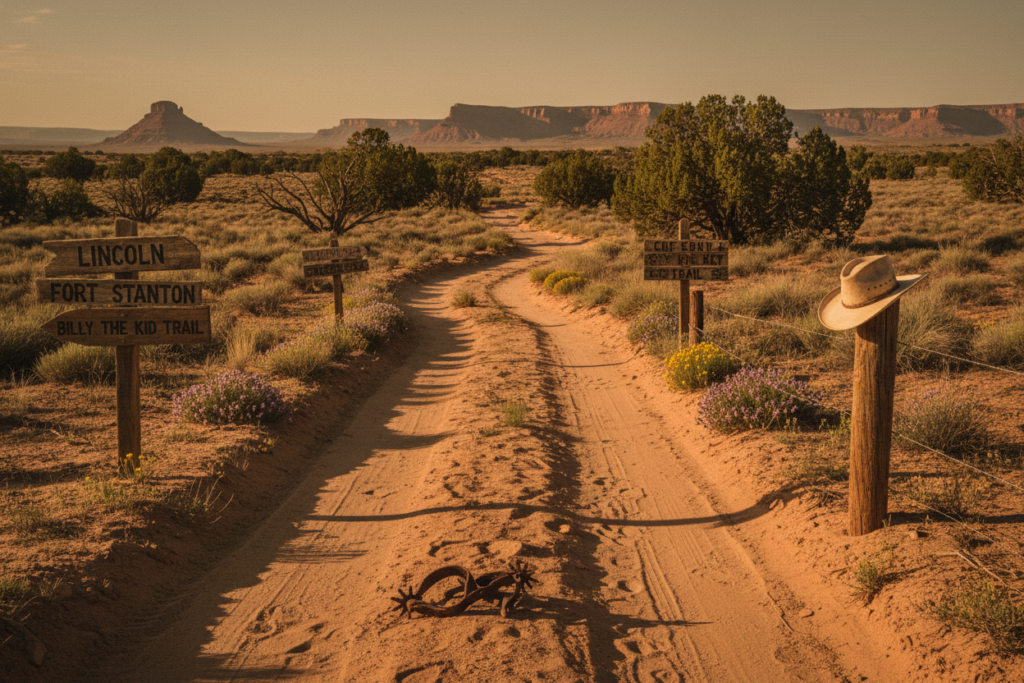
The dusty roads of Lincoln County, New Mexico, still echo with the thundering hooves and gunfire that once made this region synonymous with the Wild West. At the center of it all was Henry McCarty, better known as Billy the Kid, whose legendary exploits during the Lincoln County War transformed him from a young drifter into America’s most famous outlaw. Today, visitors can follow the Billy the Kid Trail to walk in the footsteps of this enigmatic figure and experience the authentic landscapes where history’s most dramatic shootouts unfolded.
This historic trail winds through some of New Mexico’s most captivating terrain, offering modern travelers a chance to step back in time and witness the places where Billy the Kid lived, fought, and ultimately met his fate. From the courthouse where he made his daring escape to the saloons where he planned his next move, every stop along this route tells a piece of the larger story that captivated the American imagination and continues to fascinate visitors from around the world.
The Historical Context: Understanding Billy the Kid’s Lincoln County
Before embarking on your journey along the Billy the Kid Trail, it’s essential to understand the turbulent period known as the Lincoln County War. This wasn’t just a simple tale of good versus evil, but rather a complex business dispute that erupted into violence between 1878 and 1881. The conflict centered around control of lucrative government contracts and the monopolistic practices of the Murphy-Dolan faction, which controlled most of the county’s commerce through their general store and political connections.
Billy the Kid found himself caught in the middle of this conflict when he joined the Regulators, a group of men deputized to arrest those responsible for the murder of John Tunstall, a British rancher and merchant who had challenged the Murphy-Dolan monopoly. What started as a quest for justice quickly devolved into a cycle of revenge killings that would define Billy’s short but notorious career.
The young outlaw, who was probably born around 1859, possessed a combination of charm, intelligence, and deadly skill with a firearm that made him both feared and oddly beloved by many locals. His ability to speak Spanish fluently and his reputation for treating Hispanic residents with respect earned him protection and loyalty that would serve him well during his years as a fugitive.
Starting Your Journey: Lincoln Historic District
Your adventure along the Billy the Kid Trail naturally begins in the town of Lincoln, which has been remarkably preserved as a living museum of the Old West. The entire main street is designated as a National Historic Landmark, and walking down this dusty thoroughfare feels like stepping directly into 1878.
The Lincoln County Courthouse stands as the crown jewel of your visit, not just for its historical significance but for the dramatic events that unfolded within its walls. This is where Billy the Kid was held after his capture and trial, and more importantly, where he staged his legendary escape on April 28, 1881. The building now houses a museum where you can see the actual room where Billy was imprisoned and learn about the circumstances surrounding his daring breakout.
During his escape, Billy managed to slip out of his handcuffs, overpower his guards, and retrieve weapons from the courthouse armory. He then shot and killed Deputy James Bell and later Deputy Bob Olinger, who had been particularly cruel to him during his captivity. The bullet holes from this dramatic confrontation can still be seen in the courthouse walls, providing a visceral connection to this pivotal moment in Wild West history.
Just down the street, you’ll find the Wortley Pat Garrett Hotel, where the famous sheriff who would eventually kill Billy the Kid once stayed. The building has been restored to reflect its 1870s appearance and offers visitors a chance to experience authentic frontier accommodations, complete with period furnishings and artifacts from the era.
Key Stops Along the Billy the Kid Trail
The Tunstall Store represents one of the most significant locations in understanding the Lincoln County War’s origins. John Tunstall established this mercantile business to compete with the Murphy-Dolan monopoly, and his murder on February 18, 1878, sparked the violence that would consume the region. Today, the store has been carefully restored and operates as a museum where visitors can see authentic merchandise from the period and learn about the economic factors that led to the conflict.
The Torreon, a circular stone tower built in the 1850s, served as a fortress and refuge during Apache raids and later during the Lincoln County War. Billy the Kid and his associates used this structure for protection during some of the conflict’s most intense battles. Climbing to the top of the Torreon provides visitors with the same strategic view of the surrounding valley that Billy would have had during those tense days.
San Patricio, located about 45 minutes from Lincoln, offers another crucial stop on your journey. This small Hispanic village provided Billy with refuge and support throughout his outlaw career. The locals here knew him as “Bilito” and appreciated his respectful treatment of their community. The village church and surrounding adobe buildings remain largely unchanged from Billy’s time, offering an authentic glimpse into the cultural landscape that shaped his experiences.
Fort Sumner: The Final Chapter
No journey along the Billy the Kid Trail would be complete without visiting Fort Sumner, where Billy the Kid’s story came to its dramatic conclusion. On the night of July 14, 1881, Sheriff Pat Garrett tracked Billy to the home of Pete Maxwell, where the young outlaw had come to visit his girlfriend and enjoy a late-night meal.
The Billy the Kid Museum in Fort Sumner houses one of the most comprehensive collections of artifacts related to the outlaw’s life and death. Here you can see authenticated photographs, weapons, and personal items that belonged to Billy and his associates. The museum also features detailed exhibits about the Lincoln County War and the broader context of frontier life in New Mexico during the late 19th century.
Billy the Kid’s grave site, located in the old Fort Sumner Cemetery, draws thousands of visitors each year. The grave is marked by a simple headstone shared with his friends Tom O’Folliard and Charlie Bowdre, both of whom were killed by Pat Garrett’s posse. The headstone has been stolen and recovered multiple times over the years, leading to the installation of a protective cage that has become part of the site’s distinctive character.
The actual room where Billy was killed has been preserved within the Fort Sumner State Monument. Standing in this space, visitors can imagine the fateful encounter between Billy and Pat Garrett that ended the life of America’s most famous young outlaw just shy of his 22nd birthday.
Planning Your Billy the Kid Trail Adventure
The complete Billy the Kid Trail can be experienced as a day trip, but taking two to three days allows for a more thorough exploration of each site and a better appreciation of the historical context. The trail is approximately 170 miles long and can be driven in a regular passenger vehicle, though some side trips to more remote locations may require higher clearance.
Spring and fall offer the most comfortable weather for exploring the trail, with mild temperatures and clear skies that provide excellent photography opportunities. Summer can be quite hot, especially in the lower elevations, while winter occasionally brings snow to the higher elevations around Lincoln.
Many visitors choose to stay overnight in Lincoln at one of the historic bed and breakfast establishments, which provide an immersive experience in period-appropriate accommodations. Alternatively, Roswell and Ruidoso offer more modern hotel options within reasonable driving distance of the main trail sites.
The Billy the Kid Scenic Byway, which encompasses much of the trail, is well-marked with interpretive signs that provide historical context and help visitors navigate between sites. However, purchasing a detailed guidebook or downloading a trail app can enhance your experience with additional stories, photographs, and historical details that bring the locations to life.
What Makes This Trail Special
Unlike many historical tourist destinations that rely heavily on reconstructions and replicas, the Billy the Kid Trail offers visitors the rare opportunity to see authentic locations where actual historical events took place. The bullet holes in the Lincoln Courthouse walls, the original adobe buildings in San Patricio, and the room where Billy met his end in Fort Sumner all provide genuine connections to the past that few other destinations can match.
The trail also offers insight into the complex social and economic forces that shaped the American frontier. Rather than presenting a simplified narrative of heroes and villains, the sites along the Billy the Kid Trail reveal the nuanced reality of frontier life, where survival often depended on one’s ability to navigate competing loyalties and shifting alliances.
For photography enthusiasts, the trail provides stunning opportunities to capture the dramatic landscapes of the American Southwest. The interplay of light and shadow on the adobe buildings, the vast expanses of high desert terrain, and the authentic period details preserved at each site create compelling subjects for both amateur and professional photographers.
Following the Billy the Kid Trail through Lincoln County offers more than just a glimpse into the life of a famous outlaw. It provides a window into a pivotal period in American history when the frontier was closing and the modern West was being born. Walking in Billy’s footsteps, you’ll gain a deeper understanding of the forces that shaped this legendary figure and the enduring appeal of his story. Whether you’re a history buff, a Wild West enthusiast, or simply someone seeking an authentic American adventure, this trail delivers an unforgettable journey through one of the most fascinating chapters in our nation’s past.
Frequently Asked Questions
How long does it take to complete the Billy the Kid Trail?
The complete trail can be driven in one long day, but most visitors prefer to take 2-3 days to fully explore each site and absorb the historical significance. This allows time for museum visits, guided tours, and photography.
What is the best time of year to visit the Billy the Kid Trail?
Spring (March-May) and fall (September-November) offer the most comfortable weather with mild temperatures and clear skies. Summer can be very hot, while winter occasionally brings snow to higher elevations around Lincoln.
Are there guided tours available along the Billy the Kid Trail?
Yes, several local operators offer guided tours of the trail, and many of the museums and historic sites provide guided walks with knowledgeable interpreters who can share detailed stories about Billy the Kid and the Lincoln County War.
Can the trail be completed in a regular car?
Yes, the main Billy the Kid Trail is accessible by regular passenger vehicles. However, some side trips to more remote locations may require higher ground clearance.
Where can I stay overnight along the trail?
Lincoln offers several historic bed and breakfast establishments for an authentic experience. Roswell and Ruidoso provide modern hotel options within driving distance of the main trail sites.
Are the museums along the trail suitable for children?
Most of the museums and historic sites are family-friendly, though parents should be prepared to discuss the violent aspects of Billy the Kid’s story in an age-appropriate manner. Many sites offer special programs designed for younger visitors.