In the summer of 1680, something extraordinary happened in what is now New Mexico. For the first time in the Americas, indigenous peoples successfully expelled European colonizers from their ancestral lands. The Pueblo Revolt of 1680 stands as one of the most remarkable acts of coordinated resistance in colonial history, demonstrating the power of unity among diverse Native American communities.
This uprising wasn’t just a spontaneous burst of anger—it was a carefully orchestrated rebellion that had been brewing for decades under Spanish colonial oppression. The revolt would forever change the relationship between Pueblo peoples and European settlers, proving that indigenous resistance could achieve what many thought impossible.
The Spanish Colonial System in New Mexico
When Spanish conquistadors first arrived in the Rio Grande Valley in the late 16th century, they encountered a sophisticated network of Pueblo communities. These settlements, with their impressive adobe architecture and complex agricultural systems, had thrived for centuries. The Spanish saw opportunity in these established communities and quickly moved to establish their colonial dominance.
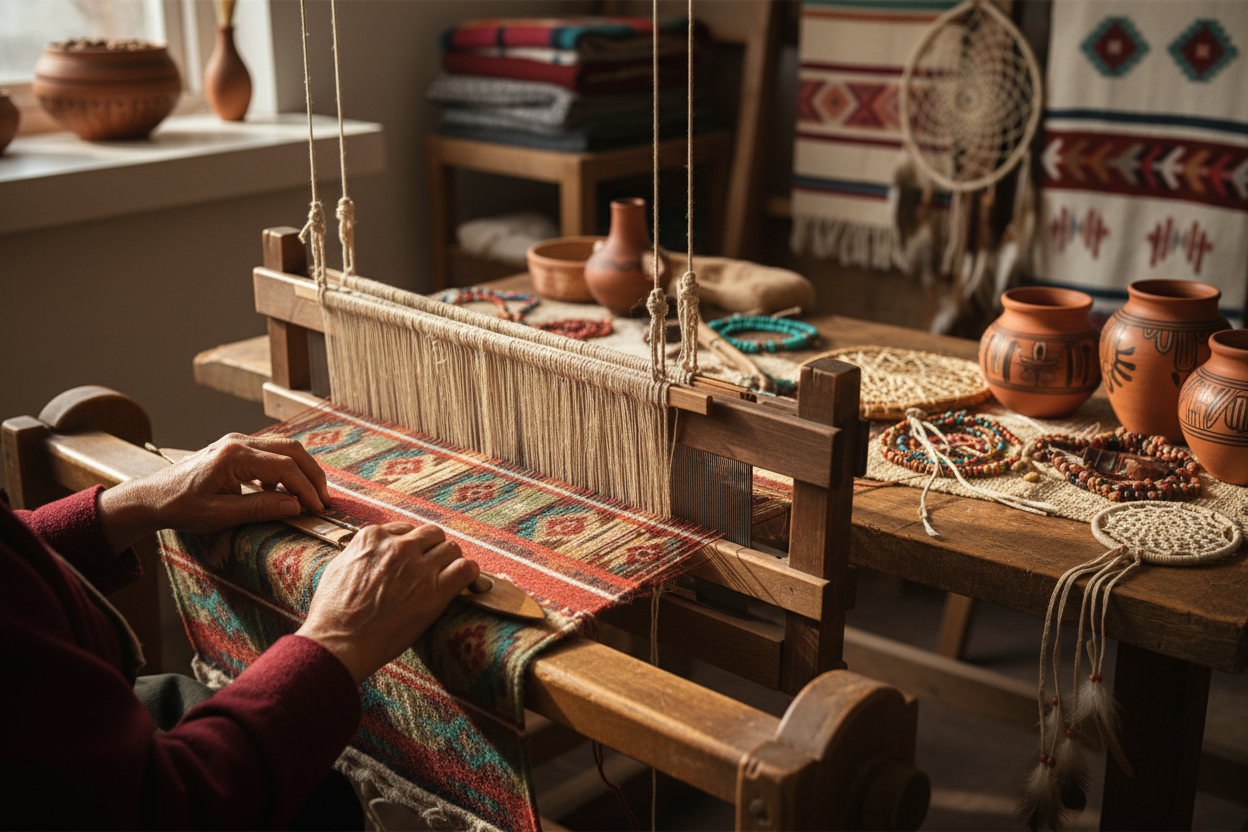
The encomienda system became the backbone of Spanish control. Under this arrangement, Spanish colonists were granted the right to demand tribute and labor from Pueblo communities. What this meant in practice was forced labor, often under brutal conditions. Pueblo men were compelled to work in Spanish fields, mines, and construction projects, while women were required to weave textiles and provide domestic services.
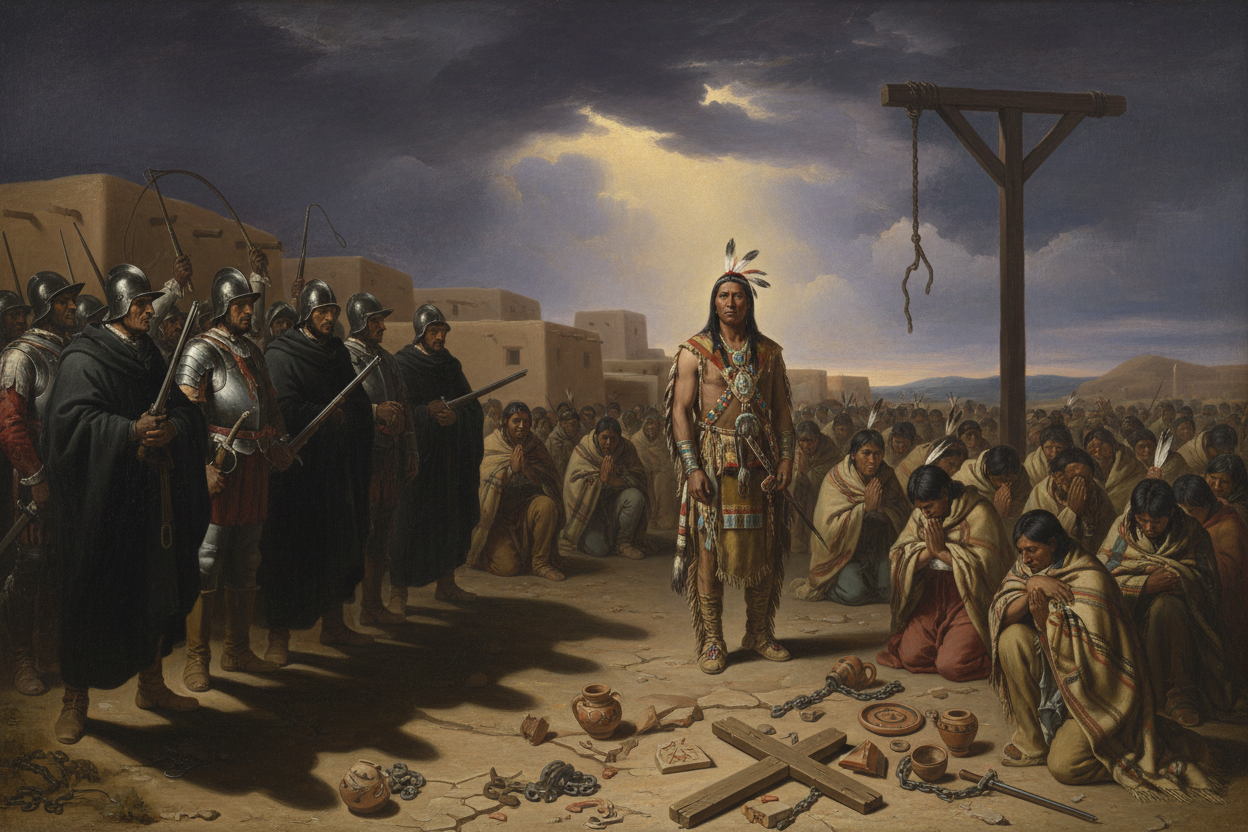
But perhaps even more devastating than economic exploitation was the systematic attack on Pueblo religious practices. Spanish missionaries, backed by colonial authorities, launched an aggressive campaign to convert indigenous peoples to Christianity. Sacred kivas were destroyed, ceremonial objects were burned, and traditional religious leaders faced imprisonment or execution.
Seeds of Rebellion: Decades of Oppression
The Spanish colonial period in New Mexico was marked by increasingly harsh treatment of Pueblo peoples. Governor after governor implemented policies that stripped away indigenous rights and freedoms. The situation became particularly dire under the leadership of various Spanish officials who showed little regard for Pueblo welfare.
Religious persecution reached new heights in the years leading up to the revolt. In 1675, Spanish authorities arrested 47 Pueblo religious leaders, accusing them of practicing witchcraft and devil worship. Four were executed, one committed suicide, and the rest were publicly whipped and imprisoned. Among those punished was a San Juan Pueblo leader named Po’pay, who would later become the architect of the great rebellion.
The economic burden on Pueblo communities was equally crushing. Spanish colonists demanded not only labor but also tribute in the form of corn, cotton textiles, and other goods. These demands often left Pueblo families struggling to feed themselves, especially during difficult harvest years.
Po’pay: The Mastermind Behind the Uprising
Po’pay emerged as the central figure in organizing what would become the most successful indigenous uprising in North American colonial history. After his humiliating punishment in 1675, Po’pay began secretly traveling between Pueblo communities, building a network of resistance that would span dozens of villages across hundreds of miles.
What made Po’pay’s approach so effective was his understanding that unity among the diverse Pueblo groups was essential. The various Pueblo communities spoke different languages and had distinct cultural practices, but they shared a common enemy in Spanish colonialism. Po’pay managed to bridge these differences, creating an unprecedented alliance.
The planning took years and required incredible secrecy. Po’pay and his co-conspirators developed a sophisticated communication system using knotted cords to coordinate timing across the vast territory. They chose August 10, 1680, as the date for simultaneous uprisings across all participating communities.
The Revolt Erupts: August 1680
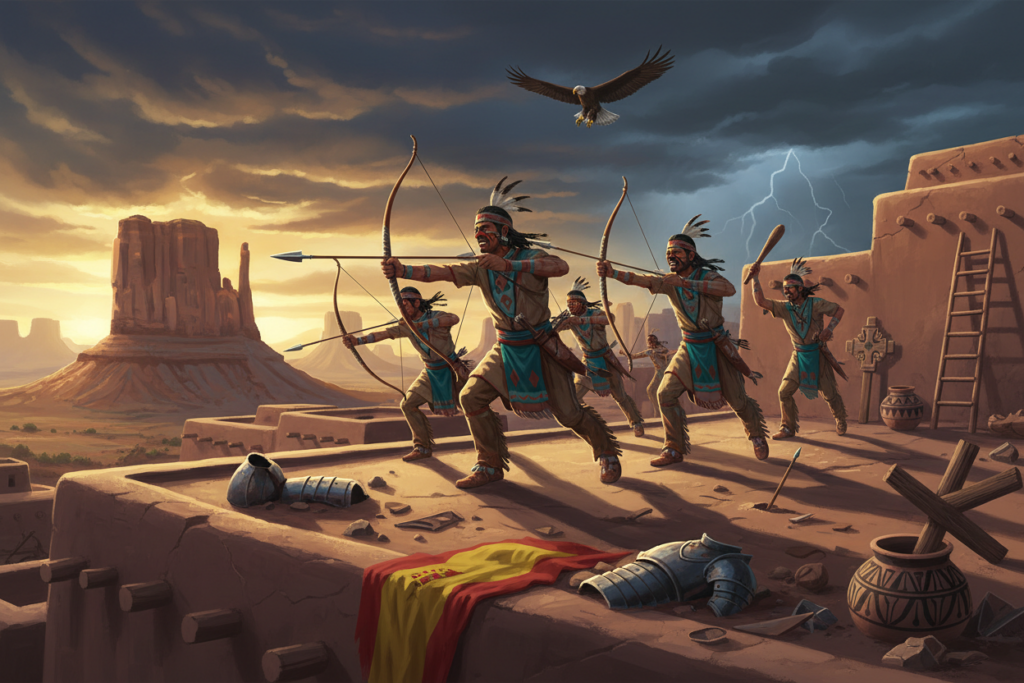
On the morning of August 10, 1680, Pueblo warriors struck with devastating coordination. Across New Mexico, from Taos in the north to the Hopi mesas in the west, indigenous fighters launched simultaneous attacks on Spanish settlements, missions, and government buildings.
The rebels showed no mercy to the symbols of their oppression. Churches were burned to the ground, and Christian religious artifacts were destroyed. Spanish colonists were killed or forced to flee, and those who survived often found themselves completely cut off from help. The rebels had effectively severed all communication lines between Spanish settlements.
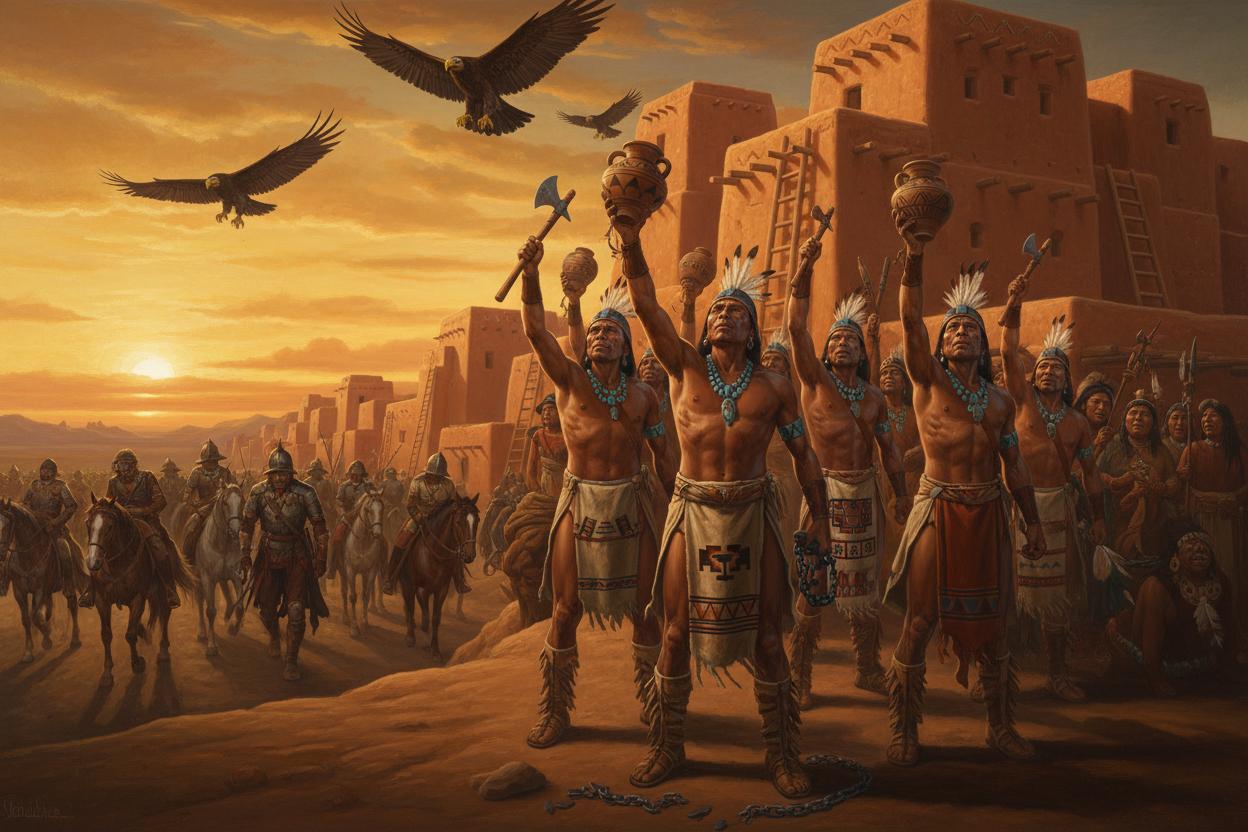
In the capital of Santa Fe, Spanish Governor Antonio de Otermín found himself under siege. The Pueblo forces, numbering in the thousands, surrounded the city and demanded the complete withdrawal of all Spanish colonists. The governor, realizing the hopelessness of his situation, agreed to evacuate.
Within just a few days, the rebels had achieved something unprecedented in the Americas: they had successfully expelled European colonizers from their territory. Approximately 400 Spanish colonists had been killed, and the remaining 2,000 fled south toward El Paso del Norte, in what is now Texas.
Twelve Years of Independence
The success of the Pueblo Revolt ushered in twelve years of indigenous independence in New Mexico. During this period, Pueblo communities worked to restore their traditional ways of life and erase the traces of Spanish colonialism.
One of the first acts of the victorious rebels was the systematic destruction of Christian symbols and Spanish colonial infrastructure. Churches were torn down, and their stones were often used to build traditional structures. Spanish legal documents were burned, and colonial administrative buildings were demolished.
The rebels also focused on cultural restoration. Traditional religious ceremonies, which had been banned or forced underground during Spanish rule, were openly practiced once again. Sacred sites that had been desecrated were restored, and traditional leadership structures were reestablished.
However, maintaining unity among the diverse Pueblo groups proved challenging without the unifying threat of Spanish oppression. Different communities had varying ideas about how to govern themselves and whether to maintain the alliance that had made the revolt possible.
The Spanish Return and Reconquest
The Spanish didn’t accept their defeat quietly. From their base in El Paso, colonial officials began planning their return to New Mexico almost immediately after their expulsion. Several attempts at reconquest failed in the early years following the revolt, but Spanish persistence eventually paid off.
In 1692, Don Diego de Vargas led a Spanish force back into New Mexico. By this time, the unity among Pueblo communities had begun to fracture, and some groups were willing to negotiate with the returning Spanish rather than fight. Drought and attacks from nomadic tribes had also weakened some Pueblo communities.
De Vargas employed a combination of military force and diplomacy to regain control. Some Pueblo communities submitted without resistance, while others fought fierce battles before being overwhelmed. By 1696, Spanish control had been largely reestablished, though it would never again be as absolute as it had been before 1680.
Legacy and Historical Significance
The Pueblo Revolt of 1680 holds immense significance in both Native American and colonial American history. It demonstrated that indigenous peoples could successfully organize large-scale resistance to European colonialism, inspiring other indigenous groups throughout the Americas.
The revolt also forced significant changes in Spanish colonial policy. When the Spanish returned to New Mexico, they were generally more tolerant of Pueblo religious practices and less demanding in their tribute requirements. The absolute cultural suppression that had characterized the pre-1680 period was never fully restored.
For Pueblo peoples, the revolt became a source of enduring pride and cultural identity. The memory of Po’pay and the successful resistance has been passed down through generations, serving as a reminder of indigenous strength and unity. Today, Po’pay is honored with a statue in the U.S. Capitol’s National Statuary Hall, representing New Mexico.
The revolt also provides valuable insights into indigenous political organization and military strategy. The ability of Po’pay to coordinate simultaneous uprisings across such a vast territory, using traditional communication methods, demonstrates sophisticated political and military planning capabilities.
Lessons from Indigenous Resistance
The Pueblo Revolt offers several important lessons about resistance, unity, and cultural survival. Perhaps most significantly, it shows the power of coordinated action among diverse groups facing a common threat. Po’pay’s ability to unite communities with different languages and customs around shared goals provides a model for effective coalition building.
The revolt also illustrates the importance of cultural preservation in resistance movements. The rebels weren’t just fighting against Spanish political control—they were fighting for the right to maintain their traditional ways of life, religious practices, and social structures.
Additionally, the twelve years of independence following the revolt demonstrate both the possibilities and challenges of indigenous self-governance in the colonial period. While Pueblo communities successfully maintained their independence for over a decade, internal divisions and external pressures eventually contributed to Spanish reconquest.
The Pueblo Revolt of 1680 stands as a testament to indigenous resilience and the power of unified resistance. Po’pay and his allies achieved something that many thought impossible, proving that European colonialism was not inevitable or unstoppable. Their success inspired indigenous resistance movements throughout the Americas and forced colonial powers to reconsider their policies.
Today, as we continue to grapple with the legacies of colonialism, the Pueblo Revolt reminds us of the strength and determination of indigenous peoples in defending their lands, cultures, and ways of life. It challenges us to remember that the history of the Americas is not just a story of European expansion, but also one of indigenous resistance, survival, and triumph.
The revolt’s legacy lives on in the continued presence and vitality of Pueblo communities in New Mexico, who have maintained their distinct cultures and identities despite centuries of pressure to assimilate. Their survival and flourishing serve as the ultimate testament to the courage and vision of Po’pay and the thousands of indigenous warriors who fought for freedom in that remarkable summer of 1680.
Frequently Asked Questions
What caused the Pueblo Revolt of 1680?
The Pueblo Revolt was caused by decades of Spanish colonial oppression, including forced labor under the encomienda system, systematic destruction of Pueblo religious practices, heavy tribute demands, and the execution and punishment of indigenous religious leaders in 1675.
Who was Po’pay and what was his role in the revolt?
Po’pay was a San Juan Pueblo leader who became the mastermind behind the 1680 revolt. After being punished by Spanish authorities in 1675, he spent years secretly organizing a coalition of Pueblo communities and coordinating the simultaneous uprising that successfully expelled Spanish colonizers.
How long did Pueblo independence last after the revolt?
Pueblo independence lasted for twelve years, from 1680 to 1692. During this time, Pueblo communities restored traditional religious practices and governance structures while working to erase traces of Spanish colonialism.
How many people participated in the Pueblo Revolt?
The revolt involved thousands of Pueblo warriors from dozens of communities across New Mexico and parts of present-day Arizona. The exact number is difficult to determine, but it represented a coordinated effort involving most Pueblo communities in the region.
What happened when the Spanish returned?
The Spanish began attempting to reconquer New Mexico almost immediately after their expulsion. Don Diego de Vargas successfully led the reconquest beginning in 1692, using a combination of military force and diplomacy. However, Spanish rule was never again as oppressive as it had been before 1680.
What is the historical significance of the Pueblo Revolt?
The Pueblo Revolt was the most successful indigenous uprising in North American colonial history. It demonstrated that coordinated indigenous resistance could expel European colonizers and inspired other indigenous resistance movements throughout the Americas. It also forced changes in Spanish colonial policy and remains a source of pride for Pueblo peoples today.