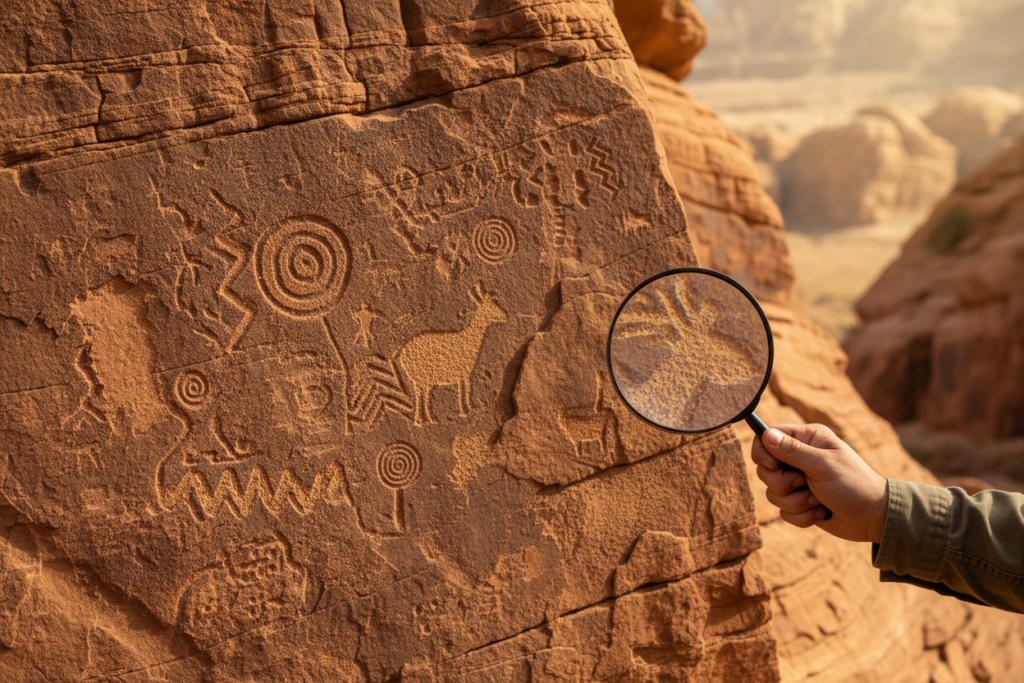
Standing before a massive sandstone cliff in New Mexico, I found myself face-to-face with mysterious symbols carved thousands of years ago. These ancient petroglyphs seemed to whisper stories from civilizations long past, their meanings locked in stone and waiting to be understood. New Mexico holds one of the world’s richest collections of rock art, with over 25,000 documented petroglyphs sites scattered across the state’s diverse landscapes.
The art of decoding these ancient messages isn’t just an academic pursuit—it’s a journey into the minds and hearts of people who walked this land centuries before us. Each symbol, each carefully carved line, represents a form of communication that transcends time, offering glimpses into ancient beliefs, daily life, and spiritual practices that shaped early American cultures.
The Rich History of New Mexico’s Petroglyphs
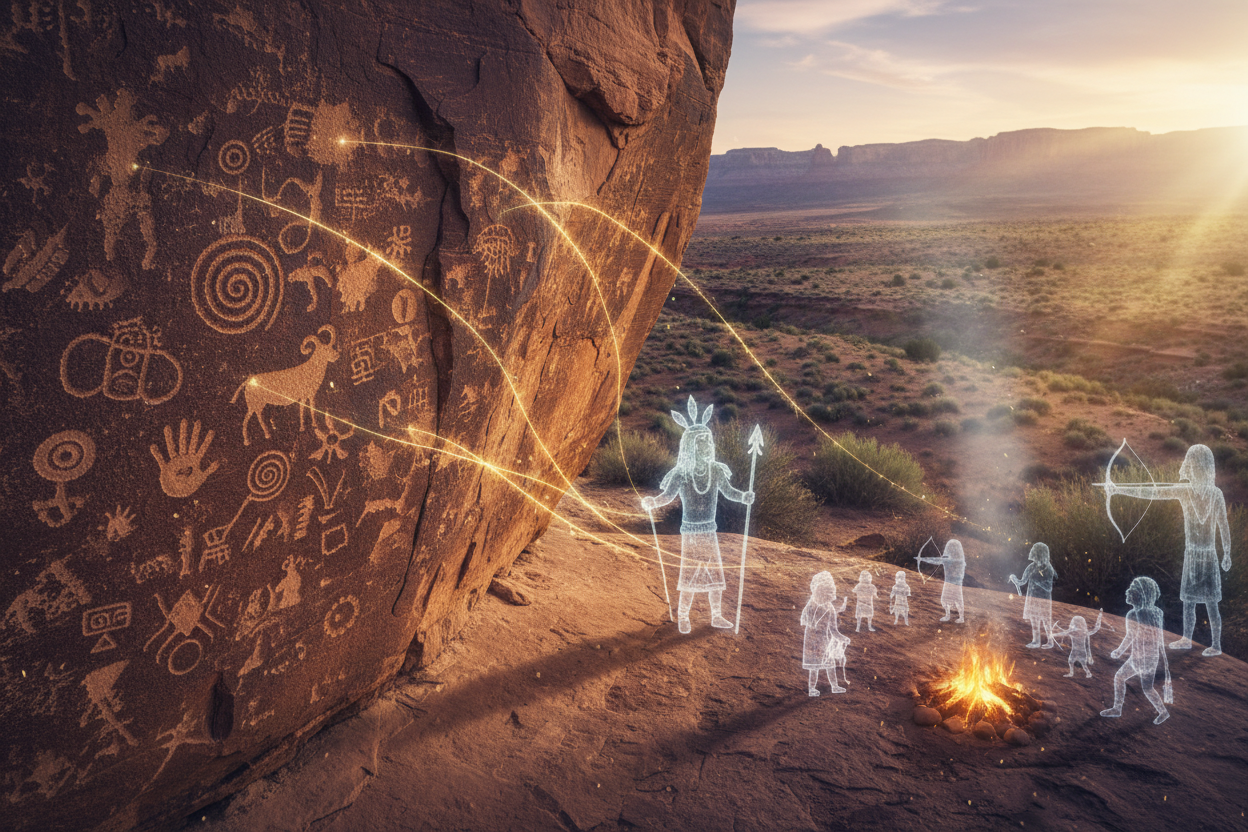
New Mexico’s petroglyphs span an incredible timeline, with some dating back over 3,000 years. The state’s unique geological formations, particularly its volcanic escarpment and sandstone cliffs, provided perfect canvases for ancient artists. The most famous concentration lies along Albuquerque’s West Mesa, where Petroglyph National Monument protects over 24,000 images carved into volcanic rock.
These rock art galleries weren’t created by a single culture but represent the artistic expressions of multiple indigenous groups over millennia. The Ancestral Puebloans, also known as the Anasazi, left their mark between 1300 and 1680 CE. Later, Pueblo peoples, Navajo, Apache, and Spanish settlers added their own symbols to this growing outdoor museum.
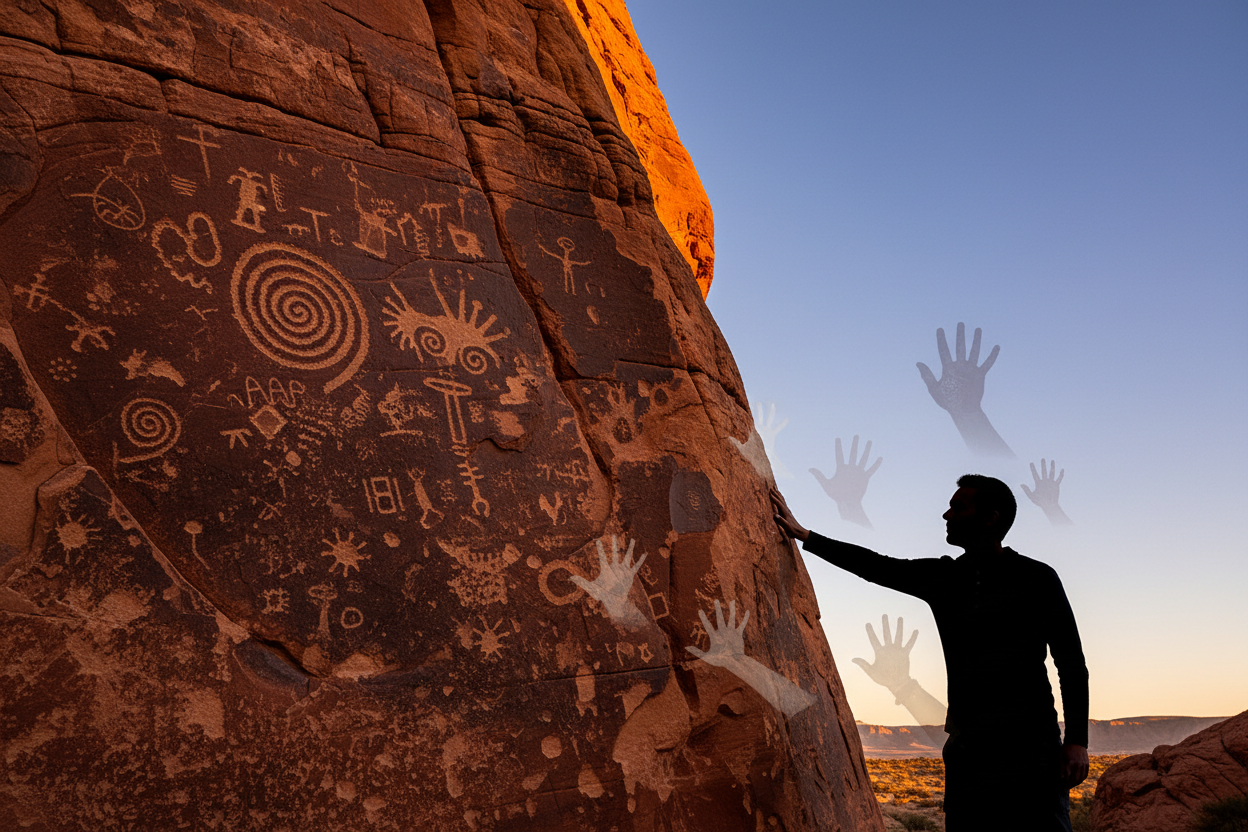
What makes New Mexico’s petroglyphs particularly fascinating is their diversity. Unlike some regions where rock art follows consistent patterns, New Mexico’s examples showcase varying styles, techniques, and subject matters that reflect the state’s position as a cultural crossroads in the ancient Southwest.
Deciphering Ancient Symbols and Their Meanings
Understanding petroglyph meanings requires careful analysis of symbols within their cultural and environmental contexts. Researchers have identified several categories of common imagery that appear throughout New Mexico’s rock art sites.
Animal representations dominate many panels, with deer, elk, bears, birds, and reptiles frequently depicted. These weren’t mere artistic choices—they likely held deep spiritual significance. Many indigenous cultures viewed animals as spiritual guides or clan symbols, making their presence in rock art particularly meaningful.
Human figures, or anthropomorphs, appear in various forms throughout New Mexico’s petroglyphs. Some display elaborate headdresses or ceremonial regalia, suggesting their importance in religious or social contexts. Others show simple stick-figure forms engaged in hunting, dancing, or other daily activities.
Geometric patterns present perhaps the greatest challenge for interpretation. Spirals, circles, zigzag lines, and complex maze-like designs could represent anything from astronomical observations to maps of sacred sites. Some researchers believe these patterns might encode information about seasonal changes, water sources, or territorial boundaries.
Cultural Significance in Native American Traditions
For many Native American tribes, petroglyphs aren’t historical artifacts—they’re living connections to ancestral wisdom. Pueblo peoples often view these rock art sites as sacred places where their ancestors communicated with spiritual beings or recorded important cultural knowledge.
The Hopi tribe, whose ancestors created many of New Mexico’s petroglyphs, maintain that certain symbols represent clan migrations or mark significant events in their people’s journey to their current homeland. These carved messages served as waypoints and historical records, helping future generations understand their cultural heritage.
Many symbols relate directly to ceremonial practices still observed today. Images of kachinas, supernatural beings central to Pueblo religious traditions, appear throughout the region. These figures often display distinctive characteristics that help identify specific kachina types and their associated ceremonies.
Water symbols hold particular importance in New Mexico’s arid landscape. Wavy lines, spirals, and cloud formations might indicate water sources or serve as prayers for rain. Understanding these symbols requires recognizing the crucial role water played in ancient survival and spiritual practices.
Modern Archaeological Techniques for Interpretation
Today’s archaeologists employ sophisticated methods to decode petroglyph meanings that go far beyond simple visual analysis. Digital photography and 3D scanning create detailed records of rock art panels, allowing researchers to study subtle details invisible to the naked eye.
Portable X-ray fluorescence (pXRF) technology helps determine the mineral composition of different pigments and carving tools, providing insights into trade relationships and technological practices. This scientific approach reveals information about when different symbols were created and what materials ancient artists used.
Geographic Information Systems (GIS) mapping allows researchers to analyze petroglyph locations in relation to water sources, migration routes, and astronomical alignments. This spatial analysis often reveals patterns that suggest specific purposes for different rock art sites.
Ethnographic studies, combining archaeological evidence with contemporary Native American knowledge, provide crucial context for interpretation. Many tribes maintain oral traditions that offer insights into their ancestors’ symbolic language, helping bridge the gap between ancient art and modern understanding.
Famous Petroglyph Sites Across New Mexico
Petroglyph National Monument near Albuquerque represents New Mexico’s most accessible and well-documented rock art collection. The monument’s Boca Negra Canyon trail offers visitors close encounters with hundreds of petroglyphs, including impressive panels featuring large birds, human figures, and complex geometric designs.
Three Rivers Petroglyph Site in south-central New Mexico showcases over 21,000 petroglyphs spread across 50 acres of ancient lava flows. This remarkable concentration includes some of the state’s most elaborate and well-preserved examples, with clear depictions of animals, humans, and abstract symbols.
Chaco Culture National Historical Park contains petroglyphs that complement its famous architectural ruins. The rock art here often relates directly to the site’s astronomical alignments and ceremonial functions, providing additional evidence of Chacoan cultural sophistication.
La Cieneguilla Petroglyphs near Santa Fe feature a unique combination of Ancestral Puebloan and historic Cochiti Pueblo artwork. This site demonstrates the continuity of rock art traditions and shows how different cultures adapted and modified existing symbols over time.
Preservation Challenges and Conservation Efforts
New Mexico’s petroglyphs face numerous threats that require ongoing conservation efforts. Natural weathering from wind, rain, and temperature fluctuations gradually erodes the rock surfaces, slowly diminishing the clarity of ancient symbols.
Human impact poses perhaps the greatest threat to these irreplaceable cultural resources. Vandalism, including modern graffiti carved over ancient symbols, causes permanent damage that can never be reversed. Increased visitation to petroglyph sites, while important for education, also brings risks of accidental damage from touching or climbing on rock art panels.
Urban development around major cities like Albuquerque threatens many petroglyph sites. As communities expand, previously protected areas may face pressure from construction projects or infrastructure development.
Conservation efforts include regular monitoring of significant sites, installation of protective barriers where appropriate, and educational programs that teach visitors about proper rock art etiquette. Digital documentation projects create permanent records that preserve these images for future study, even if the original rock art deteriorates.
Collaboration between archaeologists, Native American tribes, and land management agencies ensures that conservation efforts respect both scientific and cultural values. This partnership approach recognizes that petroglyphs aren’t just archaeological specimens—they’re sacred cultural heritage that deserves protection and respect.
Conclusion
Decoding New Mexico’s ancient petroglyphs opens windows into worlds we can barely imagine—societies that thrived in harsh landscapes, developed complex spiritual beliefs, and created lasting artistic legacies carved in stone. These rock art messages continue revealing their secrets through advancing technology and deeper cultural understanding.
As we work to interpret these ancient communications, we must remember that petroglyphs represent more than historical curiosities. They’re tangible connections to the indigenous peoples who called New Mexico home for thousands of years, and their preservation ensures that future generations can continue learning from these remarkable cultural treasures.
The next time you encounter New Mexico’s petroglyphs, take a moment to appreciate the hands that carved these symbols and the minds that conceived their meanings. In doing so, you become part of an ongoing conversation that spans millennia—one that connects us all to the enduring human desire to leave meaningful marks upon the world.
Frequently Asked Questions
How old are New Mexico’s petroglyphs?
New Mexico’s petroglyphs range in age from about 3,000 years old to relatively recent historical periods. The oldest examples date to around 1000 BCE, while some were created as recently as the 1600s CE by Spanish colonists and Native American groups.
What tools did ancient people use to create petroglyphs?
Ancient artists primarily used harder stone tools to peck, scrape, and carve softer rock surfaces. Common tools included hammerstones, chisels made from harder minerals, and abrading stones. The pecking technique, where artists repeatedly struck the rock surface, was the most common method.
Can anyone visit petroglyph sites in New Mexico?
Many petroglyph sites are open to the public, including Petroglyph National Monument and Three Rivers Petroglyph Site. However, some locations on private or tribal land require permission to visit. Always check access requirements and follow Leave No Trace principles when visiting rock art sites.
Is it illegal to damage or deface petroglyphs?
Yes, damaging petroglyphs is illegal under federal and state laws. The Archaeological Resources Protection Act imposes severe penalties for vandalizing rock art on public lands, including fines up to $100,000 and imprisonment. Even touching petroglyphs can cause damage from skin oils.
How do researchers determine what petroglyphs mean?
Researchers combine multiple approaches including comparative studies with other rock art sites, ethnographic interviews with Native American tribes, analysis of symbol contexts and locations, and examination of associated archaeological evidence. However, many meanings remain interpretive rather than definitively known.
Why were petroglyphs created in specific locations?
Petroglyphs were often placed in locations with special significance—near water sources, along travel routes, at ceremonial sites, or in areas with particular spiritual importance. The rock surface quality, visibility, and accessibility also influenced location choices for ancient artists.