There’s something profoundly moving about standing before the ancient ruins of the Ancestral Puebloans, commonly known as the Anasazi. These remarkable structures, carved into cliff faces and nestled in canyon alcoves across the American Southwest, tell stories that span centuries. As a photographer, capturing these architectural marvels presents both incredible opportunities and unique challenges that demand patience, respect, and technical skill.
The interplay between ancient stone and natural light creates some of the most compelling photographic subjects you’ll ever encounter. Whether you’re documenting the intricate masonry of Mesa Verde’s cliff dwellings or the mysterious towers of Hovenweep, understanding how to work with available light can transform your images from simple documentation into powerful artistic statements that honor these sacred spaces.
Understanding the Historical Significance of Anasazi Architecture
Before we dive into photography techniques, it’s crucial to understand what we’re photographing. The Ancestral Puebloans inhabited the Four Corners region from approximately 100 to 1300 CE, leaving behind architectural achievements that continue to astound modern engineers and archaeologists. Their structures weren’t just shelters; they were sophisticated communities designed to work in harmony with the natural environment.
These ancient builders possessed an intimate understanding of solar orientation, seasonal light patterns, and natural protection from the elements. Many structures were positioned to capture winter sunlight while providing shade during scorching summer months. This intentional relationship with light makes photographing these ruins particularly rewarding, as you’re essentially documenting the same interplay of light and shadow that the original inhabitants experienced daily.
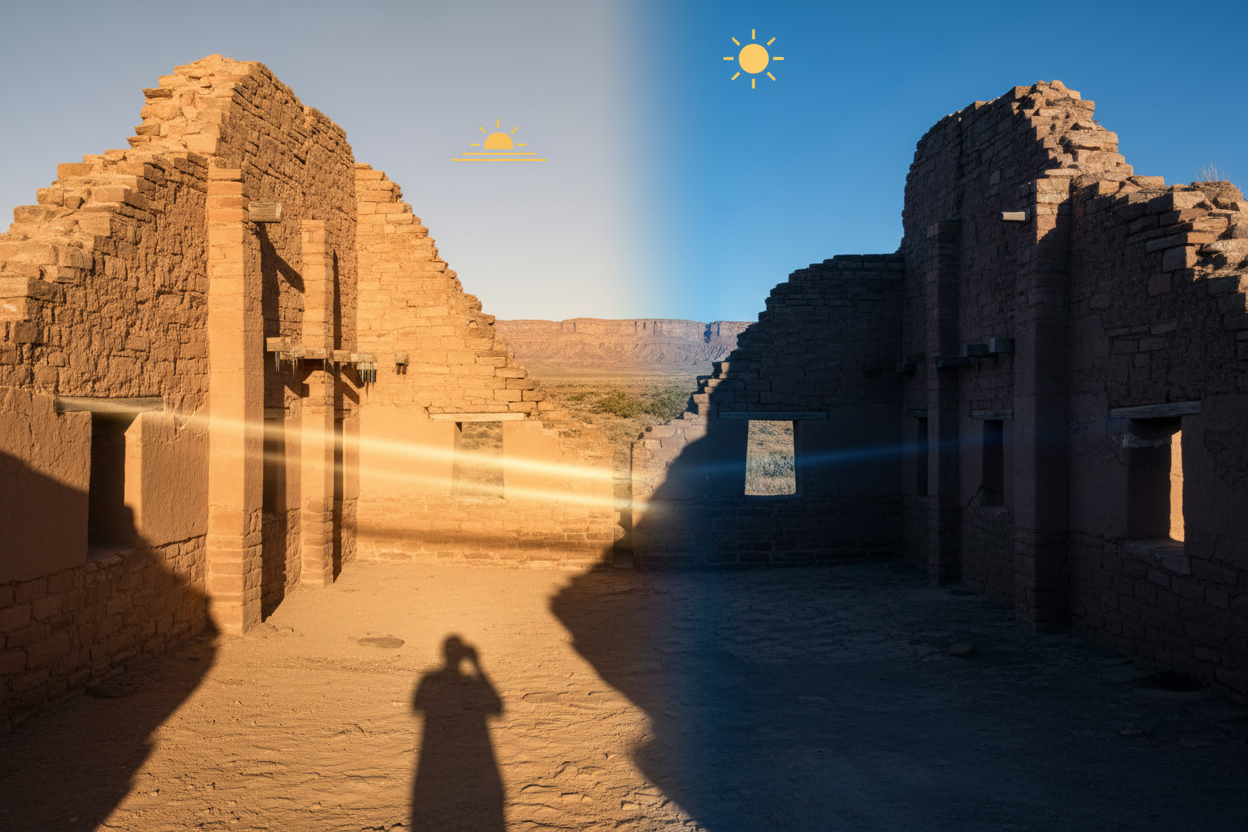
When photographing these sites, remember that you’re not just capturing buildings – you’re documenting a way of life that thrived in one of North America’s most challenging environments. This perspective will inform your approach and help you create images that convey the ingenuity and resilience of these ancient peoples.
Essential Equipment for Ruins Photography
Successful Anasazi ruins photography requires thoughtful equipment selection. The remote locations and challenging lighting conditions demand gear that can handle extreme temperatures, dust, and varying light conditions while remaining portable enough for long hikes to reach these ancient sites.
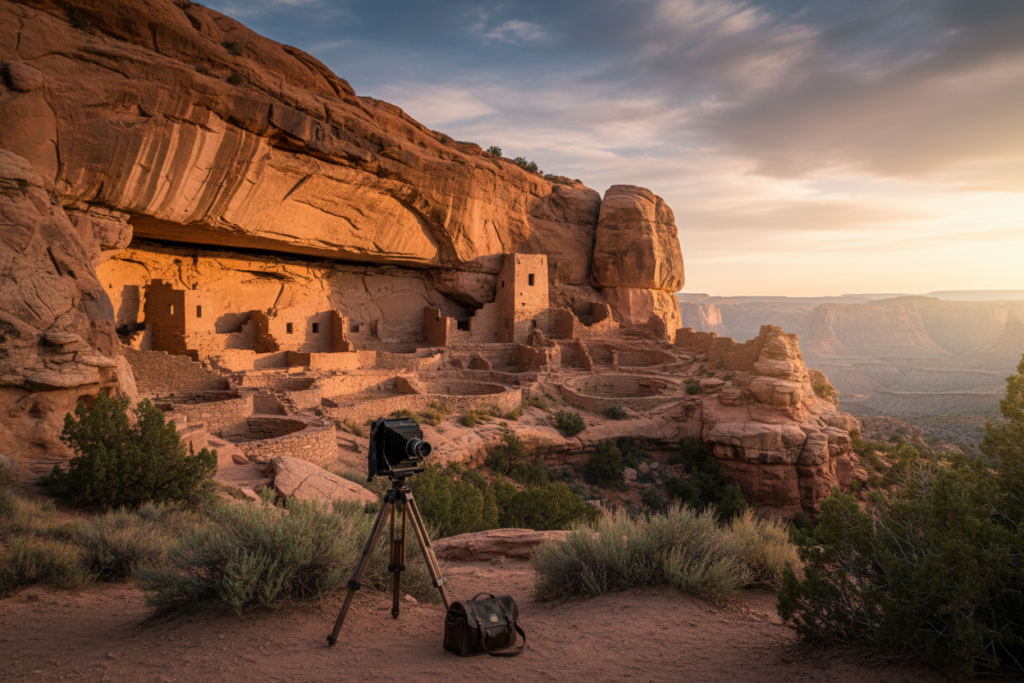
A sturdy tripod is absolutely essential. Many of the best shots occur during golden hour or in shadowed alcoves where slower shutter speeds are necessary. I’ve learned this lesson the hard way after attempting handheld shots in the dim light of Betatakin ruins – the results were disappointing and couldn’t capture the subtle details that make these structures so remarkable.
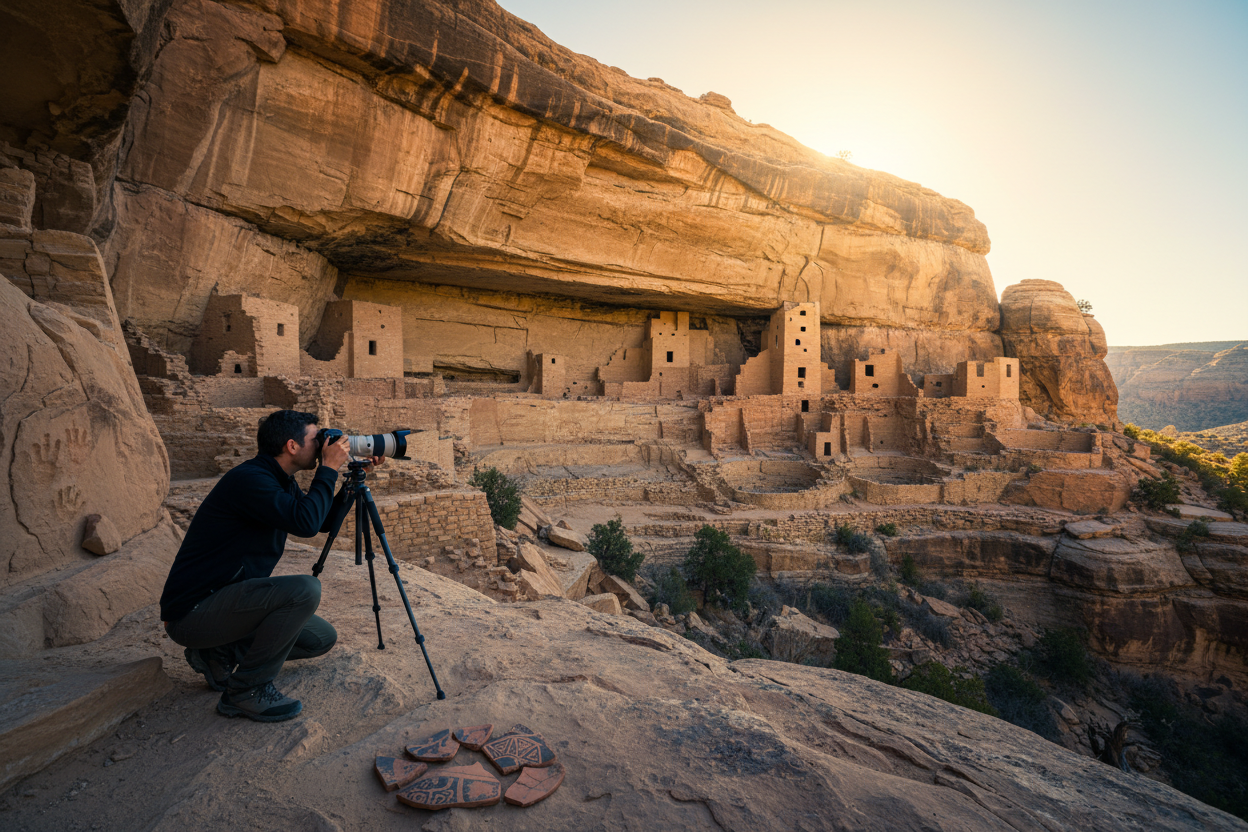
Wide-angle lenses excel at capturing the relationship between structures and their dramatic surroundings, while telephoto lenses allow you to isolate architectural details without getting too close to fragile ruins. A polarizing filter proves invaluable for managing reflections off rock surfaces and enhancing the contrast between ancient masonry and the sky.
Don’t overlook the importance of lens cleaning supplies. The Southwest’s dusty conditions can quickly compromise your equipment’s performance, and there’s nothing more frustrating than discovering dust spots on your images after a long day of hiking and shooting.
Mastering Natural Light in Canyon Environments
Canyon photography presents unique lighting challenges that can make or break your images. The high canyon walls create complex lighting scenarios where direct sunlight, reflected light, and deep shadows coexist within the same frame. Understanding these conditions is key to creating compelling photographs that accurately represent these ancient spaces.
Morning light often provides the most dramatic illumination for cliff dwellings. As the sun rises, it gradually illuminates the canyon walls, creating a warm, golden glow that brings out the texture in ancient masonry. The key is arriving early enough to witness this transition from shadow to light – it happens quickly, and the best moments often last only minutes.
Reflected light from opposite canyon walls can serve as a natural softbox, providing gentle, even illumination for ruins tucked into alcoves. This bounced light reveals details that would be lost in harsh direct sunlight while maintaining the natural color temperature that makes these images feel authentic.
Overcast conditions, while less dramatic, offer their own advantages. The soft, diffused light eliminates harsh shadows and allows you to capture detail across the entire tonal range. These conditions are particularly effective for documenting the intricate stonework and architectural details that define Anasazi construction techniques.
Composition Techniques for Ancient Architecture
Composing photographs of ancient ruins requires balancing respect for the site with artistic vision. These structures weren’t built to be photographed, yet their natural integration with the landscape often creates inherently compelling compositions that reward thoughtful framing.
Leading lines naturally occur in many ruins, from the straight edges of walls to the curves of kivas and the horizontal layers of masonry. Use these architectural elements to guide the viewer’s eye through your composition, creating a visual journey that mirrors the physical experience of exploring these ancient spaces.
The rule of thirds works exceptionally well with ruins photography, particularly when balancing the geometric precision of human construction against the organic curves of natural rock formations. Placing key architectural elements along these intersection points creates tension and visual interest while honoring both the human and natural elements of the scene.
Scale is crucial when photographing ruins. Including environmental context helps viewers understand the remarkable achievement these structures represent. A tiny doorway or window becomes more impressive when you can see how it relates to the massive cliff face surrounding it. Sometimes including a distant figure can provide this scale reference, though always check local regulations regarding people in photographs at protected sites.
Seasonal Considerations and Light Patterns
Each season brings distinct advantages for ruins photography, and understanding these patterns can help you plan visits for optimal lighting conditions. The Southwest’s dramatic seasonal variations create entirely different photographic opportunities throughout the year.
Winter offers perhaps the most dramatic lighting, with the low sun angle creating long shadows that emphasize architectural details and textures. Snow occasionally dusts these ancient structures, creating a striking contrast between the warm sandstone and pristine white snow. However, winter also brings challenges including shorter days, unpredictable weather, and potentially hazardous hiking conditions.
Spring and fall provide the most comfortable shooting conditions with moderate temperatures and stable weather patterns. The sun’s angle during these seasons often aligns perfectly with the architectural orientation of many ruins, suggesting that ancient builders understood and planned for these seasonal light patterns.
Summer’s harsh midday light can be challenging, but early morning and late evening sessions reward patient photographers with incredible golden hour illumination. The extreme heat requires careful planning and plenty of water, but the payoff can be extraordinary images that capture the intensity of the desert environment these ancient peoples called home.
Respecting Sacred Spaces and Photography Ethics
Photographing Anasazi ruins comes with significant ethical responsibilities that every photographer must understand and respect. These sites are not just historical artifacts; they’re sacred spaces with deep cultural significance to modern Pueblo peoples who consider themselves descendants of the Ancestral Puebloans.
Always research and follow all regulations before visiting any archaeological site. Many locations require permits for photography, especially commercial work, and some areas may be completely off-limits to protect fragile resources or respect cultural sensitivities. The extra effort to obtain proper permissions is always worthwhile and demonstrates respect for both the sites and the communities that protect them.
Maintain appropriate distance from all structures and artifacts. Modern telephoto lenses allow you to capture intimate details without physically approaching fragile ruins. Remember that these sites have survived for centuries, and our responsibility as photographers is to ensure they remain intact for future generations to study and appreciate.
Consider the impact of sharing location information in your photographs. While these sites are generally public knowledge, specific details about access routes or unmarked ruins can lead to increased visitation that may damage fragile resources. Focus on sharing the beauty and significance of these places while being mindful of their protection.
Post-Processing Techniques for Ruins Photography
Post-processing plays a crucial role in bringing out the best in your ruins photography while maintaining the authentic character of these ancient spaces. The goal should always be enhancement rather than manipulation, preserving the natural beauty and historical integrity of your subjects.
Shadow and highlight recovery tools prove invaluable when working with the extreme contrast often found in canyon environments. Carefully lifting shadows can reveal architectural details hidden in darkness while protecting highlights prevents the loss of texture in sunlit sandstone surfaces. The key is subtlety – overdoing these adjustments can create an artificial look that detracts from the natural beauty of the scene.
Color grading should enhance rather than alter the natural palette of these desert environments. The warm tones of sandstone, the deep blues of desert skies, and the subtle greens of desert vegetation create a natural color harmony that rarely needs dramatic adjustment. Focus on bringing out these existing colors rather than imposing an artificial color scheme.
Sharpening and clarity adjustments can help emphasize the incredible craftsmanship evident in ancient masonry, but use these tools judiciously. Over-sharpening can create artifacts that distract from the natural textures and may make your images appear over-processed.
Planning Your Ruins Photography Expedition
Successful ruins photography requires careful planning that goes far beyond simply showing up with a camera. The remote locations, challenging access, and specific lighting requirements demand thorough preparation to maximize your photographic opportunities while ensuring your safety.
Research is paramount. Study topographic maps, satellite imagery, and sun position calculators to understand how light will interact with your chosen sites throughout the day. Many ruins face specific directions that were carefully chosen by their builders, and understanding these orientations helps you plan for optimal lighting conditions.
Physical preparation cannot be overlooked. Many of the most spectacular ruins require significant hikes over challenging terrain. Build your fitness level gradually and always inform others of your plans. The desert environment can be unforgiving, and proper preparation can mean the difference between a successful photography expedition and a dangerous situation.
Weather monitoring becomes crucial, especially during monsoon season when flash floods can make canyon access extremely dangerous. Always check current conditions and forecasts, and be prepared to adjust your plans based on safety considerations.
Frequently Asked Questions
What’s the best time of year to photograph Anasazi ruins?
Spring and fall offer the most comfortable conditions with moderate temperatures and excellent light quality. Winter provides dramatic low-angle lighting but can be challenging due to weather and shorter days. Summer offers spectacular golden hour light but requires careful planning to avoid dangerous heat.
Do I need special permits to photograph ruins?
Requirements vary by location. National parks and monuments typically allow personal photography without permits, but commercial work often requires special use permits. Always check with the managing agency before your visit and respect all posted regulations.
What focal length works best for ruins photography?
Wide-angle lenses (14-35mm) excel at capturing ruins in their environmental context, while telephoto lenses (70-200mm and longer) allow you to isolate architectural details without getting too close to fragile structures. A versatile zoom lens covering 24-70mm handles most situations effectively.
How do I handle the extreme contrast in canyon lighting?
Use graduated neutral density filters to balance exposure between bright skies and shadowed ruins. Bracketed exposures for HDR processing can also help, but maintain a natural look. Focus on capturing detail in both shadows and highlights rather than trying to eliminate all contrast.
Can I use a drone to photograph ruins?
Drone use is generally prohibited in national parks and monuments, and many other protected areas have similar restrictions. Always check regulations before bringing a drone, and respect all flight restrictions designed to protect wildlife and cultural resources.
What safety precautions should I take when photographing remote ruins?
Always tell someone your plans and expected return time. Carry plenty of water, sun protection, and emergency supplies. Know your limits and turn back if conditions become dangerous. Many ruins are in remote areas where help may be hours away.
Photographing Anasazi ruins offers an incredible opportunity to document and share the remarkable achievements of ancient peoples while developing your skills as a photographer. The combination of challenging technical requirements, stunning natural beauty, and profound historical significance creates a uniquely rewarding photographic experience that connects us across centuries to the ingenuity and artistry of the Ancestral Puebloans. Remember that we are temporary visitors to these ancient spaces, and our role as photographers is to capture their beauty while ensuring their preservation for future generations to discover and appreciate.