
Iowa
Short Hiking Trails In Iowa That Everyone Can Enjoy
Remarkable Short Hiking Trails In Iowa For Anyone To Walk Iowa, the heartland of the United States, is renowned for its rolling prairies, serene…

Explore Iowa through its cities, local stories, history, food and landscapes. Start with a city guide or follow a story that catches your attention.
Choose a city pin to open its local guide.
City locations are approximate. Select a name to explore.
Local stories, food, culture and places to explore.
↗City guideLocal stories, food, culture and places to explore.
↗City guideLocal stories, food, culture and places to explore.
↗City guideLocal stories, food, culture and places to explore.
↗City guideLocal stories, food, culture and places to explore.
↗The markets, tables and traditions that tell a place’s story.
02Architecture, landmarks and the people behind them.
03Open spaces, scenic routes and time well spent outside.
04The teams, venues and local rituals that bring people together.

Iowa, lovingly known as the Hawkeye State, is an endearing mix of small-town charm and urban sophistication. This Midwestern state, nestled in the heart of America, is steeped in rich history and vibrant culture, offering a blend of scenic landscapes, architectural marvels, and technological advancements.
With its land mass extending over 56,857 square miles, Iowa is the 26th most extensive in total area among the 50 U.S. states. It is home to a population of 3,190,369 residents according to the 2020 census, placing it as the 31st most populous state.
The state’s geographical coordinates extend from 40° 23′ N to 43° 30′ N in latitude and 90° 8′ W to 96° 38′ W in longitude. Officially, Iowa operates under the Central time zone (UTC−06:00) with daylight saving time observed in the summer (UTC−05:00).
Iowa’s governance is a reflection of the democratic ethos of the United States. The state is headed by Governor Kim Reynolds, with Adam Gregg serving as the Lieutenant Governor. The two-tier legislature, the Iowa General Assembly, consists of the Upper house (Senate) and Lower house (House of Representatives).
Chuck Grassley and Joni Ernst are the U.S. senators from Iowa, with the U.S. House delegation comprising of key figures like Mariannette Miller-Meeks, Ashley Hinson, Zach Nunn, and Randy Feenstra.

Iowa’s unique geographical positioning sees it bordered by the mighty Mississippi River to the east, and the Missouri River and Big Sioux River to the west. This makes Iowa the only U.S. state with its east and west borders almost entirely formed by rivers.
It shares its borders with six states: Wisconsin to the northeast, Illinois to the east and southeast, Missouri to the south, Nebraska to the west, South Dakota to the northwest, and Minnesota to the north.
Iowa’s name originates from the Ioway people, an indigenous Siouan-speaking tribe who were part of the Ho-Chunk Confederation that once inhabited the area. The Ioway were one among the many Native American nations whose territory comprised the future state of Iowa before European colonization.
Iowa’s prehistory is marked by the gradual transition of its indigenous inhabitants from hunters-gatherers to settled farmers. The arrival of European explorers and traders brought about significant upheaval, leading to economic and social shifts amid the indigenous tribes.

The first known European explorers to document Iowa were Jacques Marquette and Louis Jolliet in 1673. Iowa was part of a territory known as La Louisiane or Louisiana, and European traders were primarily interested in lead and furs obtained by Indigenous people.
The first American settlers officially moved to Iowa in June 1833. On December 28, 1846, Iowa became the 29th state in the Union. Post statehood, Iowa set its direction towards development and organized campaigns for settlers and investors.
Iowa staunchly supported the Union during the Civil War. After the war, Iowa’s population continued to grow dramatically, with the American Civil War bringing about temporary higher profits.
The Great Depression and World War II accelerated Iowa’s shift away from smallholder farming to larger farms and began a trend of urbanization. The period post-World War II witnessed a significant increase in manufacturing operations.
Today, Iowa’s economy is a mix of manufacturing, biotechnology, finance and insurance services, and government services. The state continues to witness an urban growth trend, with a majority of its population residing in urban areas.

Iowa’s natural topography is a captivating mix of tallgrass prairie, savanna in upland areas, dense forest, and wetlands in flood plains and river valleys. The southern part of Iowa is categorized as the Central forest-grasslands transition ecoregion, while the northern, drier part is part of the Central tall grasslands.
Iowa experiences a humid continental climate with extremes of both heat and cold. The state is known for its hot, humid summers and freezing winters. The state’s climatic pattern is seasonal, with most precipitation falling during the summer months.

Iowa’s population is more urban than rural, a trend that began in the early 20th century. The state has been experiencing a shift towards urbanization, with more urbanized counties witnessing population increases.
Iowa, the Hawkeye State, is a testament to America’s vibrant history, diverse landscapes, and the tenacity of its people. Its rich agricultural heritage, coupled with its strides in manufacturing and technology, make it a state of intriguing contrasts. From its bustling urban centers to its serene countryside, Iowa offers a unique slice of the American experience.
Remarkable Short Hiking Trails In Iowa For Anyone To Walk Iowa, the heartland of the United States, is renowned for its rolling prairies, serene…
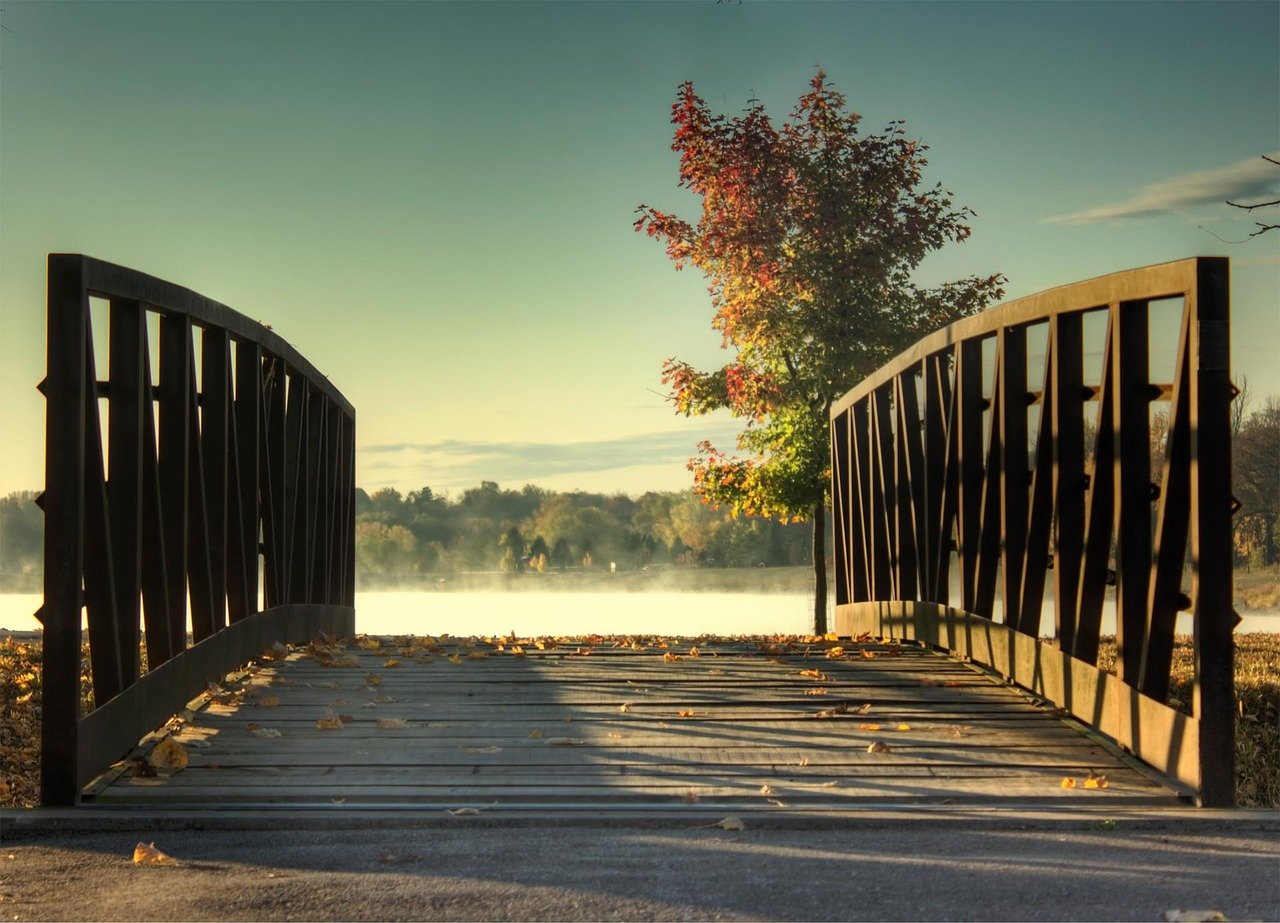
10 Breathtaking Fall Destinations in Iowa As the summer heat gives way to cool and crisp autumn days, Iowa transforms into a picturesque wonderland…