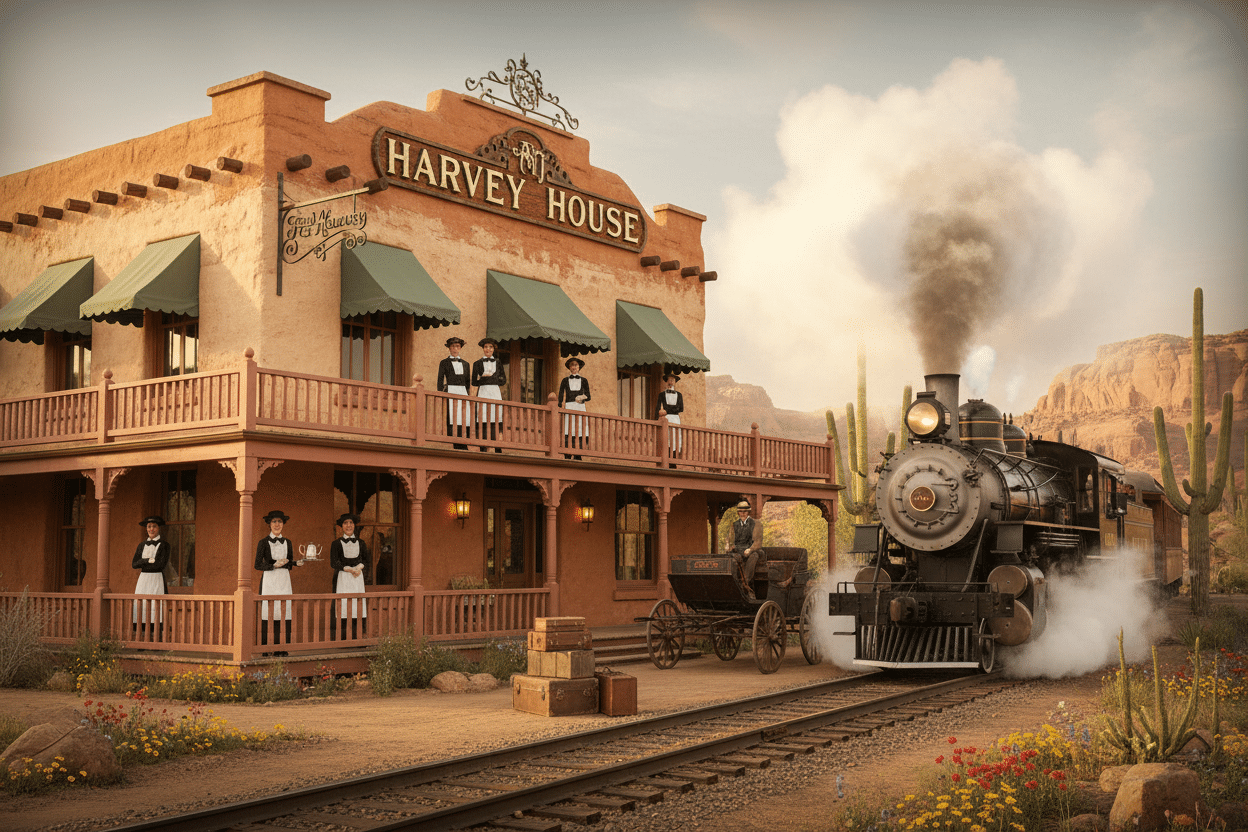
Historic Harvey Houses: Railroad Hospitality That Civilized the Southwest
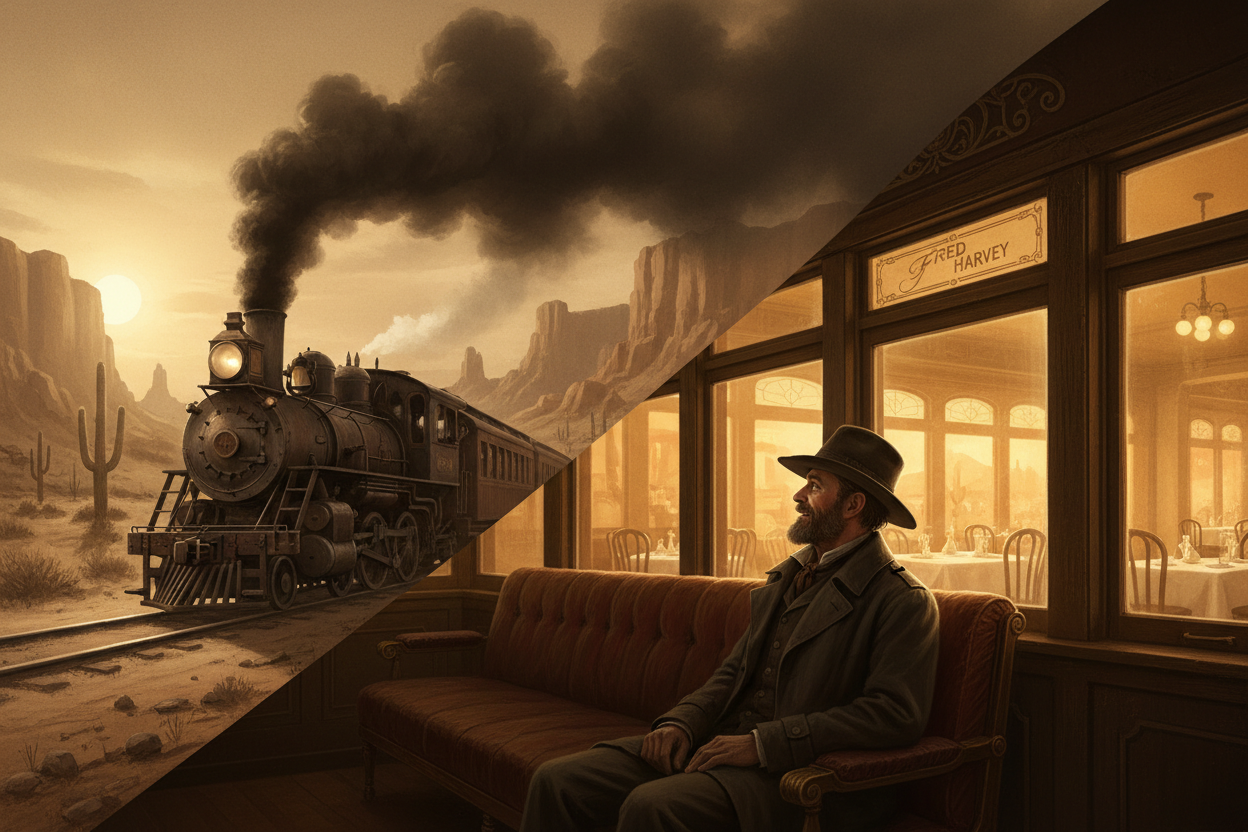
Picture this: you’re a weary traveler in 1880, bouncing along on a dusty train through the American Southwest. Your stomach growls as you peer out at endless desert landscapes, wondering where your next decent meal might come from. Suddenly, the conductor calls out “Harvey House ahead!” and you breathe a sigh of relief. You’re about to experience something revolutionary – the first chain restaurant empire that would transform travel dining forever.
The Harvey Houses weren’t just restaurants; they were oases of civilization that brought fine dining, proper service, and a touch of elegance to the rugged frontier. Founded by Fred Harvey in the 1870s, these establishments became synonymous with quality hospitality along the Atchison, Topeka & Santa Fe Railway, fundamentally changing how Americans traveled and dined in the Southwest.
The Visionary Behind the Harvey House Empire
Fred Harvey arrived in America from England as a teenager with little more than ambition and an eye for quality service. After working various jobs in New York and later in the Midwest, he witnessed firsthand the abysmal state of railroad dining in the 1870s. Travelers were often subjected to greasy, cold food served in unsanitary conditions by surly staff who knew customers had no other options.
Harvey saw an opportunity where others saw only problems. In 1876, he struck a deal with the Atchison, Topeka & Santa Fe Railway to operate dining facilities along their route. His vision was simple yet revolutionary: provide travelers with the same quality of food and service they would expect at the finest establishments back East.
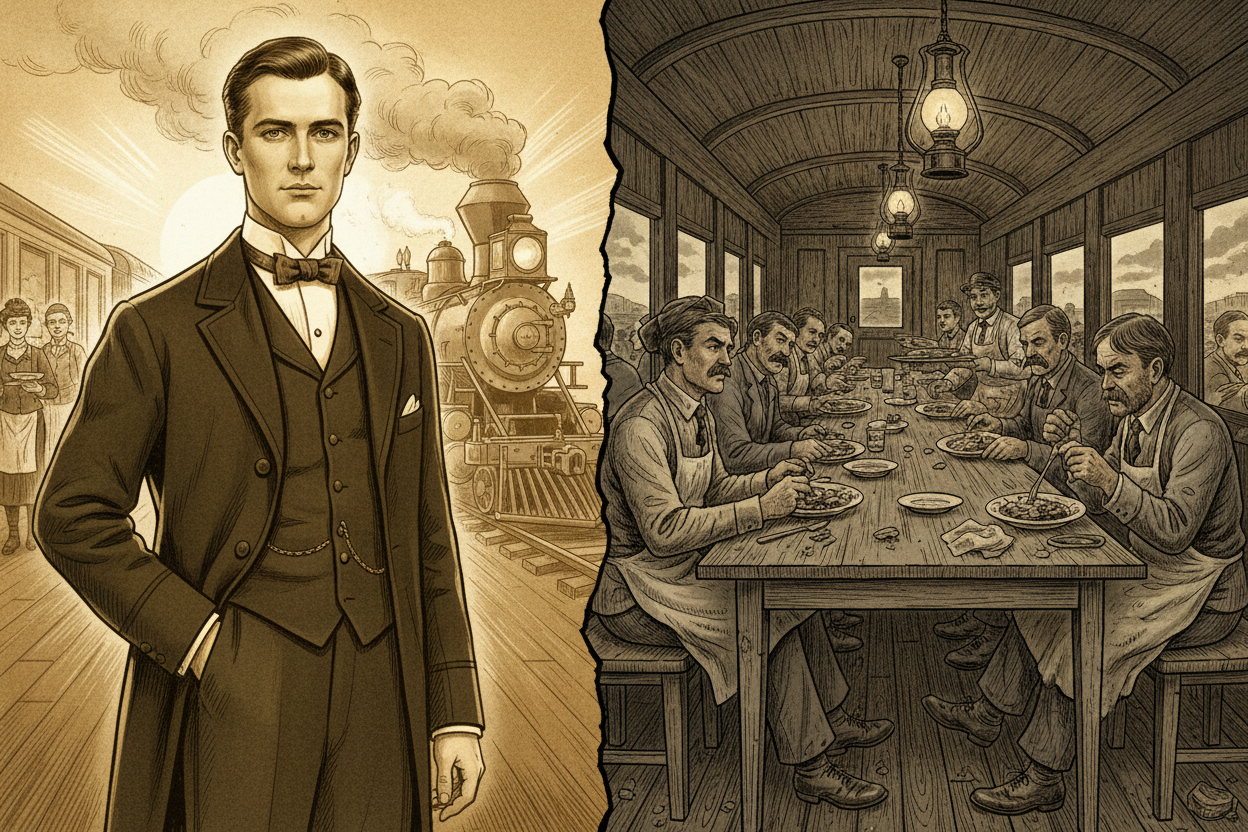
What set Harvey apart wasn’t just his business acumen – it was his unwavering commitment to standards. He insisted on fresh ingredients, skilled chefs, and impeccable service, even in the middle of nowhere. This attention to detail would become the hallmark of every Harvey House across the Southwest.
The Harvey Girls: Pioneers of Professional Service
Perhaps no aspect of the Harvey House story is more fascinating than the Harvey Girls – the young women who served as waitresses in these establishments. In an era when respectable women rarely worked outside the home, Harvey recruited educated, well-mannered young ladies from the East Coast with promises of adventure, good wages, and the chance to see the American frontier.
These women underwent rigorous training in proper service techniques, menu knowledge, and deportment. They lived in company-provided housing under strict supervision, with curfews and behavioral codes that maintained their reputations. The Harvey Girls wore identical black and white uniforms and were required to remain unmarried during their employment – though many eventually married local ranchers, businessmen, and railroad workers, helping to establish permanent communities throughout the Southwest.
The impact of the Harvey Girls extended far beyond restaurant service. They brought Eastern culture, education, and refinement to frontier towns. Many taught Sunday school, organized cultural events, and became pillars of their adopted communities. In many ways, they were among America’s first career women, earning their own money and gaining independence in an age when such opportunities were rare.
Architectural Elegance Meets Frontier Practicality
Harvey Houses were architectural marvels that stood in stark contrast to the rough-and-tumble buildings typically found in frontier towns. Harvey collaborated with renowned architects to create structures that combined functionality with elegance. These buildings featured high ceilings, large windows, and spacious dining rooms that could accommodate the sudden influx of passengers when trains arrived.
The interiors were equally impressive, furnished with fine china, crystal glasses, and silverware that would have been at home in the best hotels of Chicago or New York. Harvey insisted on white tablecloths, fresh flowers when available, and dining rooms that sparkled with cleanliness – a stark contrast to the dusty, primitive conditions travelers encountered elsewhere on the frontier.
Many Harvey Houses also included hotel accommodations, gift shops featuring Native American crafts and Southwestern souvenirs, and even newsstands. The larger establishments, like the one at the Grand Canyon, became destinations in their own right, attracting tourists who came specifically to experience Harvey House hospitality.
Culinary Standards That Set the Bar High
The food served at Harvey Houses was nothing short of remarkable for its time and place. While other railroad stops offered questionable stew and stale bread, Harvey Houses featured multi-course meals with fresh ingredients shipped in by refrigerated rail cars. Menus included items like fresh oysters, prime beef, and seasonal vegetables – luxuries virtually unheard of in the desert Southwest.
Harvey’s commitment to quality extended to every detail of food preparation and presentation. Chefs were recruited from fine establishments in major cities, and kitchens were equipped with the latest technology. The famous Harvey House coffee became legendary among travelers, served strong and hot in distinctive heavy white cups that became collector’s items.
The dining experience was choreographed like a ballet. When trains pulled into stations, Harvey Girls would quickly assess the number of passengers and prepare accordingly. A complex system of cup signals allowed waitresses to communicate drink orders to each other across crowded dining rooms, ensuring efficient service even during the busiest meal rushes.
Cultural Impact on the American Southwest
The influence of Harvey Houses extended far beyond hospitality and dining. These establishments became cultural bridges between East and West, introducing Eastern customs and refinement to frontier communities while also celebrating and promoting Southwestern and Native American culture.
Harvey was among the first businessmen to recognize the commercial value of Native American arts and crafts. He established trading posts and encouraged the production of high-quality pottery, jewelry, and textiles, providing economic opportunities for indigenous communities while introducing their artistry to travelers from around the world.
The Harvey Houses also played a crucial role in promoting tourism to the Southwest. Through partnerships with the Santa Fe Railway, Harvey helped market destinations like the Grand Canyon, Carlsbad Caverns, and various pueblo communities. The company’s promotional materials and guidebooks helped shape America’s perception of the Southwest as a land of natural wonders and cultural richness.
The Golden Age and Gradual Decline
The early 20th century marked the golden age of Harvey Houses. At their peak, the company operated more than 100 establishments across the Southwest, serving millions of meals annually. The Harvey House at Chicago’s Union Station alone served 15,000 meals daily during its busiest periods.
However, the rise of automobile travel and the construction of interstate highways gradually reduced dependence on railroad dining. By the 1950s, many Harvey Houses had closed or been converted to other uses. The company struggled to adapt to changing travel patterns and eventually sold its remaining operations in 1968.
Despite their decline, the legacy of Harvey Houses lived on in the communities they helped establish and in the standards they set for hospitality service. Many former Harvey House buildings were preserved as museums or repurposed as hotels and restaurants, maintaining connections to their storied past.
Lasting Legacy in Modern Hospitality
The innovations pioneered by Fred Harvey and his Harvey Houses continue to influence the hospitality industry today. The concept of standardized service, employee training programs, and brand consistency across multiple locations became foundational principles of modern chain restaurants and hotels.
The Harvey House emphasis on local culture and regional cuisine also foreshadowed today’s farm-to-table movement and cultural tourism trends. Harvey’s recognition that travelers sought authentic experiences alongside quality service remains relevant in our contemporary hospitality landscape.
Several restored Harvey Houses continue to operate today, offering visitors a chance to experience a piece of American history. The La Posada Hotel in Winslow, Arizona, and the El Tovar Hotel at the Grand Canyon maintain the Harvey House tradition of exceptional service and regional character, proving that the Harvey House concept still resonates with modern travelers.
The story of Harvey Houses reminds us that true hospitality transcends mere service – it’s about creating experiences that enrich travelers’ journeys and contribute to the communities they visit. In an age of impersonal chain establishments and fast food, the Harvey House legacy offers valuable lessons about the enduring appeal of quality, authenticity, and genuine care for the traveler’s experience.
From their humble beginnings as railroad dining rooms to their role in shaping the cultural landscape of the American Southwest, Harvey Houses represent a unique chapter in American business and social history. They proved that even in the most challenging environments, there was always room for excellence, and that good hospitality could indeed help civilize the frontier – one meal at a time.
Frequently Asked Questions
What were Harvey Houses and when did they operate?
Harvey Houses were a chain of railroad restaurants, hotels, and dining facilities operated by the Fred Harvey Company from 1876 to 1968. They were located primarily along the Atchison, Topeka & Santa Fe Railway route throughout the American Southwest.
Who were the Harvey Girls?
Harvey Girls were the female waitresses employed by the Harvey House restaurants. They were typically young, educated women from the Eastern United States who were recruited to work in the Southwest. They lived under strict company supervision and were known for their professional service and proper deportment.
How many Harvey Houses existed at their peak?
At their peak in the early 20th century, there were more than 100 Harvey House establishments operating across the Southwest, serving millions of meals annually to railroad travelers.
What made Harvey House food special?
Harvey Houses served high-quality, fresh food that was unprecedented for frontier dining. They used fresh ingredients shipped via refrigerated rail cars, employed skilled chefs, and maintained strict standards for food preparation and presentation, including their famous strong coffee served in distinctive heavy white cups.
Are any Harvey Houses still operating today?
Yes, several former Harvey House buildings have been restored and continue to operate as hotels and restaurants, including La Posada Hotel in Winslow, Arizona, and El Tovar Hotel at the Grand Canyon. Many others have been preserved as museums or historical sites.
Why did Harvey Houses decline?
Harvey Houses declined primarily due to the rise of automobile travel and the construction of interstate highways, which reduced dependence on railroad travel and dining. The company struggled to adapt to changing travel patterns and eventually sold its operations in 1968.