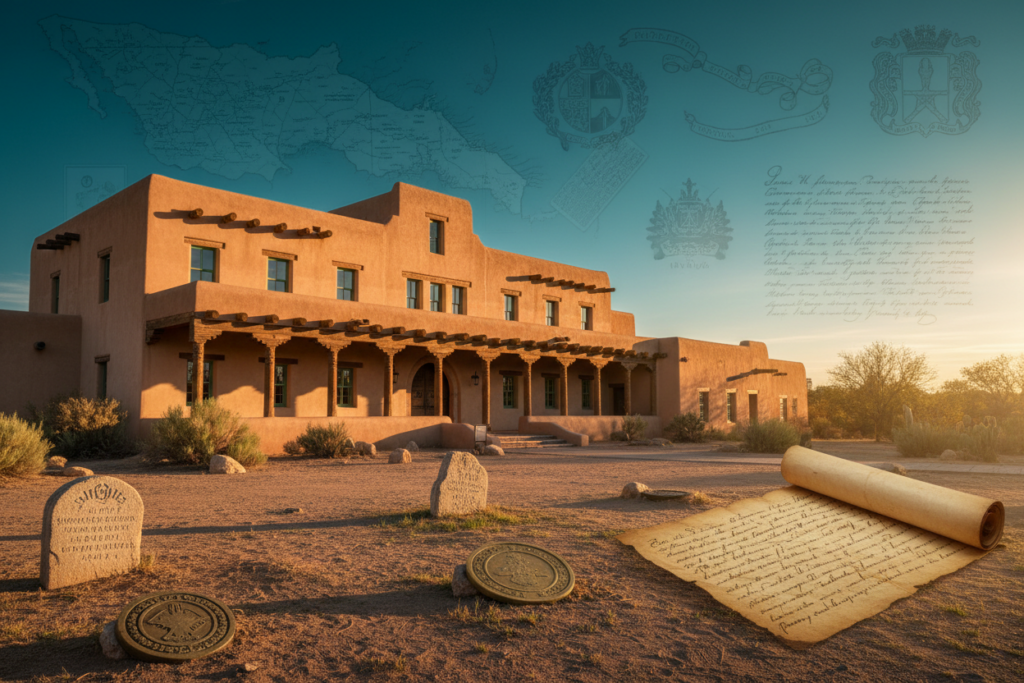
Standing proudly in the heart of Santa Fe, New Mexico, the Palace of the Governors represents something truly extraordinary in American architecture and history. This adobe structure, built in 1610, holds the remarkable distinction of being the oldest continuously occupied public building in the United States. For over four centuries, this unassuming yet magnificent building has witnessed the rise and fall of governments, the clash of cultures, and the evolution of an entire region from Spanish colony to American state.
What makes this palace truly fascinating isn’t just its age, but the incredible political drama that has unfolded within its walls. From Spanish conquistadors to Mexican governors, from Civil War generals to territorial administrators, the Palace of the Governors has sheltered the powerful and witnessed history in the making. Today, it serves as a museum that tells the complex story of the American Southwest, making it an essential destination for history enthusiasts and curious travelers alike.
The Spanish Colonial Foundation: Birth of a Political Center
When Spanish Governor Pedro de Peralta established Santa Fe as the capital of the northern frontier province of Nuevo México in 1610, he chose to construct his governmental headquarters using local materials and indigenous building techniques. The result was a sprawling adobe complex that would become known as the Palace of the Governors, though its original Spanish name was “Palacio de los Gobernadores.”
The building’s design reflected both Spanish colonial administrative needs and practical considerations for the high desert environment. Thick adobe walls provided insulation against the region’s dramatic temperature swings, while the long portal (covered walkway) offered protection from both sun and sudden mountain storms. This architectural approach would prove so effective that the basic structure has survived largely intact for over 400 years.
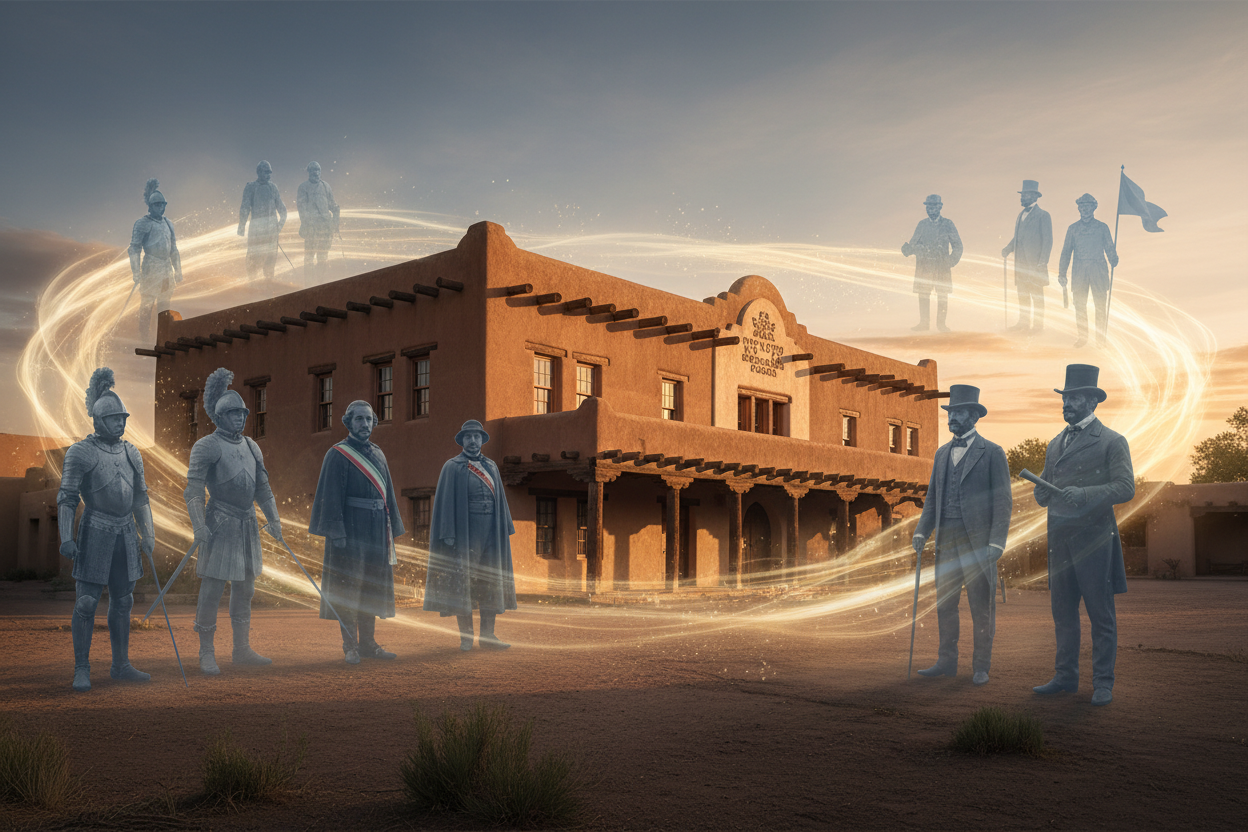
During the Spanish colonial period, which lasted until 1821, the Palace served as the seat of government for a vast territory that stretched from present-day Colorado to northern Mexico. Spanish governors ruled from these rooms, making decisions that affected thousands of indigenous peoples, Spanish colonists, and later, Mexican settlers. The building witnessed the complex negotiations between Spanish authorities and Pueblo leaders, the establishment of trade relationships, and the gradual development of a unique mestizo culture in the region.
Mexican Independence and Changing Flags
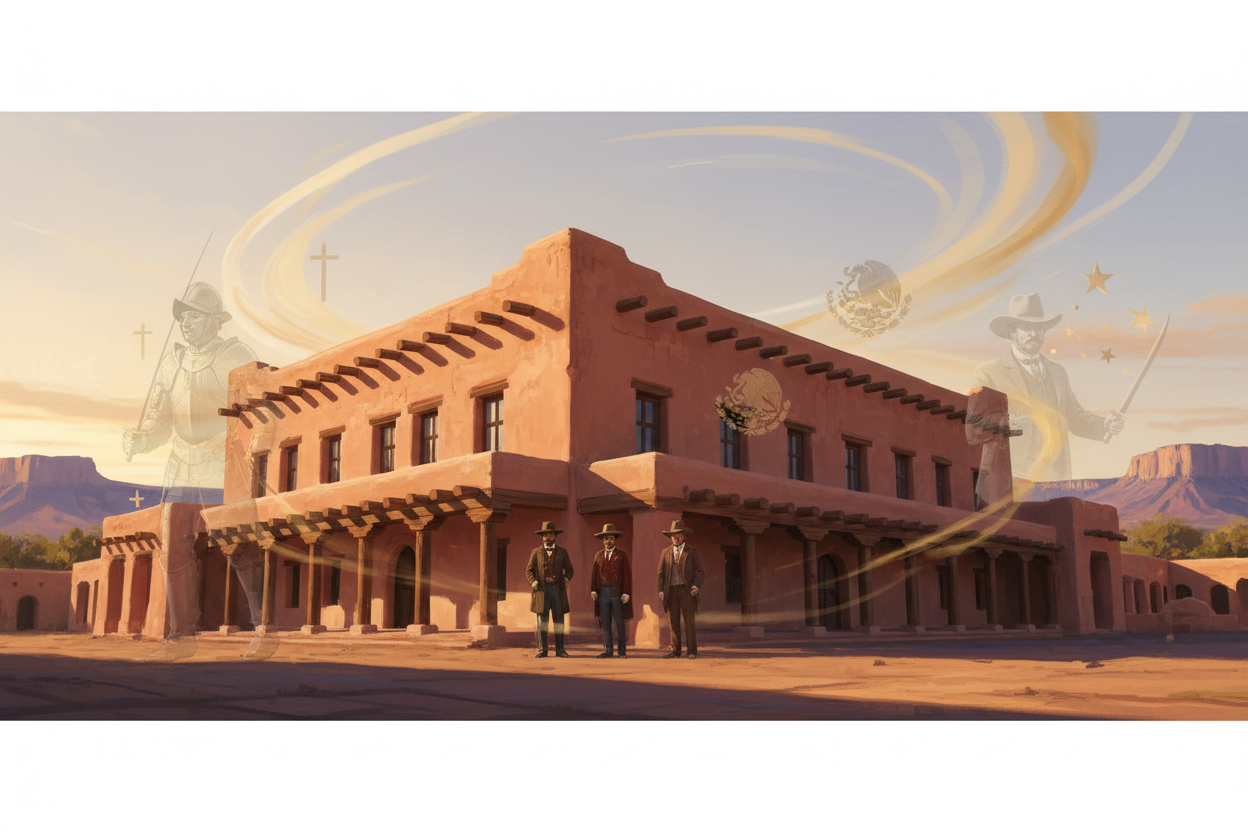
The year 1821 brought dramatic change to the Palace of the Governors when Mexico achieved independence from Spain. Suddenly, the Spanish flag that had flown over the building for more than two centuries was replaced by the Mexican tricolor. The transition wasn’t merely symbolic – it represented a fundamental shift in how the territory would be governed and who would hold power within these adobe walls.
Mexican governors brought different administrative styles and policies to the Palace. They faced unique challenges, including increased trade with the United States along the Santa Fe Trail, growing tensions between different cultural groups, and the practical difficulties of governing a remote territory from Mexico City. The Palace became a center of commerce as well as politics, with Mexican officials negotiating trade agreements and managing the influx of American merchants and settlers.
During this period, the building also witnessed significant social changes. The rigid caste system of Spanish colonial rule began to break down, and new opportunities emerged for people of mixed heritage. The Palace’s rooms hosted negotiations between Mexican officials and various Native American tribes, as well as discussions about land rights that would have lasting implications for the region’s development.
American Occupation and Territorial Government
Perhaps no period in the Palace’s history was more dramatic than August 1846, when American forces under General Stephen W. Kearny marched into Santa Fe during the Mexican-American War. Without firing a shot, Kearny claimed the territory for the United States and raised the American flag over the Palace of the Governors. This peaceful occupation marked the beginning of yet another chapter in the building’s remarkable political history.
The American territorial period brought new challenges and opportunities to the Palace. American governors, appointed by the President and confirmed by Congress, had to navigate the complex cultural landscape of New Mexico while implementing American legal and administrative systems. The building’s rooms witnessed heated debates about statehood, slavery, and civil rights – issues that would define American politics throughout the 19th century.
One of the most significant figures to occupy the Palace during this period was Lew Wallace, territorial governor from 1878 to 1881. Wallace, who would later become famous as the author of “Ben-Hur,” used his office in the Palace to negotiate with Billy the Kid and other notorious figures of the Lincoln County War. These negotiations, conducted in the same rooms where Spanish conquistadors had once planned expeditions, demonstrate the building’s continuous role in regional politics and conflict resolution.
Civil War Intrigue and Confederate Occupation
The Palace of the Governors played a crucial role during one of the most turbulent periods in American history. When the Civil War reached New Mexico Territory in 1862, Confederate forces briefly occupied Santa Fe and flew the Confederate flag over the Palace. This occupation lasted only a few weeks, but it represented a unique moment when the building served as the seat of Confederate territorial government.
The Confederate occupation ended when Union forces, including the famous Colorado Volunteers, recaptured Santa Fe following the Battle of Glorieta Pass. The Palace once again became the center of Union territorial government, but the brief Confederate interlude added another layer to the building’s complex political legacy. Union officers used the Palace to coordinate military operations throughout the Southwest and to maintain communication with Washington during this critical period of American history.
Statehood and Modern Political Evolution
When New Mexico achieved statehood in 1912, the Palace of the Governors transitioned from territorial to state government headquarters. The building continued to serve as the official residence and office of the state governor until 1886, when the territorial government moved to a new capitol building. However, the Palace’s political significance didn’t end with this transition.
Throughout the early 20th century, the building remained an important symbol of New Mexico’s unique cultural heritage and political identity. State officials recognized the Palace’s historical value and began efforts to preserve and interpret its remarkable story. In 1909, the building was converted into a museum, ensuring that future generations could learn about the complex political history that had unfolded within its walls.
Cultural Crossroads and Indigenous Perspectives
While the Palace of the Governors is often viewed through the lens of European and American colonial history, it’s essential to recognize that this building sits on land that was home to indigenous peoples for thousands of years before any European flags flew over its ramparts. The Pueblo peoples of the region had their own sophisticated governmental systems and political structures long before the Palace was constructed.
The relationship between the Palace’s various governments and local indigenous communities was complex and often contentious. The building witnessed negotiations, treaties, and conflicts that shaped the lives of Native American peoples throughout the Southwest. Today, the museum housed within the Palace works to present a more complete and balanced view of this history, including indigenous perspectives that were often overlooked in earlier historical narratives.
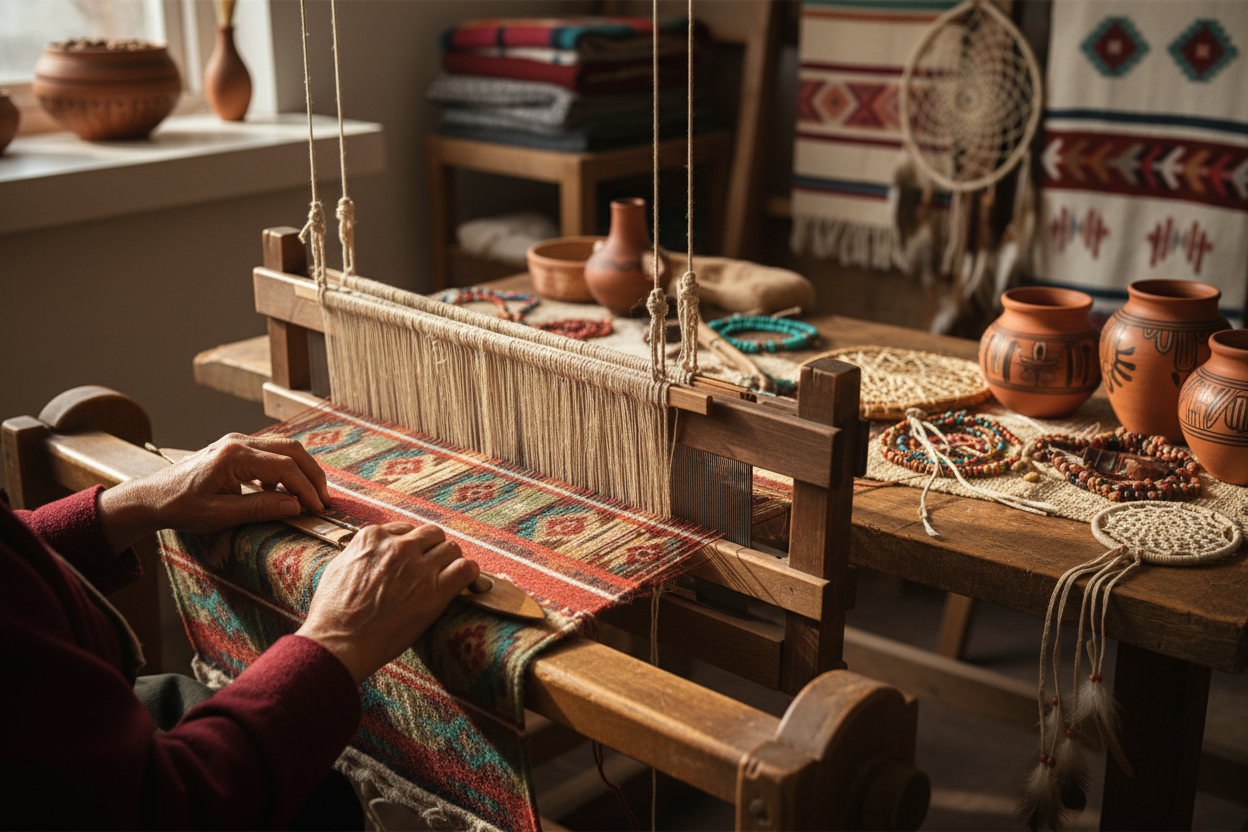
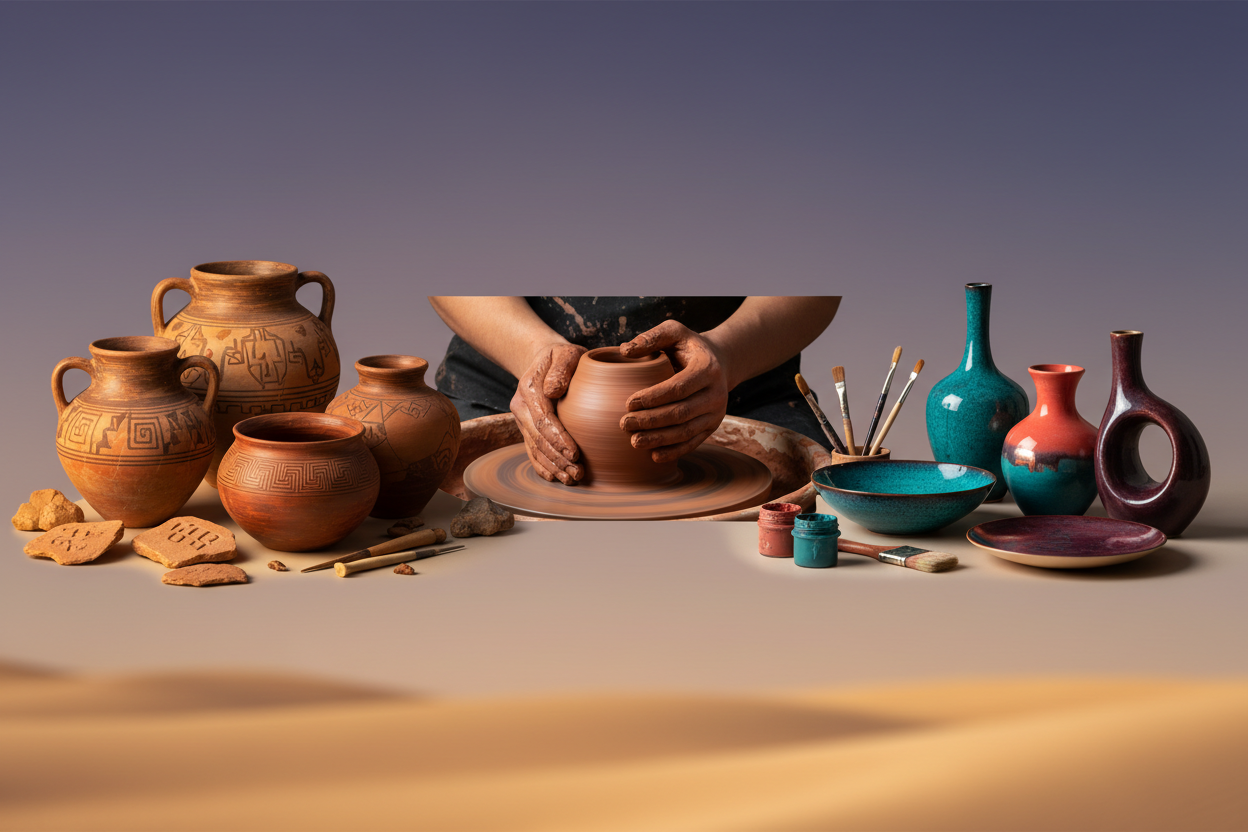
The famous portal of the Palace has become a gathering place for Native American artisans who sell their work to visitors from around the world. This daily presence of indigenous vendors creates a living connection between the building’s colonial past and its role in contemporary cultural exchange.
Preservation and Modern Museum Status
Today, the Palace of the Governors operates as part of the New Mexico History Museum, welcoming thousands of visitors each year who come to explore its remarkable collection of artifacts and exhibits. The museum’s curators have worked diligently to preserve not only the building’s physical structure but also the stories of all the people who shaped its history.
Recent archaeological investigations have revealed new insights into the Palace’s construction and the daily lives of its occupants throughout different historical periods. These discoveries continue to add depth to our understanding of how this building functioned as both a seat of government and a home for the families of various governors and administrators.
The preservation efforts extend beyond the building itself to include the vast collection of documents, photographs, and artifacts that tell the story of New Mexico’s political evolution. Researchers and historians from around the world come to study these materials, ensuring that the Palace’s legacy continues to inform our understanding of American Southwest history.
Visiting the Palace Today: A Journey Through Time
Modern visitors to the Palace of the Governors can walk through rooms where Spanish governors once held court, where Mexican officials negotiated with American traders, and where territorial governors shaped the future of New Mexico. The museum’s exhibits bring these stories to life through carefully curated displays of period furniture, official documents, and personal artifacts belonging to the building’s former occupants.
The experience of visiting the Palace is enhanced by its location in the heart of Santa Fe’s historic plaza, surrounded by other significant buildings that tell the story of the city’s evolution. Visitors can easily spend an entire day exploring the museum and the surrounding area, gaining a comprehensive understanding of how political power, cultural exchange, and historical change have shaped this unique corner of America.
The Palace of the Governors stands as more than just a museum or historical curiosity – it represents the continuous thread of governance and political evolution in the American Southwest. For 400 years, this building has adapted to serve the needs of different governments while maintaining its essential character and significance. As we look toward the future, the Palace continues to serve as a reminder of how political institutions can evolve while preserving the lessons and legacy of the past.
Whether you’re a history enthusiast, a student of American politics, or simply someone curious about the rich cultural heritage of the Southwest, the Palace of the Governors offers an unparalleled opportunity to experience four centuries of political history under one remarkable roof. In a world where political buildings are often demolished or abandoned as power shifts, this enduring adobe palace stands as a testament to the importance of preserving our shared political heritage for future generations.
Frequently Asked Questions
Q: How old is the Palace of the Governors?
A: The Palace of the Governors was built in 1610, making it over 410 years old and the oldest continuously occupied public building in the United States.
Q: Can visitors tour the inside of the Palace of the Governors?
A: Yes, the Palace now operates as a museum and visitors can tour the interior rooms, which feature exhibits about New Mexico’s political and cultural history.
Q: How many different governments have operated from the Palace?
A: The Palace has served as headquarters for Spanish colonial government (1610-1821), Mexican territorial government (1821-1846), American territorial government (1846-1912), and briefly Confederate forces during the Civil War.
Q: What is the significance of the portal at the Palace of the Governors?
A: The portal (covered walkway) serves as a marketplace where Native American artisans sell authentic jewelry, pottery, and other crafts. It has been designated as a National Historic Landmark for this cultural tradition.
Q: Are there any original furnishings or artifacts from the Spanish colonial period?
A: While most original furnishings have not survived, the museum houses an extensive collection of period artifacts, documents, and reproductions that help visitors understand how the building functioned during different historical periods.
Q: How long does it take to tour the Palace of the Governors?
A: Most visitors spend 1-2 hours touring the Palace, though history enthusiasts may want to allow more time to fully explore the exhibits and read the detailed historical information provided throughout the museum.