
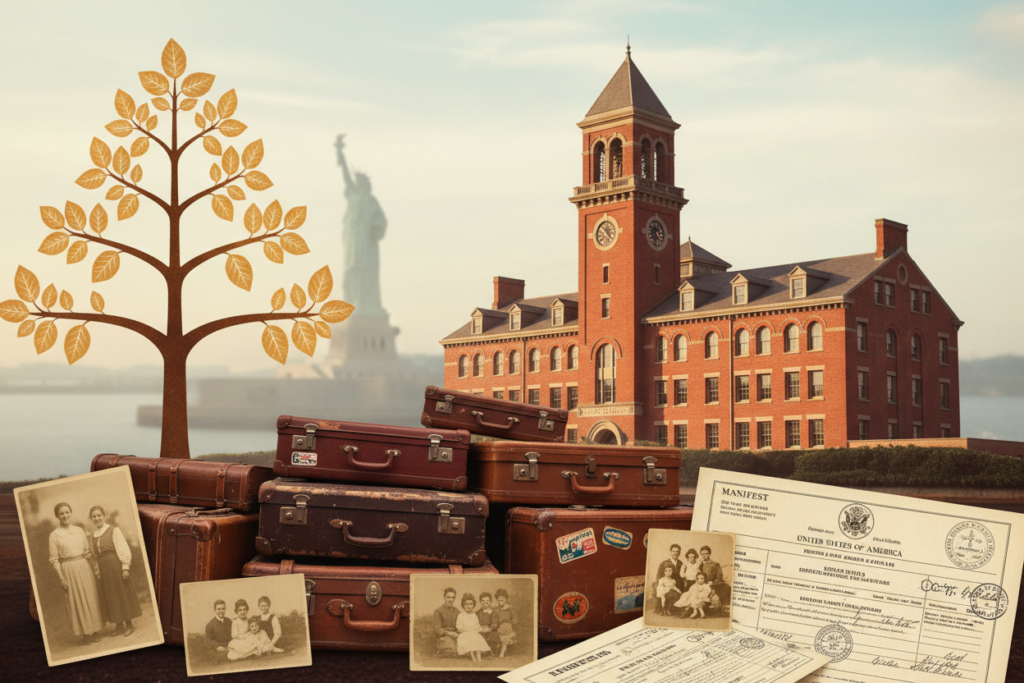
Standing on the ferry as it approaches Ellis Island, you can almost hear the echoes of millions of hopeful voices speaking in dozens of languages. Between 1892 and 1954, over 12 million immigrants passed through these halls, each carrying dreams, fears, and stories that would become woven into the fabric of American history. Today, the Ellis Island Immigration Museum serves as both a monument to their courage and a treasure trove for anyone seeking to uncover their family’s American journey.
Whether your great-great-grandmother arrived clutching a worn photograph of the family she left behind, or your ancestors were among the millions who saw the Statue of Liberty as their first glimpse of freedom, Ellis Island holds the keys to understanding your family’s unique immigration story. This remarkable museum doesn’t just display artifacts behind glass cases – it offers you the chance to walk in your ancestors’ footsteps and discover the personal details of their transformative journey to America.
The Historic Significance of Ellis Island
Ellis Island earned its nickname as the “Island of Hope, Island of Tears” for good reason. For many immigrants, it represented the final hurdle before starting their new American life. The immigration station processed an average of 1,900 people daily during its peak years, with inspectors conducting medical examinations and legal interviews that determined whether newcomers could enter the United States or face the heartbreak of deportation.
The main building, now home to the Immigration Museum, witnessed countless emotional moments – families reunited after months of separation, children seeing their fathers for the first time, and immigrants taking their first official steps as future American citizens. The Great Hall, with its soaring arched ceiling and red-tiled floor, served as the primary inspection area where your ancestors likely waited nervously, hoping to pass the various tests that would grant them entry to their promised land.
What makes Ellis Island particularly fascinating is how it captured the American immigrant experience during one of the nation’s most significant periods of growth. The detailed records kept by immigration officials have become invaluable resources for modern genealogy research, creating an unparalleled database of family histories that spans generations.

Exploring the Immigration Museum Exhibits
The Ellis Island Immigration Museum transforms the historic immigration station into an immersive experience that brings the past to life. As you walk through the same corridors your ancestors navigated, you’ll encounter exhibits that tell both the collective immigrant story and individual tales of triumph and struggle.
The “Peopling of America” exhibit traces immigration patterns from the colonial period through today, helping you understand the broader historical context surrounding your family’s arrival. Interactive displays show how different waves of immigration shaped American communities, from the Irish fleeing the potato famine to Eastern Europeans escaping religious persecution.
Perhaps most moving is the “Peak Immigration Years” exhibit, which recreates the experience of arriving at Ellis Island. You can examine actual passenger ship manifests, see the medical instruments used during health inspections, and even listen to oral histories recorded by immigrants themselves. These first-hand accounts often reveal details about the journey that official records cannot capture – the seasickness, the fear, the overwhelming relief of finally reaching American shores.
The museum’s “Restoring a Landmark” exhibit showcases the incredible effort required to preserve Ellis Island for future generations. Through photographs and artifacts, you’ll see how the abandoned buildings were transformed back into the immigration station your ancestors would recognize, complete with original benches, registry desks, and examination rooms.
Using the American Family Immigration History Center
The crown jewel of any genealogy visit to Ellis Island is the American Family Immigration History Center. This research facility houses digitized records of over 51 million passengers and crew members who entered New York Harbor between 1892 and 1957. Unlike generic ancestry websites, this database focuses specifically on Ellis Island arrivals, providing detailed information that can unlock family mysteries you never knew existed.
The search process is surprisingly user-friendly, even for beginners. You can search by name, ship, or date of arrival, and the system will pull up the original ship manifest showing your ancestor’s entry. These documents often reveal fascinating details: your great-grandfather’s occupation in the old country, how much money he carried, whether he could read and write, and even the name and address of the American relative he planned to visit.
What makes these records particularly valuable is their accuracy and completeness. Immigration officials were meticulous record-keepers, and the manifests include information you’re unlikely to find elsewhere. You might discover that your ancestor traveled with siblings you never knew existed, or learn the exact village they left behind in Europe. Some manifests even include physical descriptions and notes about distinguishing characteristics.
The center also provides access to ship photographs, allowing you to see the actual vessel that carried your family to America. Imagine being able to show your children the same ship their great-great-grandmother sailed on, complete with details about the journey’s duration and conditions aboard.
Planning Your Genealogy Research Visit
A successful genealogy research trip to Ellis Island requires some preparation, but the effort pays off tremendously when you’re holding a copy of your ancestor’s original immigration document. Start by gathering whatever family information you already have – full names, approximate arrival dates, countries of origin, and any family stories that might provide clues.
Keep in mind that names on Ellis Island records might not match exactly what you expect. Immigration officials sometimes simplified complex foreign names, and your ancestors might have used different versions of their names at different times. Be prepared to search for variations and alternative spellings.
The museum offers both self-guided research and assisted research sessions. If you’re new to genealogy or feeling overwhelmed by the database, consider scheduling time with one of the research specialists. These experts know the records inside and out and can help you navigate challenges like common names or missing information.
Don’t forget to bring a camera or smartphone to photograph any documents you find. While you can purchase official copies of records, having digital photos allows you to share discoveries immediately with family members and continue your research at home.
Beyond Ellis Island: Continuing Your Family Research
Your Ellis Island research often serves as a launching pad for deeper genealogy investigations. The information you discover about your ancestor’s arrival – their hometown, traveling companions, and sponsor in America – provides crucial clues for tracing both their life before immigration and their American story after Ellis Island.
Many researchers find that Ellis Island records help them connect with living relatives they never knew existed. Ship manifests sometimes list multiple family members or reveal that your ancestor was joining relatives already established in America. These connections can lead to rich family networks and shared stories that have been preserved in different branches of your family tree.
The museum’s research staff can provide guidance on where to continue your investigation. They’re familiar with other archives and resources that complement Ellis Island records, including naturalization documents, census records, and local historical societies in areas where your ancestors settled.
Consider reaching out to genealogy societies in your ancestor’s homeland as well. Many European countries have excellent genealogy resources that can help you trace your family’s story before they made the momentous decision to leave for America.
Making the Most of Your Ellis Island Experience
While genealogy research might be your primary motivation for visiting, don’t miss the opportunity to fully experience Ellis Island as a historic site. Take time to stand in the Great Hall and imagine the nervous anticipation your ancestors felt while waiting for their interviews. Walk through the dormitory areas where detained immigrants stayed, sometimes for weeks, while their cases were reviewed.
The museum’s audio tour, narrated by Tom Brokaw, includes powerful immigrant stories that provide context for your own family’s experience. Hearing about the challenges and triumphs of other families helps you appreciate the courage it took for your ancestors to leave everything familiar behind and start over in a new country.
Many visitors find it meaningful to participate in the museum’s oral history project by recording their own family’s immigration stories. These recordings become part of the permanent collection, ensuring that your family’s unique experience is preserved for future generations to discover and learn from.
The Wall of Honor, located outside the main building, allows you to honor your immigrant ancestors by having their names permanently inscribed alongside thousands of others. This tribute creates a lasting memorial to your family’s contribution to America’s immigrant heritage.
Frequently Asked Questions
How do I get to Ellis Island?
Ellis Island is accessible only by ferry from Battery Park in Manhattan or Liberty State Park in New Jersey. The Statue Cruises ferry service operates year-round, though schedules vary by season. Tickets include access to both Ellis Island and the Statue of Liberty, so plan for a full day of exploration.
Do I need to make reservations for genealogy research?
While you can use the American Family Immigration History Center computers without reservations, making an appointment ensures you’ll have dedicated time and possibly assistance from research staff. During peak tourist seasons, walk-in access to computers may involve waiting.
What if my ancestors didn’t come through Ellis Island?
Ellis Island processed immigrants arriving in New York Harbor, but many immigrants entered through other ports like Boston, Philadelphia, Baltimore, or West Coast cities. The museum staff can direct you to resources for researching immigration through other entry points.
How much does it cost to access the immigration records?
Basic access to the immigration database is included with your ferry ticket and museum admission. However, purchasing copies of documents or photographs requires additional fees. Digital copies are available for immediate download, while official certified copies take longer to process.
Can I find records of ancestors who were turned away?
Yes, the database includes records of immigrants who were denied entry and deported. These records can be particularly valuable for understanding family history, as they often contain detailed explanations of why someone was refused admission.
What should I bring for my research visit?
Bring any family documents, photographs, or stories you have, along with a notebook for taking notes and a camera for photographing documents. Consider bringing a portable phone charger, as research can take several hours and you’ll want to share discoveries with family members.
Your journey to Ellis Island isn’t just a tourist visit – it’s a pilgrimage to the place where your American family story truly began. Every document you discover, every photograph you take, and every moment you spend walking in your ancestors’ footsteps adds another chapter to your understanding of the courage, hope, and determination that brought your family to America. The Ellis Island Immigration Museum doesn’t just preserve history; it helps you reclaim your personal connection to one of the most transformative experiences in your family’s past.